

 See My Latest Article on HelloNation
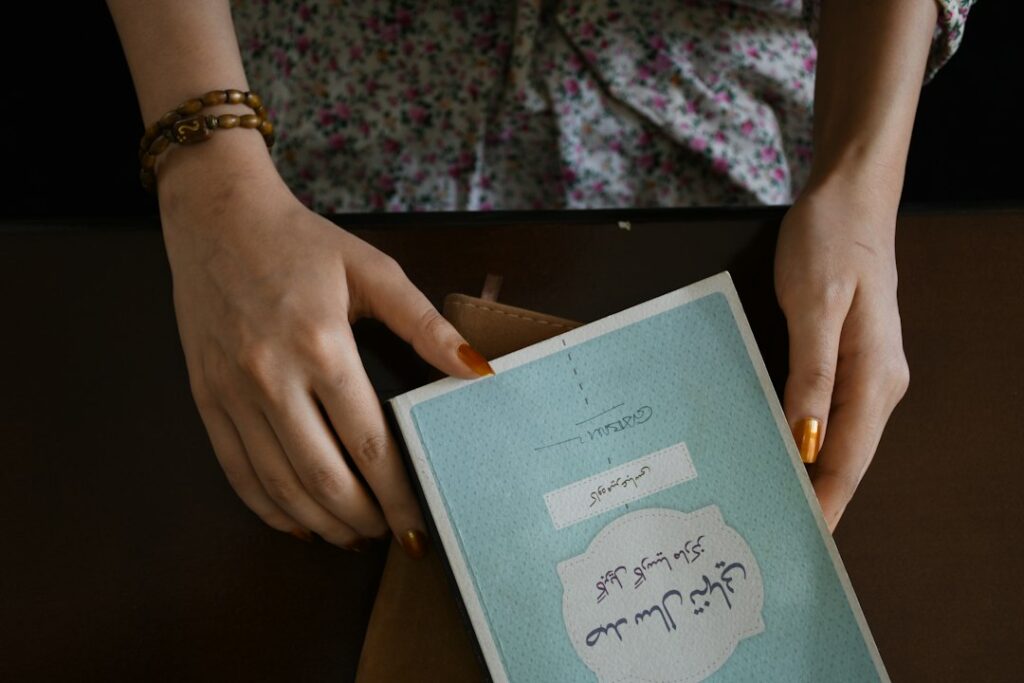
Learning Hebrew through traditional Jewish prayers can connect language study with sound, rhythm, history, and daily practice. For residents of Englewood, NJ, this approach can be useful for children, adults returning to Jewish learning, interfaith families, and anyone who wants to understand what is being said during synagogue services or home rituals.
Prayer texts are not a complete Hebrew course by themselves. They contain biblical vocabulary, rabbinic expressions, poetic language, and grammatical forms that may not appear in everyday conversation. Used with guidance, however, they provide a meaningful and structured foundation for reading and comprehension.
Why are prayers useful for learning Hebrew?
Traditional prayers are repeated often, which gives learners multiple opportunities to recognize the same letters, words, and phrases. Repetition also makes it easier to connect pronunciation with meaning over time.
Prayer study can develop several skills at once:
- Reading fluency: Learners practice moving from right to left and recognizing common letter patterns.
- Pronunciation: Repeated phrases help learners become comfortable with Hebrew sounds.
- Vocabulary: Words related to praise, gratitude, peace, holiness, community, and daily life recur throughout the prayer book.
- Grammar awareness: Learners encounter verb forms, possessive endings, plurals, and formal sentence patterns.
- Cultural understanding: The language becomes connected to Jewish holidays, life-cycle events, family customs, and communal practice.
A learner may begin by recognizing a phrase from the Shema or a blessing over food, then gradually understand how individual words function within the sentence. This is more effective than memorizing an entire prayer without examining its structure.
Which prayers are best for beginners?
Short, familiar prayers are generally the most approachable starting point. The goal is to choose texts that are brief enough to study carefully and meaningful enough to invite regular review.
Useful starting points include:
The Shema
The first verse of the Shema is short and widely known. It introduces important vocabulary related to hearing, unity, and God. Because the verse is often recited in both communal and home settings, learners can hear it repeatedly.
A beginner can study:
- The Hebrew letters and vowels
- A word-by-word translation
- The difference between literal and interpretive translations
- The pronunciation of final letters
- How the phrase is connected to Jewish practice
Common blessings
Blessings beginning with “Baruch Atah” offer a clear repeated pattern. Learners can compare several blessings and notice which words remain the same and which change according to the subject of the blessing.
This provides an early lesson in sentence structure. Instead of treating each blessing as unrelated, students see a template that can be applied across different contexts.
Modeh Ani
This brief morning prayer is often accessible to families because it is connected to waking up and beginning the day. It includes common ideas such as gratitude, life, and faithfulness. Its length makes it practical for handwriting, pronunciation, and vocabulary exercises.
The blessings over food
Food blessings are useful because they can be practiced at home without requiring a full prayer service. They also introduce category words and a consistent blessing formula. Studying one blessing at a time allows learners to focus on accurate pronunciation rather than rushing through a long passage.
Should learners start with Hebrew letters or translation?
Both should be introduced together, but the balance should change as the learner develops. Beginners may need transliteration and translation for support, while still looking at the Hebrew text from the beginning.
Transliteration can help with pronunciation, but it should not become a permanent substitute for reading Hebrew. English letters cannot represent every Hebrew sound consistently, and different prayer books may use different transliteration systems.
A practical sequence is:
1. Look at the Hebrew word.
2. Say it with limited pronunciation support.
3. Check the translation.
4. Identify familiar letters or word parts.
5. Read the phrase again without relying entirely on transliteration.
This method keeps meaning and decoding connected. Learners should also understand that a translation is an interpretation, not always a word-for-word equivalent.
How can prayer study teach Hebrew vocabulary?
Prayer vocabulary becomes easier to remember when words are grouped by roots and repeated patterns. Hebrew often builds related words from a three-consonant root, although not every word follows a simple pattern.
For example, learners may notice recurring ideas connected to:
- Blessing
- Holiness
- Knowledge
- Peace
- Praise
- Life
- Redemption
- Service
A teacher can highlight one word in several prayers and show how its form changes. Learners may also keep a small vocabulary notebook with four columns:
- Hebrew word
- Pronunciation
- Basic meaning
- Prayer or phrase where it appears

The notebook should remain selective. Recording every unfamiliar word can become discouraging, especially in longer sections of the siddur. It is usually more useful to learn a small number of high-frequency words well.
How should pronunciation be taught?
Pronunciation should be consistent with the learner’s prayer tradition and family practice. Jewish communities use different pronunciation traditions, and variations may be heard in vowels, consonants, and the treatment of certain Hebrew letters.
The purpose of instruction is not to criticize a family’s familiar pronunciation. A thoughtful lesson can explain differences while maintaining respect for the version used at home or in the learner’s community.
Important early distinctions may include:
- Hebrew letters that have similar English approximations
- The difference between “kh” and a regular “k” sound
- The sound of the letter ayin, when it is pronounced
- The difference between a silent letter and a consonant
- Vowel patterns marked by nikud
Nikud can be especially helpful for beginners because it shows vowel sounds. Many prayer books for experienced readers omit most vowel markings, so learners eventually need practice recognizing words without depending on every written vowel.
Can children and adults use the same approach?
The basic principles are similar, but the activities should match the learner’s age and goals. Children often benefit from singing, movement, matching games, visual cards, and short repeated phrases. Adults may prefer translation comparisons, grammar explanations, historical context, and practical reading exercises.
For children, a single line of a prayer may be enough for one lesson. Adults may be ready to compare a biblical phrase with a later rabbinic formulation or examine how a verb changes across related prayers.
Families can support learning by choosing one short phrase for the week and using it during an appropriate home ritual. The practice should remain brief and predictable rather than becoming a test.
What common mistakes should learners avoid?
Several habits can slow progress:
- Memorizing sounds without meaning: Fluent recitation does not necessarily show comprehension.
- Depending completely on transliteration: This can delay Hebrew reading development.
- Studying too many prayers at once: A short passage studied carefully is more valuable than several passages read superficially.
- Assuming every prayer is written in modern conversational Hebrew: Prayer language includes older forms and elevated expressions.
- Ignoring variations in prayer books: Wording, order, and customs may differ according to tradition.
- Correcting pronunciation harshly: Anxiety can make reading more difficult, especially for children and beginners.
A useful lesson separates accuracy from speed. First, the learner identifies letters and words. Next comes pronunciation. Meaning and fluent recitation develop through repeated, patient practice.
How can local households make prayer-based learning practical?
Households in Englewood may have busy schedules shaped by school, work, religious observance, and seasonal changes. A short routine is more sustainable than an ambitious study plan.
A practical weekly routine might include:
- Five minutes reviewing a familiar phrase
- Five minutes learning two or three new words
- Reading the phrase aloud once with translation
- Using the phrase during the related prayer or ritual
- Reviewing the same material later in the week
A quiet corner with a siddur, pencil, and vocabulary notebook is enough. Families can also listen carefully during services and mark phrases they recognize, then study those phrases afterward.
Prayer-based Hebrew learning works best when it combines reverence with curiosity. The learner is not only decoding an ancient text but also discovering how language carries memory, communal identity, and personal meaning from one generation to the next.