

 See My Latest Article on HelloNation
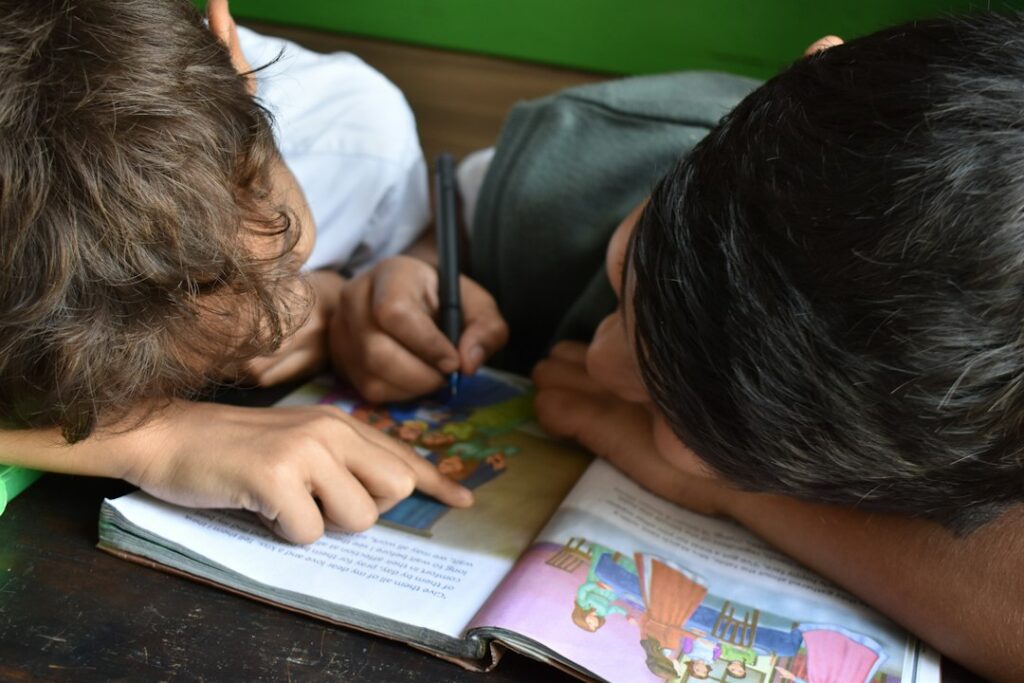
Learning Hebrew through children’s books gives young learners repeated exposure to sounds, words, sentence patterns, and cultural ideas in a meaningful setting. For families in Englewood, NJ, books can support formal lessons, home practice, or a gradual introduction to Hebrew for children who hear more than one language in daily life.
A storybook does not need to be fully understood on the first reading. Children benefit from hearing familiar phrases repeatedly, using illustrations to infer meaning, and noticing how written Hebrew works from page to page.
Why are children’s books useful for learning Hebrew?
Children’s books combine language with context. A picture of a cat, house, meal, or family activity helps a child connect Hebrew words with meaning without translating every sentence.
Stories also provide repetition in a natural form. A child may hear the same phrase several times in one book and begin to recognize it by sound. With additional readings, the child may identify the written word, repeat it aloud, and eventually use it independently.
Books support several areas of language learning at once:
- Vocabulary related to family, food, animals, school, nature, and daily routines
- Listening comprehension through repeated sentence patterns
- Pronunciation and rhythm through read-aloud practice
- Early reading skills, including letter recognition and directionality
- Cultural understanding through names, holidays, songs, and familiar experiences
The story format also gives children a reason to stay engaged. Learning becomes connected to characters and events rather than isolated word lists.
What age is appropriate for Hebrew storybooks?
Children can benefit from Hebrew books as soon as they enjoy looking at pictures and listening to an adult read aloud. The approach should change with age and language experience.
For babies and toddlers, sturdy picture books with one object or action per page are suitable. Adults can name what appears in the illustration, use gestures, and repeat short expressions. A complete reading is not necessary.
Preschool children can begin following simple storylines. Books with repeated phrases, predictable endings, and clear illustrations are especially helpful. Children may participate by finishing a sentence, naming a character, or pointing to an object.
Early elementary students can work with longer picture books and simple readers. They may be ready to identify familiar words, notice repeated grammatical patterns, and answer basic questions in Hebrew or in another language.
Older children can use chapter books, nonfiction for young readers, comics, or dual-language materials. At this stage, the goal may include reading fluency, independent vocabulary strategies, and discussion of plot or character choices.
Age alone does not determine the right level. A child who speaks Hebrew but is still developing reading skills may need a different book from a child who reads well but is new to spoken Hebrew.
How should a parent read a Hebrew book with a beginner?
The most effective approach is usually interactive rather than a word-for-word translation of every line. Before reading, look at the cover and illustrations together. Ask the child what might happen, then introduce two or three useful words.
During the story:
- Read slowly, but keep the natural rhythm of the language.
- Point to important objects or actions in the pictures.
- Repeat key phrases without requiring the child to repeat every time.
- Pause occasionally for simple questions such as “Where is the dog?” or “What is she eating?”
- Use gestures, facial expressions, and objects to clarify meaning.
- Translate only when the meaning cannot be understood from context.
After reading, talk briefly about the story. A child might choose a favorite character, place events in order, or draw a picture and label it with Hebrew words.
A ten-minute reading that happens several times each week is often more useful than an occasional long session that feels tiring.
Should children start with Hebrew-only books or bilingual books?
Both types can be useful. Hebrew-only books provide more sustained exposure and encourage children to use pictures, familiar words, and context to understand the story. They are especially appropriate when an adult can explain a few key ideas without interrupting the reading constantly.
Bilingual books can reduce frustration for beginners and help families who are still building confidence with Hebrew. However, reading only the translated text may limit the child’s attention to the Hebrew. A better method is to read the Hebrew first, offer a short explanation when needed, and use the second language to confirm the general meaning.
Families can gradually reduce dependence on translation by rereading the same story. The first reading may require substantial support. Later readings can focus more on Hebrew phrases and participation.
How can books help children learn Hebrew reading skills?
Hebrew reading develops through several related skills. Children learn to identify letters, recognize common word patterns, connect written symbols with sounds, and read from right to left. Books give these skills a meaningful purpose.
For beginners, adults can draw attention to one feature at a time:
- Find a particular letter on each page.
- Notice a familiar word such as “mother,” “house,” or “day.”
- Compare words that begin with the same sound.
- Track the words from right to left with a finger.
- Look for repeated endings or grammatical forms.
- Read a short phrase together before allowing the child to try alone.

Books with vowel markings can be helpful during the early stages because they give children more information about pronunciation. As reading becomes stronger, children can gradually encounter texts with fewer markings, as is common in everyday Hebrew reading.
It is not necessary to turn every story into a worksheet. A few minutes of focused attention on print can be enough.
What if the child understands Hebrew but refuses to read?
A child may understand spoken Hebrew while finding reading slow or difficult. This is common, particularly when the child hears the language at home but has had limited experience with Hebrew print.
Choose books connected to the child’s interests rather than selecting material only because it appears educational. Humor, animals, mysteries, sports, family stories, and imaginative adventures can all support language development.
It can also help to share the reading. The adult reads most of the text while the child reads one repeated line, a character’s speech, or a few familiar words. This keeps the child involved without making the entire story a test.
Avoid correcting every pronunciation immediately. If the meaning is clear, continue the story and return to the word later. Too much interruption can make reading feel like an evaluation instead of a shared activity.
How can local families make reading practical throughout the year?
Household routines often provide natural opportunities for Hebrew reading. A book can be kept near a child’s bed, in a common reading area, or with other materials used during quiet time. Seasonal changes, rainy afternoons, school breaks, and family gatherings can all create reasons to return to familiar stories.
In a dense community with varied household schedules, flexibility matters. Some families may have one adult who reads Hebrew more comfortably than another. Older siblings may enjoy reading aloud, while younger children can participate through pictures, gestures, and repeated phrases.
A small home library does not need to be large. A useful collection might include:
- Several familiar picture books for repeated reading
- One or two books connected to the child’s interests
- A simple reader with clear print
- A book containing songs, poems, or rhymes
- A story that reflects a family tradition or holiday
The purpose is steady exposure, not completing a certain number of books. A child who hears, discusses, and revisits a small number of engaging stories can develop strong foundations for later Hebrew learning.
What common mistakes should families avoid?
The most common mistake is expecting every reading to produce immediate vocabulary mastery. Children often understand a phrase long before they can say it, and they may recognize a word in a familiar book before they can read it elsewhere.
Another mistake is choosing text that is too difficult. If nearly every sentence requires translation, the book may be better saved for later. A manageable book should contain some new language while also offering enough familiar material for the child to follow the main idea.
Finally, reading should not be limited to formal study. Hebrew children’s books can be part of ordinary family life: a bedtime story, a quiet weekend activity, or a short conversation about a character’s decision. That regular, low-pressure contact helps Hebrew become a language children use to understand stories, express ideas, and share time with others.