

 See My Latest Article on HelloNation
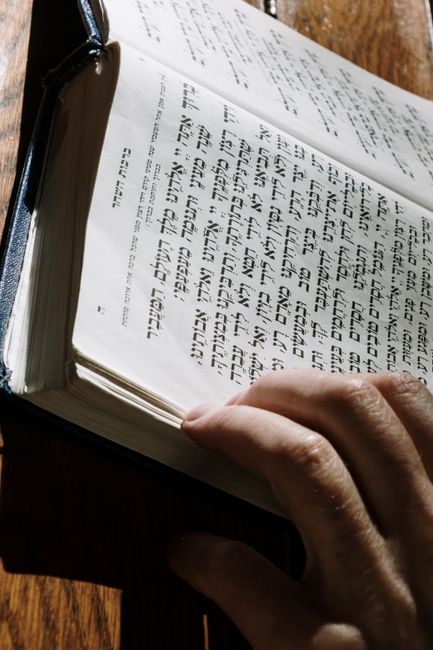
Why can Hebrew be read without vowels?
Hebrew is commonly written without most vowel marks, yet fluent readers can usually determine pronunciation from context, word patterns, and familiarity with the language. The small marks that show vowels are called *niqqud*; they appear often in beginner materials, children’s books, dictionaries, poetry, prayer books, and language-learning texts, but less often in ordinary adult reading.
For learners in Englewood, NJ, this can feel confusing at first. A page of Hebrew may seem to contain too little information because many words show only consonants. The goal is not to guess every vowel separately. Instead, readers gradually learn to recognize complete words, grammatical patterns, and familiar phrases.
What information does Hebrew provide without vowel marks?
Unvoweled Hebrew still provides several useful clues:
- Consonants: The main structure of the word remains visible.
- Word length: The number of letters can narrow the possibilities.
- Prefixes and suffixes: Common additions often reveal grammar and meaning.
- Context: Nearby words help identify the intended pronunciation.
- Spelling conventions: Certain letters may help represent vowel sounds.
- Word patterns: Hebrew nouns and verbs often follow recognizable structures.
For example, the letters כתב can relate to writing. Depending on the vowels and context, a reader may encounter forms connected with *katav* (“he wrote”), *kotev* (“writing” or “writes”), or *ktav* (“writing” or “script”). The surrounding sentence usually makes the meaning clear.
What are niqqud, and when should learners use them?
*Niqqud* are dots and small marks placed above, below, or inside Hebrew letters to indicate vowels and certain pronunciation details. They are helpful because they make the spoken form visible, but relying on them permanently can slow progress with ordinary Hebrew.
A useful learning sequence is:
1. Study new vocabulary with niqqud.
2. Read the same words without niqqud.
3. Meet the words in short sentences.
4. Review them later in ordinary unvoweled text.
This approach connects pronunciation with spelling without making vowel marks the only source of information. Learners should not feel that using niqqud is a weakness. It is a valuable support, particularly when studying biblical passages, liturgy, unfamiliar names, or advanced vocabulary.
How do Hebrew readers know which vowels to use?
Readers use several overlapping strategies rather than one perfect rule.
Recognize familiar words as units
Experienced readers do not always sound out every letter. They identify common words quickly, much as an English reader recognizes “because” or “through” without rebuilding the pronunciation from scratch.
Build recognition with high-frequency words such as:
- אני — I
- אתה — you, masculine singular
- היא — she
- בית — house
- ספר — book
- מים — water
- היום — today
- תודה — thank you
The pronunciation should be learned together with the meaning and spelling.
Notice prefixes and suffixes
Hebrew frequently attaches short grammatical elements to a word. Common prefixes include:
- ב־ — in, at, with
- ל־ — to, for
- מ־ — from
- ה־ — the
- ו־ — and
- ש־ — that, which
A word may appear differently when one of these is attached. Recognizing the prefix helps the reader divide the word into manageable parts.
Suffixes can show possession, number, gender, or verb information. For example, ים often marks a masculine plural noun, while ות commonly marks a feminine plural noun. These patterns are not absolute, but they provide useful guidance.
Look for spelling clues
Modern Hebrew often uses certain consonants to help show vowels. The letters ו and י may function partly as vowel indicators, sometimes called *matres lectionis*. For example, ו may help signal an “o” or “u” sound, while י may help signal an “i” or “ei” sound.
These letters do not solve every pronunciation question. Their use varies by word, spelling tradition, and grammatical form. Still, they are valuable clues, especially in common modern Hebrew vocabulary.
Should learners pronounce every letter?
No. Hebrew spelling and pronunciation do not always match letter for letter.
The letter א, called *aleph*, often represents a glottal stop or simply supports a vowel. The letter ע, called *ayin*, historically represented a different throat sound, but many modern speakers pronounce it lightly or do not distinguish it clearly from א. The letter ה may be pronounced at the beginning or middle of a word but can be weak or silent at the end.
The letter ו can represent a consonant similar to “v,” or help indicate “o” or “u.” The letter י can represent a consonant similar to “y,” or help indicate a vowel. Learning these possibilities prevents frustration when a word does not sound exactly as its spelling seems to suggest.
How can context help with ambiguous words?
Context is one of the most powerful tools in reading Hebrew. A sequence of consonants may have more than one possible pronunciation or meaning, but the sentence usually reduces the choices.
Consider the letters ספר. Depending on context, they may relate to:
- *sefer* — book
- *safar* — he counted
- *sipper* — he told or related
- *sofer* — scribe
A sentence about reading, a sentence about numbers, and a sentence about storytelling will point toward different interpretations. Learners should avoid deciding the meaning from a single word in isolation whenever possible.
Ask three questions:
1. What part of speech is needed here?
2. What meaning fits the surrounding sentence?
3. Does the word resemble a pattern already studied?
What are the most useful reading habits?
Short, regular practice is usually more effective than occasional long study sessions. This can fit well into household routines, commutes, or quiet seasonal study periods in the community.
Try the following method:
- Read a short passage aloud once with help from niqqud or a recording.
- Read it again without looking at the vowel marks.
- Circle words that seem familiar but uncertain.
- Guess the meaning from context before checking a dictionary.
- Record the correct pronunciation and return to the passage later.
- Copy several sentences by hand to notice recurring spellings.
Reading aloud matters because it connects visual patterns with pronunciation. Silent reading is also valuable, but speaking helps expose uncertainty that may otherwise remain hidden.
Which materials are easiest for beginners?
Begin with texts that contain predictable vocabulary and clear sentence structure. Graded readers, children’s stories for language learners, short dialogues, labeled pictures, and simple news summaries can be useful. Prayer and biblical texts may be meaningful, but they often contain older grammar, uncommon vocabulary, and spelling conventions that require additional guidance.
A practical progression is:
1. Fully pointed words and short phrases.
2. Simple unvoweled sentences with familiar vocabulary.
3. Short paragraphs with repeated themes.
4. Everyday modern Hebrew written for native readers.
5. Literary, biblical, or specialized texts.
Learners should expect a temporary gap between understanding spoken Hebrew and reading it comfortably. That gap narrows as common words become visually familiar.
What mistakes should learners avoid?
The most common mistake is trying to decode every word from individual letters. This can make reading slow and mentally exhausting. Another mistake is assuming that one set of vowels always applies to a particular group of consonants. Hebrew words change form according to tense, person, number, gender, and grammatical pattern.
It is also unhelpful to treat an unfamiliar word as evidence that the entire sentence is too difficult. Mark it, continue reading, and return after using the broader context. Often the meaning becomes clearer once the rest of the sentence is understood.
Reading Hebrew without vowels is a learned skill, not a test of intuition. With repeated exposure, common words become recognizable, prefixes and patterns become easier to spot, and context begins to supply the information that niqqud once provided.