

 See My Latest Article on HelloNation
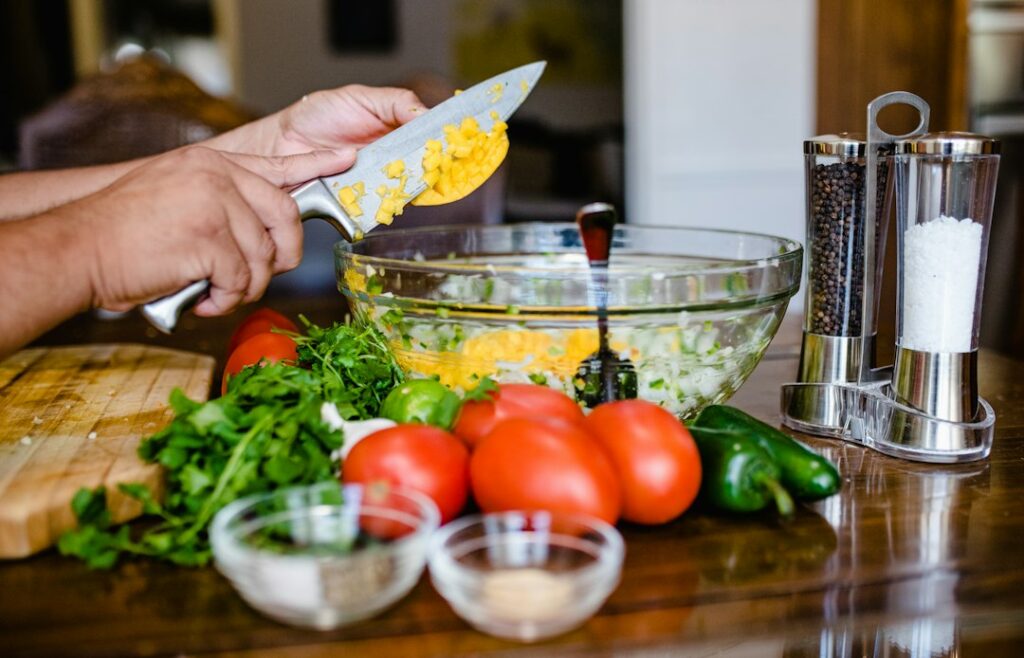
Learning Hebrew through cooking Israeli recipes turns language practice into a practical household activity. Ingredients, measurements, kitchen tools, and short instructions create repeated opportunities to hear, read, say, and remember everyday Hebrew.
For residents of Englewood, NJ, cooking can also fit naturally into family routines. A shared meal may involve children, adults, grandparents, or learners at different levels. Each person can participate with a small set of words and phrases, making the activity useful even when no one is fluent.
Why does cooking help people learn Hebrew?
Cooking provides context, repetition, and physical movement. A learner does not encounter a word as an isolated vocabulary item. The word is connected to an action, object, smell, or result.
For example, the Hebrew word for “cut” can be practiced while cutting vegetables. The word for “mix” becomes easier to remember when it is used beside a bowl and spoon. Instructions such as “add the tomatoes” or “wash the herbs” become meaningful because the learner can immediately act on them.
Cooking also reinforces several language skills at once:
- Reading: recognizing ingredient names and recipe instructions
- Listening: following spoken directions
- Speaking: naming ingredients or describing steps
- Grammar: practicing commands, quantities, and simple sentence patterns
- Memory: connecting Hebrew words with movement and sensory experience
This approach is especially useful for beginners who find ordinary vocabulary drills too abstract.
Which Israeli recipes are suitable for Hebrew practice?
The most useful recipes are simple enough to prepare without constant explanation. Recipes with familiar ingredients and a small number of steps allow learners to focus on language rather than becoming overwhelmed by the cooking process.
Good starting points include:
- Israeli salad: chopped tomatoes, cucumbers, peppers, herbs, lemon juice, and olive oil
- Hummus: chickpeas, tahini, lemon, garlic, water, and seasonings
- Shakshuka: eggs cooked in a tomato and pepper sauce
- Lentil soup: lentils, vegetables, broth, and herbs
- Roasted vegetables: seasonal vegetables prepared with oil and spices
- Tahini sauce: sesame paste mixed with water, lemon, and garlic
- Chopped herb salad: parsley, mint, vegetables, and a simple dressing
A salad is often the easiest first lesson because the steps are visible and flexible. Learners can practice colors, numbers, food names, and action verbs without needing advanced cooking skills.
What Hebrew vocabulary should learners begin with?
A small vocabulary set is more effective than a long list. Ten to fifteen words can support an entire cooking session.
Useful categories include:
Kitchen tools
- סכין — knife
- כף — spoon
- קערה — bowl
- סיר — pot
- מחבת — frying pan
- כוס — cup
Common ingredients
- עגבנייה — tomato
- מלפפון — cucumber
- בצל — onion
- שום — garlic
- לימון — lemon
- חומוס — chickpeas or hummus, depending on context
- טחינה — tahini
- ביצה — egg
Cooking actions
- לחתוך — to cut
- לערבב — to mix
- להוסיף — to add
- לשטוף — to wash
- לבשל — to cook
- לטעום — to taste
- לשים — to put or place
Learners may first use the infinitive form, such as לחתוך or לערבב. As confidence grows, instruction phrases can be added: “cut the cucumber,” “mix the salad,” or “add the lemon.”
How can a recipe become a Hebrew lesson?
A recipe can be divided into short language stages rather than translated all at once.
Before cooking
Introduce the ingredients and tools. Ask learners to point to each item, repeat its Hebrew name, and identify its color or size.
Questions might include:
- What is this?
- How many tomatoes are there?
- Which ingredient is green?
- Where is the bowl?

During preparation
Use short, repeated commands. Natural kitchen language does not need to be complicated.
Examples include:
- Wash the vegetables.
- Cut the onion.
- Put the ingredients in the bowl.
- Mix slowly.
- Add a little salt.
- Taste the sauce.
At first, the teacher or adult can say the Hebrew phrase and demonstrate the action. Later, learners can give the instructions to one another.
After cooking
Use the finished dish for descriptive practice. Learners can say whether the food is hot, cold, sweet, salty, spicy, soft, or crunchy. They can also describe what they did using simple past-tense sentences, such as “I cut the tomatoes” or “We mixed the salad.”
Should learners use Hebrew script, transliteration, or both?
Beginners often benefit from seeing Hebrew script and a pronunciation guide during the early stages. Transliteration can make a word easier to say, but it should not replace the Hebrew alphabet.
A practical sequence is:
1. Show the Hebrew word.
2. Provide a simple pronunciation guide.
3. Say the word aloud.
4. Connect it to the ingredient or action.
5. Gradually reduce reliance on transliteration.
For children, large labels placed near kitchen objects can make Hebrew more visible. Adults may prefer a printed recipe with Hebrew on one side and English support on the other. The goal is to use English as a bridge while steadily increasing Hebrew exposure.
How can families adapt cooking lessons for different ages?
The same recipe can support different levels of learning.
Young children can focus on colors, food names, counting, and simple commands. They might count three tomatoes, identify a green cucumber, or repeat the word for “mix.”
Older children can read ingredient lists, measure quantities, and write short Hebrew sentences. They can also compare formal recipe language with the casual phrases used during family cooking.
Adults may work on pronunciation, verb patterns, and conversation. They can explain preferences, describe steps, or discuss how a dish changes when an ingredient is added or removed.
A mixed-age household does not need separate lessons. Each person can receive a different language task while participating in the same meal.
What common mistakes should learners avoid?
The main mistake is trying to teach too many words at once. A recipe may contain dozens of possible vocabulary items, but learners usually retain more when each session has a narrow focus.
Other common problems include:
- Correcting every pronunciation mistake immediately
- Requiring full Hebrew sentences before learners are comfortable
- Treating transliteration as a permanent substitute for reading Hebrew
- Focusing only on food names and ignoring useful verbs
- Allowing the cooking process to become so complicated that language practice stops
A relaxed rhythm works better. Repeat important words several times, accept approximate pronunciation from beginners, and return to the same vocabulary in later meals.
How can local households make this practical throughout the year?
Seasonal cooking can support regular practice without requiring elaborate planning. In colder months, soups, roasted vegetables, and warm tomato-based dishes provide opportunities to practice words related to heat, cooking time, and texture. During warmer months, salads, cold sauces, and fresh herbs make short lessons easier to fit into busy schedules.
In apartments, shared homes, or smaller kitchens, no special setup is required. A cutting board, bowl, printed vocabulary sheet, and a few familiar ingredients are enough for a useful lesson. Families can also prepare part of a recipe in advance and reserve ten minutes for Hebrew instructions and conversation.
The strongest results usually come from repetition. Preparing the same salad several times allows learners to move from naming ingredients to giving directions and eventually describing the entire process in Hebrew.