

 See My Latest Article on HelloNation
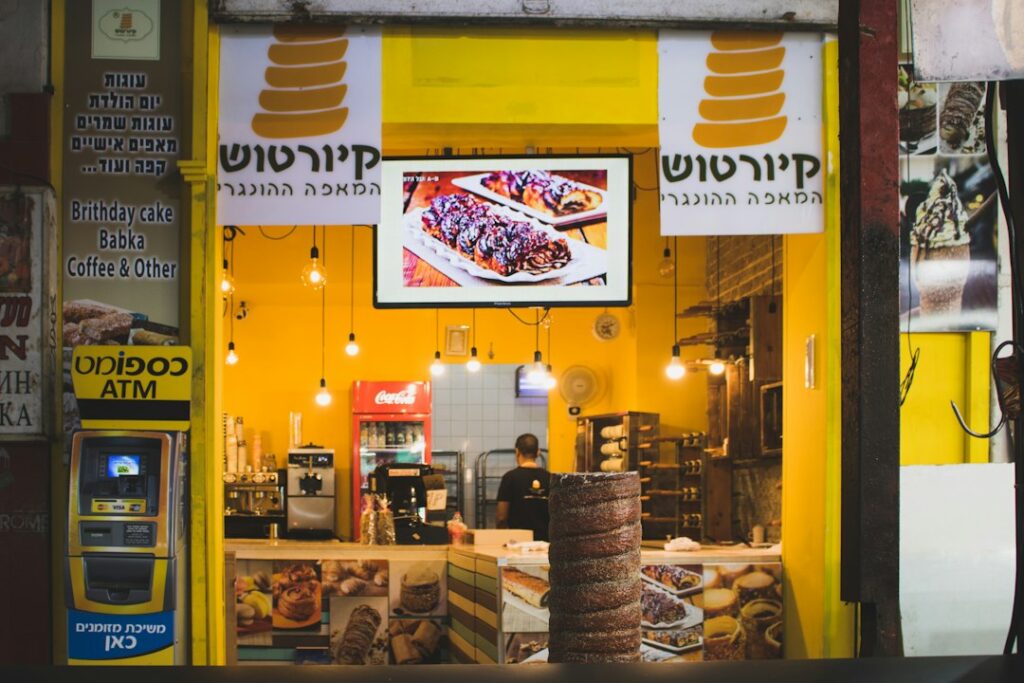
Learning how to order food in Hebrew becomes much easier when a few practical phrases are learned as complete expressions rather than isolated vocabulary words. For residents of Englewood, NJ, these phrases can be useful at Hebrew-speaking gatherings, family meals, cultural events, travel situations, or conversations with Hebrew-speaking friends and relatives.
The goal is not perfect grammar. A polite greeting, a clear request, and a few words about preferences can make a food order understandable and comfortable.
What should you say first when ordering?
Begin with a greeting and a polite request. In Hebrew, a simple “hello” followed by “I would like” is enough for many situations.
- שלום — *Shalom* — Hello
- אני רוצה… — *Ani rotze…* — I want… or I would like… when spoken by a man
- אני רוצה… — *Ani rotzah…* — I want… or I would like… when spoken by a woman
- בבקשה — *Bevakasha* — Please
- תודה — *Todah* — Thank you
For example:
שלום, אני רוצה קפה, בבקשה.
*Shalom, ani rotze kafe, bevakasha.*
Hello, I would like coffee, please.
The phrase אני רוצה is common and easy to remember. In a more formal setting, Hebrew speakers may also use אני gostaria—but that is not Hebrew. English speakers sometimes accidentally transfer phrases from other languages, so it is useful to remember that אני רוצה is the standard everyday expression.
How do you ask for a menu?
If the menu is not already available, use:
אפשר תפריט, בבקשה?
*Efshar tafrit, bevakasha?*
May I have a menu, please?
Important words include:
- אפשר — *Efshar* — Is it possible? or May I?
- תפריט — *Tafrit* — Menu
- מים — *Mayim* — Water
- חשבון — *Cheshbon* — Bill or check
To ask what a dish contains, say:
מה יש בזה?
*Ma yesh ba-zeh?*
What is in this?
You can also ask:
מה המנה הזאת?
*Ma ha-mana ha-zot?*
What is this dish?
The word מנה means “dish” or “serving.” The word זאת means “this” when referring to a feminine noun, and מנה is grammatically feminine.
How do you order food and drinks?
Many food words are recognizable because Hebrew menus often use familiar international terms. Still, pronunciation and grammatical gender can affect the sentence.
Common words include:
- לחם — *Lechem* — Bread
- סלט — *Salat* — Salad
- מרק — *Marak* — Soup
- אורז — *Orez* — Rice
- עוף — *Of* — Chicken
- בשר — *Bassar* — Meat
- דג — *Dag* — Fish
- ירקות — *Yerakot* — Vegetables
- גבינה — *Gvina* — Cheese
- קפה — *Kafe* — Coffee
- תה — *Teh* — Tea
- מיץ — *Mitz* — Juice
To order a specific item, place the food after אני רוצה:
אני רוצה מרק, בבקשה.
*Ani rotze marak, bevakasha.*
I would like soup, please.
אני רוצה סלט.
*Ani rotze salat.*
I would like a salad.
For a drink, you might say:
אפשר מים, בבקשה?
*Efshar mayim, bevakasha?*
May I have water, please?
Although מים is grammatically plural, it is treated as a standard word for water in everyday conversation.
How do you ask for changes or special instructions?
Food orders often require details such as removing an ingredient, adding something, or changing the portion. These phrases are especially useful for household dietary preferences and shared meals.
- בלי… — *Bli…* — Without…
- עם… — *Im…* — With…
- עוד… — *Od…* — More…
- קצת… — *Ktsat…* — A little…
- לא חריף — *Lo charif* — Not spicy
- חריף — *Charif* — Spicy
- צמחוני — *Tsimchoni* — Vegetarian, masculine form
- צמחונית — *Tsimchonit* — Vegetarian, feminine form
Examples:
בלי בצל, בבקשה.
*Bli batzal, bevakasha.*
Without onion, please.
עם גבינה, בבקשה.
*Im gvina, bevakasha.*
With cheese, please.
לא חריף, בבקשה.
*Lo charif, bevakasha.*
Not spicy, please.
A useful sentence for allergies is:
יש לי אלרגיה ל…
*Yesh li alergia le…*
I am allergic to…
For example:
יש לי אלרגיה לאגוזים.
*Yesh li alergia la-egozim.*
I am allergic to nuts.
For a serious allergy, use clear language and repeat the key ingredient. Do not assume that a dish is safe simply because an ingredient is not visible. Cross-contact can occur during preparation, so specific questions are appropriate.
How do you ask about quantity and size?
Hebrew uses several common words for size and amount:
- קטן — *Katan* — Small, masculine
- קטנה — *Ktana* — Small, feminine
- גדול — *Gadol* — Large, masculine
- גדולה — *Gdola* — Large, feminine
- חצי — *Chatzi* — Half
- אחד — *Echad* — One, masculine
- אחת — *Achat* — One, feminine

You can ask:
יש גודל קטן?
*Yesh godel katan?*
Is there a small size?
אפשר חצי מנה?
*Efshar chatzi mana?*
May I have half a portion?
Numbers are helpful when ordering several items:
- אחד — *Echad* — One, masculine
- אחת — *Achat* — One, feminine
- שניים — *Shnayim* — Two, masculine
- שתיים — *Shtayim* — Two, feminine
- שלושה — *Shlosha* — Three, masculine
- שלוש — *Shalosh* — Three, feminine
The correct number depends on the grammatical gender of the item. Beginners do not need to master every rule immediately. Clear pronunciation and pointing to the menu can prevent confusion.
How do you understand common questions?
The person taking the order may ask:
מה תרצה?
*Ma tirtze?*
What would you like? Spoken to a man.
מה תרצי?
*Ma tirtzi?*
What would you like? Spoken to a woman.
עוד משהו?
*Od mashehu?*
Anything else?
כאן או לקחת?
*Kan o lakachat?*
For here or to take away?
לשלם ביחד או בנפרד?
*Leshalem beyachad o benifrad?*
Pay together or separately?
Useful answers include:
- זה הכול — *Ze hakol* — That is all
- כאן — *Kan* — Here
- לקחת — *Lakachat* — To take away
- ביחד — *Beyachad* — Together
- בנפרד — *Benifrad* — Separately
If something is not understood, say:
סליחה, לא הבנתי.
*Slicha, lo hevanti.*
Sorry, I did not understand.
You can also ask:
אפשר לחזור, בבקשה?
*Efshar lachzor, bevakasha?*
Could you repeat that, please?
These phrases are useful because they keep the conversation polite while giving the speaker time to process unfamiliar Hebrew.
How does Hebrew pronunciation affect ordering?
Hebrew pronunciation is usually more important than perfect grammar in a food-ordering situation. Practice the following sounds:
- ח in words such as חריף has a breathy, throaty sound. A softer pronunciation is usually still understandable.
- ר may sound different depending on the speaker’s background.
- ע can be difficult for English speakers and is often softened in modern spoken Hebrew.
- צ sounds like “ts,” as in מיץ (*mitz*).
Stress also matters. In בבקשה, the emphasis is commonly toward the final syllable: *be-va-ka-SHA*. Listening and repeating short phrases is often more effective than studying pronunciation rules alone.
What is a simple practice dialogue?
A short exchange can combine the most useful expressions:
שלום. אפשר תפריט, בבקשה?
Hello. May I have a menu, please?
כן, בבקשה.
Yes, please.
אני רוצה סלט ומים. בלי בצל, בבקשה.
I would like a salad and water. Without onion, please.
עוד משהו?
Anything else?
לא, זה הכול. תודה.
No, that is all. Thank you.
Practicing this dialogue aloud can build confidence before a Hebrew-speaking meal or gathering. Start with polite requests, then add details such as ingredients, quantity, and dietary needs. Clear, respectful communication matters more than speaking without an accent.