

 See My Latest Article on HelloNation
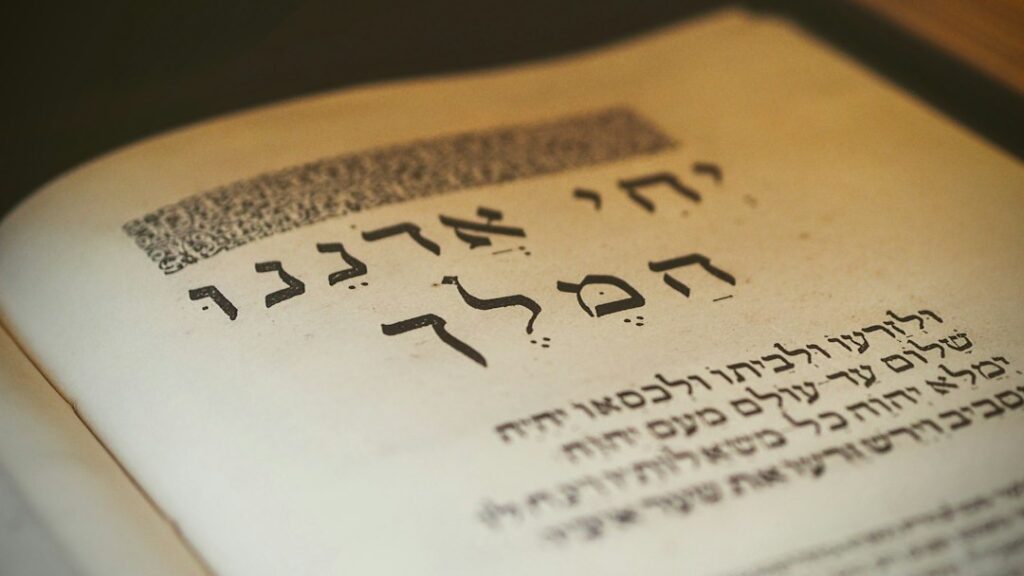
Hebrew names often carry several layers of meaning. A name may describe a quality, express gratitude, refer to a biblical story, honor a family member, or connect a child to Jewish history and language. For families in Englewood, NJ, learning how names work in Hebrew can make naming decisions, religious ceremonies, family records, and language study more meaningful.
What makes a Hebrew name different from an English name?
A Hebrew name is usually built from Hebrew words, roots, or traditional biblical forms. Many names are connected to ideas such as kindness, strength, wisdom, joy, peace, light, faith, or divine protection.
Hebrew names may also appear in more than one setting:
- A person may use an English name in school or professional life and a Hebrew name in religious settings.
- Some people use the Hebrew name every day.
- A Hebrew name may be used during a naming ceremony, a wedding, a religious service, or when being remembered in prayer.
- Families may choose a Hebrew name that sounds similar to a relative’s name rather than translating it directly.
The spelling can vary because Hebrew uses a different alphabet from English. For example, the name חנה may appear as Hannah, Chana, Hana, or Channah. These forms generally refer to the same Hebrew name, although family and community preferences differ.
How are Hebrew names formed?
Many Hebrew names come from the Hebrew Bible. Others developed through later Jewish history, religious literature, or modern Hebrew vocabulary. Some are made from phrases that refer to God, while others are ordinary Hebrew words used as personal names.
A useful example is the name *Miriam*. Its historical meaning is debated, and different explanations have been proposed. This illustrates a common issue: the meaning of an ancient name is not always certain. A name can remain important even when scholars do not agree on its original definition.
Names that clearly use familiar Hebrew words are often easier to explain:
- *Or* means “light.”
- *Tova* means “good” or “goodness.”
- *Simcha* means “joy.”
- *Shalom* means “peace” or “wholeness.”
- *Tikvah* means “hope.”
- *Chesed* refers to kindness, loving-kindness, or loyal care.
Pronunciation and spelling may change depending on whether a family follows Israeli Hebrew, traditional synagogue pronunciation, or an English-speaking Jewish tradition.
What are common Hebrew names for girls and their meanings?
Several Hebrew names remain widely recognized because of their biblical, linguistic, or cultural importance.
- *Avigail* or *Abigail* is commonly understood as “my father’s joy” or “the joy of my father.”
- *Chana* or *Hannah* is associated with grace or favor.
- *Devorah* or *Deborah* means “bee.”
- *Esther* is traditionally linked with ideas such as hiddenness or concealment, although its exact origin is discussed by scholars.
- *Leah* is a biblical name whose original meaning is uncertain.
- *Miriam* is an ancient biblical name with debated meaning and enduring religious significance.
- *Naomi* is associated with pleasantness or sweetness.
- *Rachel* means “ewe,” a female sheep, and is also the name of a major biblical matriarch.
- *Rivka* or *Rebecca* is traditionally associated with binding or joining.
- *Sarah* means “princess” or “noblewoman.”
- *Tamar* means “date palm,” a tree associated with beauty and strength.
- *Yael* means “ibex,” a mountain goat known for sure-footed movement.
Not every name has a single universally accepted translation. A careful explanation should distinguish between a well-established meaning, a traditional interpretation, and a modern association.
What are common Hebrew names for boys and their meanings?
Hebrew names for boys often refer to family relationships, moral qualities, nature, or religious ideas.
- *Aharon* or *Aaron* is a biblical name whose original meaning is uncertain.
- *Avraham* or *Abraham* is traditionally connected with “father of a multitude.”
- *David* means “beloved.”
- *Eitan* or *Ethan* means “strong,” “firm,” or “enduring.”
- *Elazar* or *Eleazar* means “God has helped.”
- *Gavriel* or *Gabriel* means “God is my strength.”
- *Isaac* means “he will laugh” or “he will rejoice.”
- *Levi* is associated with joining or attachment.
- *Matan* means “gift.”
- *Moshe* or *Moses* has a complex origin and is traditionally connected with being drawn from water.
- *Noach* or *Noah* is associated with rest or comfort.
- *Shimon* or *Simon* means “heard” or “he has heard.”
- *Yehuda* or *Judah* means “praise” or “thanksgiving.”
- *Yosef* or *Joseph* is traditionally understood as “he will add.”

Some names are used for people of any gender, particularly in modern Hebrew. Examples include *Noam*, meaning pleasantness or charm, and *Tal*, meaning dew. Contemporary naming practices may also create new combinations or use nature words that were less common in earlier generations.
Why do some people have both an English name and a Hebrew name?
Using two names is a common way to balance family tradition, daily convenience, and religious identity. A child might be given an English name such as Daniel and a Hebrew name such as Dan or Daniyel. In other families, the names have no sound relationship but share a meaning.
Some families name children after relatives who have died. The chosen Hebrew name may begin with the same Hebrew letter, share the same meaning, or honor the relative’s character. Practices differ among Jewish communities, so there is no single rule that applies to every household.
A Hebrew name may also include a parent’s name. In traditional religious usage, a person can be identified as “son of” or “daughter of” a parent, using terms such as *ben* or *bat*. This form may appear in ceremonies, religious documents, or prayers.
How should Hebrew names be pronounced?
Pronunciation depends on the Hebrew tradition being followed. The letter ח, for example, may be pronounced as a deep, raspy sound in some traditions, while English speakers may approximate it with an “h” sound. The letter כ can also have different pronunciations depending on whether it has a dot, known as a *dagesh*, in the Hebrew spelling.
A few practical guidelines help:
- Ask the family how the name is pronounced.
- Treat multiple English spellings as normal rather than assuming one version is correct.
- Learn the original Hebrew spelling when accuracy matters.
- Do not rely only on English pronunciation, especially for names containing ח, כ, צ, ע, or א.
- Remember that Israeli and traditional synagogue pronunciations may differ.
For local residents studying Hebrew, writing a name in Hebrew letters can be a useful early exercise. It connects vocabulary, sound, spelling, and cultural context in a single example.
Can a name’s meaning be misunderstood?
Yes. Online name lists sometimes present uncertain meanings as definite facts. Ancient names may have disputed origins, and some popular explanations are based on later tradition rather than direct linguistic evidence.
A reliable explanation should identify whether a meaning is:
- A direct translation of a modern Hebrew word
- A traditional interpretation
- A biblical association
- A scholarly theory about an ancient name
- A modern symbolic meaning chosen by a family
Meaning also develops through personal experience. A name connected with “light,” for example, may represent hope, learning, or a loved one to one family and carry a different association for another.
How can families choose a meaningful Hebrew name?
A thoughtful choice usually begins with the family’s priorities. Some families start with a relative’s name, while others begin with a value, biblical figure, sound, or Hebrew word.
It can help to consider:
- Whether the name is easy for family members to pronounce
- How the Hebrew spelling corresponds to the English spelling
- Whether the name honors a specific person or tradition
- Whether the name’s meaning is historically certain or symbolic
- How the name will sound in both religious and everyday settings
- Whether the family wants a traditional, modern, or nature-based name
The most meaningful Hebrew name is not always the rarest or oldest. It is the name whose sound, history, and associations fit the family using it.