

 See My Latest Article on HelloNation
Hebrew greetings often carry more meaning than a simple hello or goodbye. Some express peace, gratitude, or good wishes, while others reflect the time of day, the Jewish calendar, or the relationship between speakers. For residents of Englewood, NJ, learning a few common expressions can make conversations, community events, family visits, and religious settings feel more comfortable.
What does “shalom” mean?
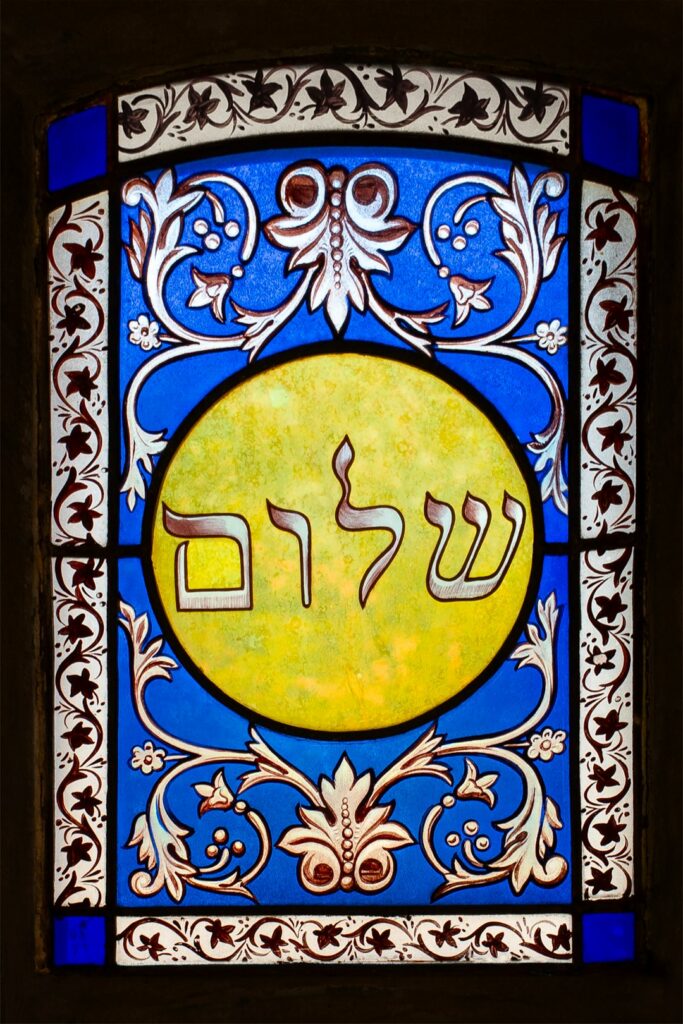
“Shalom” is the most widely recognized Hebrew greeting. It means “peace,” but it is commonly used to mean “hello,” “goodbye,” or “peace be with you,” depending on the situation.
Pronunciation: sha-LOHM
Examples:
- Shalom! — Hello!
- Shalom, ma shlomcha? — Hello, how are you? said to a man
- Shalom, ma shlomech? — Hello, how are you? said to a woman
The word is appropriate in both formal and informal situations. It can be used when entering a room, meeting someone, or leaving. In everyday speech, a simple “shalom” is usually enough.
“Shalom” also appears in the phrase Shabbat shalom, a greeting used before and during the Jewish Sabbath.
How do you say “good morning” in Hebrew?
The standard Hebrew expression for “good morning” is boker tov.
Pronunciation: BOH-ker tohv
It is generally used from the morning through late morning. A person may say it when arriving at work, greeting a neighbor, beginning a class, or meeting someone during the first part of the day.
Example:
- Boker tov! — Good morning!
The word tov means “good,” and boker means “morning.” Hebrew often places the descriptive word after the noun, so the phrase literally follows the pattern “morning good.”
What is the Hebrew greeting for the evening?
“Good evening” is erev tov.
Pronunciation: EH-rev tohv
Use it later in the day, particularly after the afternoon and into the evening. It works in both casual and more formal settings.
Example:
- Erev tov, mishpacha. — Good evening, family.
The word erev means “evening.” It is also found in expressions connected with Jewish holidays and Sabbath observance.
How do you say “good night”?
The common Hebrew expression for “good night” is laila tov.
Pronunciation: LYE-lah tohv
It is usually used when someone is going to sleep or when people are parting at night. It is not normally used as an opening greeting earlier in the evening.
Examples:
- Laila tov. — Good night.
- Laila tov, neshama sheli. — Good night, my soul or my dear, in an affectionate context.
A frequent beginner mistake is using laila tov as soon as the sun goes down. In most conversations, erev tov is more natural for “good evening,” while laila tov suggests that the day is ending.
What does “ma shlomcha” mean?
Ma shlomcha? means “How are you?” when speaking to a man.
Pronunciation: mah shlom-KHA
When speaking to a woman, use:
Ma shlomech?
Pronunciation: mah shlo-MEHK
The difference comes from Hebrew’s grammatical distinction between masculine and feminine forms. The phrase is related to shalom, so its literal sense is close to “What is your peace?”
In everyday conversation, a speaker may also use:
- Ma nishma? — What’s up? or How are things?
- Ma koreh? — What’s happening?
These are more conversational and may sound less formal than “How are you?”
A natural response can be:
- Beseder — Okay or all right
- Tov — Good
- Mezuyan — Great, excellent, or terrific
- Toda — Thank you
How do you say “thank you” and “you’re welcome”?
The Hebrew word for “thank you” is toda.
Pronunciation: toh-DAH
It can be used in nearly any setting, from receiving help to thanking someone for a meal.
For greater emphasis, say:
Toda raba — Thank you very much
Pronunciation: toh-DAH rah-BAH
The usual Hebrew equivalent of “you’re welcome” is bevakasha.
Pronunciation: beh-vah-kah-SHAH
Depending on context, bevakasha can also mean “please.” Tone and placement help determine the meaning.

Examples:
- Toda raba. — Thank you very much.
- Bevakasha. — You’re welcome.
- Bevakasha, shev. — Please, sit.
What does “mazel tov” actually mean?
Mazel tov is a congratulatory expression. It is used to celebrate a happy event or achievement, such as a wedding, birth, graduation, bar mitzvah, bat mitzvah, new job, or other milestone.
Pronunciation: MAH-zel tohv
Although English speakers sometimes use it to mean “good luck,” its more accurate meaning is “congratulations” or “good fortune.” It should generally be said after something positive has happened, not before an event as a wish for success.
Examples:
- Mazel tov on your graduation!
- Mazel tov to the whole family.
For an upcoming event, phrases such as “good luck” or “best wishes” may be more appropriate than mazel tov.
What is “Shabbat shalom”?
Shabbat shalom means “peaceful Sabbath” or “a peaceful Shabbat.” It is commonly exchanged from Friday afternoon through Saturday, particularly among people observing or acknowledging the Jewish Sabbath.
Pronunciation: sha-BAHT sha-LOHM
The phrase may be used in person, in a message, or when leaving a gathering before Shabbat. It is suitable for both religiously observant speakers and people using the expression as a warm cultural greeting.
A related phrase is Shavua tov, meaning “good week.” It is often said after Shabbat ends, wishing someone a positive week ahead.
Pronunciation: shah-VOO-ah tohv
How do you say goodbye in Hebrew?
A common way to say goodbye is lehitraot.
Pronunciation: leh-hit-rah-OHT
It literally suggests “until we see each other,” making it similar to “see you later.” It can be used with friends, relatives, classmates, and acquaintances.
Another useful expression is:
Yom tov — Have a good day or good holiday
Pronunciation: yohm tohv
For a more specific departure, a speaker might say:
- Lehitraot machar — See you tomorrow
- Lehitraot בקרוב — See you soon; the Hebrew word for “soon” is bekarov
In casual English conversation, some Hebrew speakers also use “bye,” particularly in mixed-language households. That does not make Hebrew greetings less authentic; language use naturally reflects family history, age, setting, and personal preference.
Which Hebrew greeting should beginners learn first?
Start with shalom, boker tov, toda, bevakasha, mazel tov, Shabbat shalom, and lehitraot. These expressions cover most everyday situations without requiring advanced grammar.
A few pronunciation guidelines help:
- Hebrew pronunciation varies somewhat by family, community, and tradition.
- The letter “ch” in words such as lehitraot or shabbat may sound different depending on the speaker.
- Stress is often placed near the end of a Hebrew word, but this is not true in every case.
- Speaking clearly and respectfully matters more than producing a perfect accent.
For local residents learning Hebrew through family connections, religious participation, cultural study, or conversation practice, greetings provide a practical starting point. They are short, easy to reuse, and closely connected to the values and occasions that shape daily Jewish life.