

 See My Latest Article on HelloNation
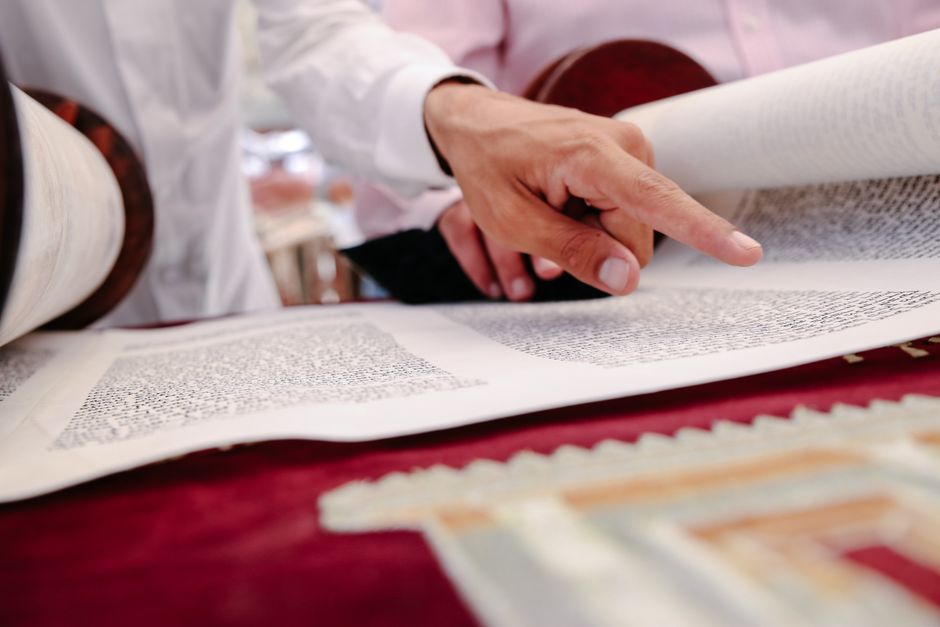
What does Hebrew instruction look like in Israeli schools?
Hebrew is taught in Israeli schools as both a language of communication and a foundation for learning across the curriculum. Students develop speaking, listening, reading, writing, vocabulary, grammar, and the ability to understand different types of texts.
The exact approach depends on the school’s educational stream, the student’s home language, and the grade level. A child in a Hebrew-speaking state school, a student in a Hebrew-language religious school, and an Arabic-speaking student learning Hebrew may follow different programs and learning goals.
For families in Englewood, understanding these differences helps explain why Israeli-style Hebrew education may feel more comprehensive than a class focused mainly on conversation, prayer, or vocabulary memorization.
How do young children begin learning Hebrew?
In the early grades, instruction emphasizes oral language, phonological awareness, vocabulary, and the relationship between spoken sounds and written symbols. Children learn to listen carefully, express ideas, recognize letters, and connect letters with sounds.
Reading instruction usually develops in stages:
- Recognizing and naming Hebrew letters
- Learning vowel markings, known as *nikud*
- Blending sounds into syllables and words
- Reading short sentences with increasing fluency
- Understanding stories, instructions, and informational passages
- Writing letters, words, sentences, and short compositions
Vowel markings are especially useful during the early stages because they make pronunciation more visible. As students become stronger readers, many everyday texts appear with fewer or no vowel markings. This requires children to use context, vocabulary knowledge, and familiarity with Hebrew word patterns.
Teachers do not generally treat reading as a decoding exercise alone. Students discuss stories, predict what may happen, explain characters’ actions, and connect texts to their own experiences.
Is Hebrew taught mainly through grammar?
No. Grammar is part of Hebrew instruction, but it is usually connected to reading, writing, speaking, and understanding meaning.
Students gradually notice how Hebrew words are formed and related. They learn about roots, prefixes, suffixes, verb patterns, gender, number, sentence structure, verb tense, and agreement between parts of a sentence. These concepts help students understand unfamiliar words and produce more accurate language.
Rather than learning every rule in isolation, students may examine a group of words, compare sentence forms, revise a paragraph, or identify how a change in verb form affects meaning. This makes grammar a tool for communication instead of a separate subject with little connection to daily language.
In later grades, Hebrew study includes more formal analysis of syntax, morphology, language registers, and the structure of complex texts.
How are reading and writing developed?
Israeli language education places substantial attention on reading fluency and comprehension. Students encounter literary works, informational texts, instructions, news-style writing, explanations, arguments, and digital material.
Reading lessons may ask students to identify a central idea, distinguish fact from opinion, infer information, interpret an unfamiliar expression, or compare two texts. The goal is not simply to pronounce the words correctly but to understand how a text is organized and what the writer is trying to accomplish.
Writing develops through a process. Students may plan an assignment, produce a first draft, receive feedback, revise the text, and prepare a final version. Common tasks include personal narratives, summaries, explanations, opinion pieces, reports, and responses to literature.
This process is useful for Hebrew learners outside Israel as well. A child who can speak conversational Hebrew may still need separate practice organizing ideas in writing, using formal vocabulary, and reading texts without vowel markings.
What happens in middle and high school?
In the middle grades, Hebrew instruction becomes more demanding and analytical. Students read longer and more sophisticated texts, study literary genres, expand their vocabulary, and work with increasingly complex sentence structures.
They are also expected to adapt language to context. The Hebrew used in a conversation with a friend differs from the Hebrew appropriate for a formal presentation, written assignment, academic explanation, or public message. Students learn to recognize these differences and make deliberate choices.
In high school, the focus commonly includes:
- Reading comprehension
- Written expression and organized argument
- Integrated writing based on several sources
- Grammar and language structure
- Literature and cultural texts
- Oral communication and presentation
- Editing, revision, and appropriate language use
Assessment may include tests, written assignments, classroom participation, projects, portfolios, and larger examinations. Schools may place different weight on these forms of evaluation depending on their educational framework.
Do all Israeli students learn Hebrew in the same way?
No. Hebrew instruction differs according to the language of instruction and the school system.
In Hebrew-speaking schools, Hebrew is generally the main language used for teaching most subjects. Students are expected to develop a high level of academic Hebrew because they encounter it in science, mathematics, history, civics, and other classes.
In Arabic-speaking schools, Hebrew is taught as an additional language. The goals may include practical communication, reading comprehension, writing, cultural understanding, and the ability to interact with Hebrew speakers. The amount of exposure outside the Hebrew class can vary considerably from one student to another.
Religious schools may also devote significant time to biblical Hebrew, prayer language, religious texts, and traditional sources. Biblical Hebrew and modern spoken Hebrew overlap, but they are not identical. A student may understand familiar prayers or scriptural passages while still needing practice with everyday conversation.
This distinction matters for families in the local community. A child learning Hebrew for family connection, religious study, travel, or heritage may need a different balance of skills than a child preparing for full academic study in Hebrew.
What role do Hebrew roots play?
Hebrew roots are one of the language’s most useful organizing features. Many related words are built from a group of consonants that carry a general meaning. Students learn to recognize connections among verbs, nouns, adjectives, and other forms.
For example, learning one root can help a student understand several words connected with writing, learning, speaking, or movement. Teachers use word families to expand vocabulary and help students make informed guesses about unfamiliar terms.
Roots are helpful, but they are not a complete shortcut. Vowels, verb patterns, prefixes, suffixes, historical development, and context all affect meaning. Effective instruction combines root awareness with extensive reading, listening, and actual use of the language.
How does this compare with Hebrew learning in Englewood?
Students in the community may have very different starting points. Some hear Hebrew at home, some recognize prayers or songs, and others encounter the language only in a classroom. Israeli schools typically provide many hours of exposure each week and use Hebrew throughout the school day, which gives students frequent opportunities to apply new language.
A local learner may need to recreate some of that exposure through age-appropriate reading, conversation, writing, listening, and cultural context. Memorizing isolated vocabulary can help, but it does not replace interaction with complete sentences and meaningful texts.
Parents can also expect uneven development. A child may speak comfortably but read slowly, read accurately but hesitate in conversation, or understand familiar religious language without following modern media or classroom discussion. These differences are normal because Hebrew includes several registers and forms of use.
The central lesson from Israeli schools is that Hebrew develops through a sequence: sound awareness, fluent reading, vocabulary growth, meaningful conversation, structured writing, and increasingly sophisticated interpretation. Each stage supports the next.