

 See My Latest Article on HelloNation
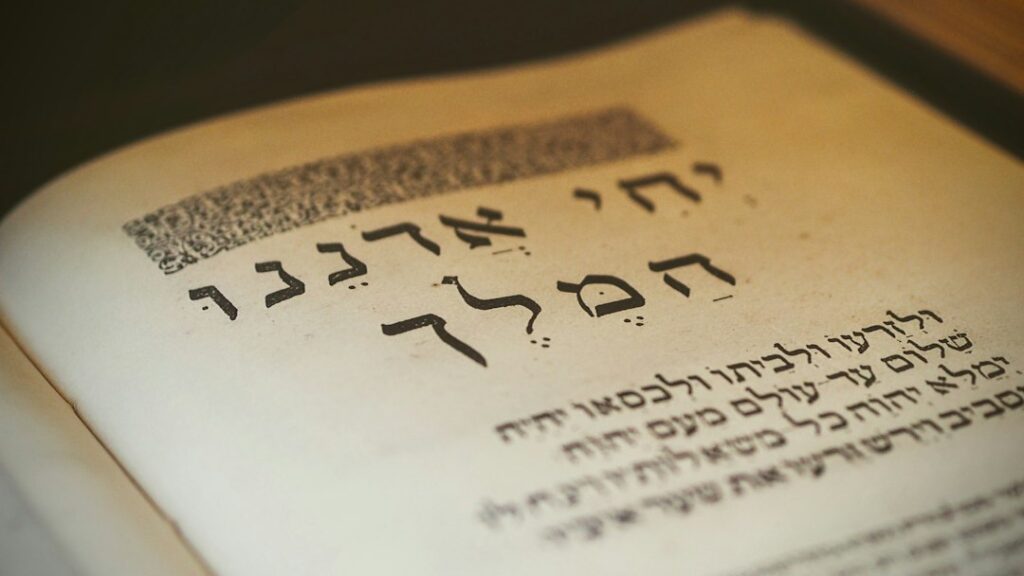
Learning to use a Hebrew-English dictionary properly involves more than finding an English word next to a Hebrew word. A dictionary can show pronunciation, grammar, word roots, gender, verb patterns, and differences in meaning. For Hebrew learners in Englewood, NJ, using these details correctly can make reading, conversation, religious study, family communication, and classroom practice much more manageable.
What does a Hebrew-English dictionary actually provide?
A Hebrew-English dictionary usually gives an English equivalent for a Hebrew word, but the entry may also include information that explains how the word functions.
A typical entry may show:
- The Hebrew word, sometimes with vowel markings
- An English definition or several possible meanings
- Transliteration, which represents Hebrew sounds with English letters
- The word’s grammatical gender
- Its part of speech, such as noun, adjective, or verb
- A plural form or feminine form
- A root or related word family
- A verb pattern, often called a binyan
- Example phrases or sentences
Not every dictionary includes all of these features. A compact learner’s dictionary may focus on everyday vocabulary, while a more advanced reference work may include biblical, literary, formal, or historical meanings.
The first definition listed is not automatically the correct one. The surrounding sentence determines which meaning fits.
Should Hebrew words be looked up by spelling or by root?
For many nouns, adjectives, and simple vocabulary items, looking up the complete word is the easiest starting point. Hebrew verbs require more attention because the form appearing in a sentence may be changed by tense, person, gender, or number.
For example, a learner may encounter a verb that begins with a prefix or ends with a personal suffix. The dictionary may list the basic form rather than the exact form seen in the text. In that situation, identify the verb’s root and pattern if possible.
Hebrew roots commonly contain three consonants. Words connected to writing, for example, may share the root כ-ת-ב. A learner who recognizes the root can connect related forms such as a verb, noun, or adjective. However, root analysis should not replace checking the full entry. Similar-looking roots can have unrelated meanings, and some words contain irregular forms.
A useful sequence is:
1. Copy the word exactly as it appears.
2. Separate prefixes or suffixes if they are recognizable.
3. Search for the remaining form.
4. Check the root and verb pattern.
5. Return to the original sentence to confirm the meaning.
How should Hebrew prefixes be handled?
Hebrew often attaches short grammatical words to the beginning of another word. A single written form may contain a preposition, conjunction, article, or pronoun together with the main word.
Common attached prefixes include forms meaning “and,” “the,” “in,” “to,” “from,” or “as.” If a dictionary search produces no useful result, the word may include one of these attached elements.
For example, a learner may see a word beginning with ו, ב, ל, כ, מ, or ה. These letters can function as prefixes, although their exact meaning depends on the word and sentence. Remove a possible prefix only when the remaining form appears to be a complete Hebrew word. Over-separating a word can create a form that is not actually used.
Hebrew spelling can also change slightly when prefixes attach. Vowel patterns may shift, and pronunciation may be affected. A dictionary with example phrases is especially helpful for confirming how the combined form works.
Why do vowel markings matter?
Hebrew can be written with or without niqqud, the small vowel marks placed above and below letters. Many modern texts omit these markings because fluent readers infer pronunciation from context.
For beginners, vowel markings provide valuable information. They can distinguish words that share the same consonants but have different pronunciations or meanings. They also help learners recognize how a word changes in different grammatical forms.
When a dictionary gives both an unmarked spelling and a marked spelling, compare them carefully. Do not assume that the English transliteration is a perfect guide to pronunciation. Transliteration systems differ. The same Hebrew sound may be represented in more than one way, and English letters cannot capture every Hebrew sound precisely.
Listening practice is useful alongside dictionary work. A written entry can explain how a word is spelled, but hearing the word helps confirm stress, syllable division, and pronunciation.
How can a learner choose the correct English meaning?
A Hebrew word may have several English equivalents because meaning changes with context. A word used in a conversation may not carry the same sense in a legal document, prayer, newspaper, children’s book, or biblical passage.
Read the entire sentence before choosing a definition. Then ask:
- Is the word a noun, verb, adjective, or another part of speech?
- What words appear immediately before and after it?
- Is the sentence formal, conversational, religious, literary, or technical?
- Does the word describe a person, object, action, emotion, or relationship?
- Does the English definition fit the grammar of the sentence?
Avoid replacing every Hebrew word with the first English word listed. A dictionary entry may present several related meanings, but only one may sound natural in the sentence.
It is also helpful to write down the meaning that fits the current passage rather than memorizing every possible definition at once.
What should learners know about Hebrew gender?
Hebrew nouns are generally treated as masculine or feminine. Gender affects adjectives, numbers, pronouns, and verb forms. A dictionary may identify gender with an abbreviation or by showing the word’s feminine or plural form.
This information matters even when the English translation does not show gender. For instance, an adjective must agree with the noun it describes. If the dictionary user memorizes only the English meaning and ignores gender, later sentence construction may become confusing.
Do not assume that grammatical gender always matches biological gender. Objects and abstract ideas also have grammatical gender. The dictionary’s labeling is a language feature, not a statement about the object itself.

How should verbs be looked up?
Hebrew verbs are often organized by root and binyan. The binyan provides a pattern that helps indicate how the verb is formed and, in many cases, how the action is understood.
A dictionary may list a verb in its basic citation form, commonly the third-person masculine singular in the past tense or another standard form, depending on the reference system. A learner should check the dictionary’s introductory explanation before searching extensively.
When looking up a verb, record:
- The root
- The binyan
- The basic meaning
- The infinitive
- The present, past, and future forms when available
- Any irregular changes
- Whether the verb commonly takes a particular preposition
Two verbs with related roots can have different meanings in different binyanim. Finding the root alone is not enough.
What are common dictionary mistakes?
Several habits make dictionary use less accurate:
- Searching only by English spelling or transliteration
- Ignoring Hebrew prefixes
- Treating every definition as interchangeable
- Assuming a word has only one meaning
- Skipping vowel markings and pronunciation information
- Failing to check part of speech
- Translating each word separately without reading the full sentence
- Using a biblical definition for a modern Hebrew passage without checking the context
- Assuming an online translation tool and a dictionary provide the same kind of information
A translation tool may suggest a complete sentence quickly, but a dictionary is better for understanding why a word means what it does and how it behaves grammatically.
How can dictionary practice fit into daily learning?
A practical routine is more effective than looking up dozens of unrelated words. Choose a short passage, such as a dialogue, news paragraph, prayer excerpt, or children’s story. Mark unfamiliar words, but first try to understand the general subject.
Look up only the words that block comprehension or illustrate an important grammar point. For each word, write the Hebrew form, a context-specific meaning, pronunciation notes, and one short example. Review the word later in a different sentence.
For households in Englewood, seasonal routines, school schedules, family gatherings, and community activities can provide natural topics for practice. Everyday vocabulary becomes easier to remember when it is connected to familiar actions rather than studied as an isolated list.
A Hebrew-English dictionary works best as a reasoning tool. It helps learners investigate a word, compare related forms, and confirm meaning in context. Used patiently, it supports stronger reading and speaking skills while reducing dependence on guesswork.