

 See My Latest Article on HelloNation
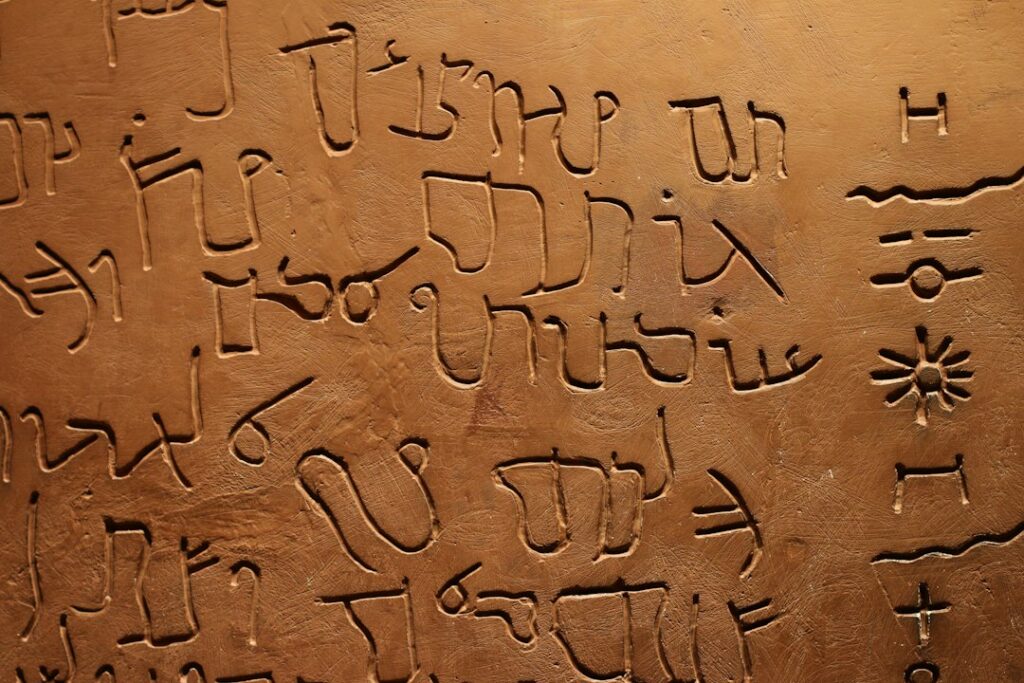
Learning to write your name in Hebrew is usually a process of matching sounds, not translating meaning. For residents of Englewood, NJ, the most accurate spelling depends on how the name is pronounced, whether it has a traditional Hebrew form, and whether the writing is intended for everyday use, religious study, artwork, or a formal document.
Is a name translated or written by sound?
Most first names from English and other languages are written in Hebrew according to their pronunciation. This process is called transliteration. The Hebrew letters are selected to represent the sounds as closely as possible.
For example:
- Michael may be written מיכאל
- Daniel may be written דניאל
- Sarah may be written שרה
- David may be written דוד
- Rachel may be written רחל
Some names already have long-established Hebrew forms. A person named John might use יוחנן in a biblical or historical setting, but יונתן or ג'ון could be more appropriate depending on the intended pronunciation and personal preference. There is not always one universally correct version.
A name can also have a Hebrew equivalent with a different pronunciation. “Elizabeth,” for example, may be connected with אֱלִישֶׁבַע, Elisheva, in a biblical context. That is different from simply spelling the English pronunciation in Hebrew letters.
Why can one name have more than one spelling?
Hebrew spelling often allows several reasonable options because modern Hebrew normally leaves out vowel marks. The reader understands the vowels from context, familiarity, and pronunciation.
The name “Jessica,” for instance, might be written ג'סיקה, using punctuation to represent the “J” sound, or with a spelling that differs slightly in informal writing. “Christopher” could appear as כריסטופר, while another writer might choose a variation based on pronunciation.
Differences may result from:
- The speaker’s accent
- Whether the name is pronounced in English, Hebrew, or another language
- The use of a traditional biblical name
- Whether the spelling is formal, artistic, or conversational
- The writer’s preference for showing vowels clearly
For this reason, a name written in Hebrew is not always a simple letter-for-letter conversion. English and Hebrew do not share the same alphabet or sound system, so certain sounds require approximation.
How does the Hebrew alphabet represent English sounds?
Hebrew is written from right to left. The alphabet contains 22 main letters, and some sounds are represented with combinations, punctuation, or letters that do not have an exact English equivalent.
Several English sounds require special attention:
- The “sh” sound is usually written with שׁ, as in שרון, Sharon.
- The “ch” sound may be written ח or כ, depending on whether it resembles the sound in “Bach” or the softer sound in “chair.”
- The “j” sound is often represented with ג׳, a gimel followed by a special mark.
- The “th” sound may be represented with ת, ט, or another approximate spelling.
- The “w” sound is commonly represented with ו, although pronunciation can vary.
- The “v” sound is generally written with ו.
- The “f” sound may be written with פ when the pronunciation calls for it.
- The “k” sound may be written with ק or כ.
Hebrew letters can also change shape at the end of a word. The final forms are ך, ם, ן, ף, and ץ. For example, a name ending in an “m” sound may use ם at the end rather than מ.
Should Hebrew vowel marks be included?
For most everyday name writing, vowel marks are not necessary. Hebrew readers commonly recognize words and names without them.
Vowel marks, known as *nikud*, may be helpful when:
- A name is being studied by a beginner
- The exact pronunciation needs to be shown
- A religious or educational text is being prepared
- The name could otherwise be read in more than one way
- A child is learning Hebrew reading

For example, Sarah can be written simply as שרה. With vowel marks, it may appear as שָׂרָה. The second version provides more pronunciation information, but it is less common in ordinary modern Hebrew writing.
A tattoo, family artwork, classroom project, or ceremonial item may require a carefully selected version. Removing or adding vowel marks can change how formal or instructional the writing appears.
What is the difference between a Hebrew name and a Hebrew spelling?
A Hebrew spelling represents the sounds of a name. A Hebrew name may be a separate traditional or religious name chosen for cultural, family, or ceremonial reasons.
Someone named Benjamin already has a common Hebrew form, בִּנְיָמִין or בנימין. Someone named Emily might use אמילי as a sound-based spelling, or choose a Hebrew name with a related meaning, such as אֶמֶת only if that choice has personal significance. The two approaches should not be confused.
A sound-based spelling is usually best when the goal is to write the person’s existing name. A traditional Hebrew name may be more suitable for religious use, family history, or a naming ceremony.
How can a person check the spelling of a specific name?
Start by writing the name phonetically in English. Divide it into its major sounds rather than its original letters. For example, “Jonathan” is closer to “JON-uh-than” than to a direct letter-by-letter sequence.
Then consider three questions:
1. Does the name have a recognized biblical or traditional Hebrew form?
2. Is the goal to preserve the English pronunciation?
3. Will the name be read by Hebrew speakers or mainly viewed by English speakers?
A spelling that looks familiar to an English speaker may be pronounced differently by a Hebrew reader. A spelling that is technically understandable may still feel unusual if it does not match common Hebrew usage.
Local families may encounter these questions in religious school assignments, family history projects, bilingual home settings, or preparations for a ceremony. In a dense, multilingual community such as Englewood, names may also be influenced by Yiddish, Russian, Spanish, French, Persian, or other language traditions. The original language of the name can affect the most natural Hebrew spelling.
What mistakes should be avoided?
The most common mistake is translating the meaning of a name when the person only wants the name written phonetically. “Rose,” for example, might be written רוז to preserve the sound, while ורד means “rose” as a flower and may function as a Hebrew name rather than a direct spelling.
Another mistake is assuming that every English letter has one fixed Hebrew equivalent. Hebrew spelling is based largely on sound, and the same English letter can represent different sounds.
It is also wise to check the direction of the writing. Hebrew runs from right to left, so names placed into artwork, jewelry, signs, or digital designs should be reviewed in their final layout. Reversing the order of letters is a serious error, even if every individual letter is correct.
Finally, do not rely only on an automatic transliteration tool for an important or permanent use. Such tools may produce a plausible spelling while missing a traditional form, a family preference, or the intended pronunciation.
Can a name be written in cursive Hebrew?
Yes. Hebrew has a printed, block-style script and a handwritten cursive style. The letters in cursive Hebrew can look substantially different from their printed forms, although the underlying alphabet is the same.
Printed Hebrew is usually easier for beginners to identify and is more suitable for educational materials or formal display. Cursive Hebrew is useful for handwriting practice but may be harder for a new learner to read.
For a name project, it can be helpful to learn the printed form first and then compare it with the cursive version. This reinforces both letter recognition and writing direction.
A practical standard for choosing the final spelling
The best spelling is the one that matches the intended pronunciation, fits the cultural setting, and reflects the person’s preference. There may be more than one defensible spelling, especially for names containing sounds that Hebrew represents differently from English.
For everyday learning, write the name from right to left, identify each sound, check whether a traditional Hebrew form exists, and add vowel marks only when they improve clarity. For permanent artwork or ceremonial use, accuracy should include pronunciation, letter order, script style, and the meaning intended by the person who will use the name.