

 See My Latest Article on HelloNation
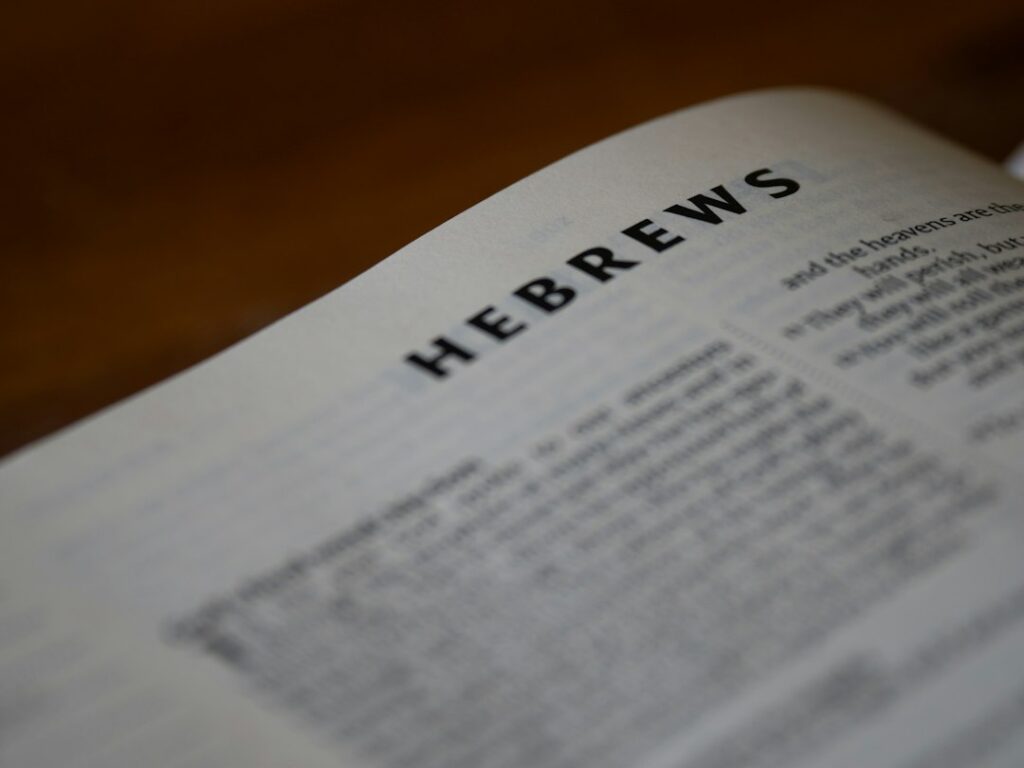
Hebrew has a distinctive role in Jewish diaspora communities: it connects people to prayer, history, religious study, Israel, and one another, even when most daily conversation takes place in another language. In Englewood, Hebrew may appear in homes, synagogues, schools, community programs, holiday gatherings, and informal conversations among people with different Jewish backgrounds.
The language is not used in exactly the same way by every Jewish community. For some people, Hebrew is primarily the language of worship. For others, it is a family language, a modern spoken language, an academic subject, or a way to explore Jewish identity. Understanding these different roles helps explain why Hebrew education can be meaningful at many ages and ability levels.
Why does Hebrew matter in Jewish communities outside Israel?
Hebrew serves as a shared cultural and religious language for Jewish communities around the world. Even when Jewish residents speak English, Spanish, French, Russian, or another language at home, Hebrew often remains present in prayers, holidays, religious texts, names, music, and communal customs.
Hebrew also provides continuity across generations. A child in one country may learn the same basic prayer words or biblical phrases as a child in a completely different country. This shared vocabulary creates a connection that does not depend on geography or nationality.
The language has both ancient and modern dimensions. Biblical and prayer Hebrew preserve older forms connected to Jewish history and religious literature. Modern Hebrew is used in everyday life in Israel, including conversation, education, media, science, and public life. These forms are related, but they are not identical in vocabulary, grammar, pronunciation, or style.
Is Hebrew mainly a religious language?
No. Hebrew can be religious, cultural, educational, historical, or conversational, depending on the learner and the setting.
In many diaspora communities, Hebrew is first encountered through prayer. Learners may recognize words from blessings, holiday services, Torah readings, or common religious expressions. They may learn to read Hebrew without fully understanding every word, especially when instruction focuses on pronunciation and participation in services.
Other learners study Hebrew to understand Jewish history and literature. Hebrew texts include biblical writings, rabbinic works, medieval poetry, modern novels, journalism, and contemporary songs. Studying the language can make these materials more accessible and reveal meanings that may not appear fully in translation.
Some families also use Hebrew as a spoken language at home. This may occur when relatives have lived in Israel, when parents want children to develop a connection to Israeli culture, or when Hebrew is part of a multilingual household.
How do diaspora families use Hebrew at home?
Home use varies widely. A family may use a few familiar Hebrew expressions during holidays, read a short prayer together, label household objects, or practice conversation during a dedicated study period. Another family may use Hebrew regularly between parents and children.
Common forms of home exposure include:
- Saying blessings before meals or during holidays
- Reading Hebrew children’s books
- Listening to Hebrew music or stories
- Discussing the meanings of Hebrew names
- Practicing greetings and simple questions
- Reviewing words connected to family traditions
- Comparing Hebrew phrases with English translations
Regular, brief exposure is often more sustainable than occasional intensive study. A few minutes of reading or conversation can help a learner become comfortable with Hebrew sounds and letter patterns.
What is the difference between learning to read Hebrew and speaking Hebrew?
Learning to read Hebrew and learning to speak Hebrew are related but separate skills. A person may read prayers accurately without being able to hold a conversation. Another person may speak modern Hebrew but have difficulty reading a traditional prayer text.
Reading instruction often emphasizes:
- Recognizing the Hebrew alphabet
- Understanding vowel markings
- Reading from right to left
- Pronouncing common letter combinations
- Identifying repeated words and grammatical patterns
Spoken-language instruction focuses more on listening, vocabulary, sentence structure, and immediate communication. Learners practice phrases such as greetings, descriptions, questions, requests, and everyday responses.
Neither goal is more legitimate than the other. A learner preparing for a bar or bat mitzvah may need strong reading skills, while someone interested in travel or family communication may prioritize conversation. Clear goals help determine what kind of instruction is most useful.
Why can Hebrew pronunciation differ between Jewish communities?
Hebrew pronunciation reflects geography, history, religious tradition, and language contact. Jewish communities developed distinct pronunciation patterns in Europe, North Africa, the Middle East, and other regions. Modern Israeli Hebrew also developed its own widely recognized pronunciation conventions.
Differences may involve:
- The sound of certain consonants
- The treatment of vowel sounds
- Stress within words
- The pronunciation of prayer passages
- The use of traditional or modern forms

These variations do not necessarily indicate that one speaker is correct and another is incorrect. In a diverse community, learners may encounter several accepted traditions. The most helpful approach is to identify the pronunciation system being taught and explain how it relates to the learner’s family or communal setting.
How does Hebrew support Jewish identity?
Language can preserve identity even when a family’s customs, background, or level of religious observance changes over time. Hebrew words often carry layers of meaning connected to memory, family stories, holidays, and shared experiences.
For some people, reading a familiar blessing connects childhood memories with present-day practice. For others, learning Hebrew later in life creates a new relationship with family history. Older adults may study the language to revisit an early education, while younger learners may use it to understand relatives, community traditions, or Jewish texts.
Hebrew should not be treated as a test of Jewish identity. People participate in Jewish life in many ways, and fluency is not a requirement for belonging. Language study can deepen connection, but it does not determine whether someone is authentically Jewish or meaningfully involved in the community.
What challenges do Hebrew learners commonly face?
The Hebrew alphabet can feel unfamiliar at first because its letters differ from English and the writing direction is reversed. Learners may also encounter texts without vowel markings, making pronunciation less predictable for beginners.
Other challenges include:
- Limited opportunities to hear Hebrew outside class
- Confusion between biblical, prayer, and modern vocabulary
- Anxiety about reading aloud
- Different pronunciation traditions within one family
- Difficulty finding time for consistent practice
- Assuming that memorizing vocabulary alone will produce fluency
Adults may also feel self-conscious if children or relatives appear to progress faster. Children often benefit from games, songs, repetition, and visual learning, while adults may prefer explanations of grammar, history, and patterns. Both age groups can make strong progress when instruction matches their needs.
How can local families make Hebrew study practical?
In a dense, diverse community such as Englewood, households may have different schedules, educational backgrounds, and levels of familiarity with Jewish practice. Hebrew learning works best when it fits naturally into those realities.
Useful habits include choosing one clear goal, practicing at a regular time, and connecting new words to familiar activities. A learner focused on prayer might begin with the vocabulary of a few common blessings. Someone interested in conversation might start with introductions, food, family, weather, and daily routines.
It is also helpful to treat mistakes as part of language learning rather than as evidence of failure. Reading one short passage carefully, understanding a few new words, and reviewing them later can be more productive than rushing through a long text.
Hebrew continues to serve diaspora communities because it can hold many meanings at once. It is a language of ancient texts and modern conversation, communal ritual and personal memory, formal study and everyday family life. For residents, Hebrew education can offer not only language skills but also a clearer connection to the diverse histories and traditions that shape Jewish community life.