

 See My Latest Article on HelloNation
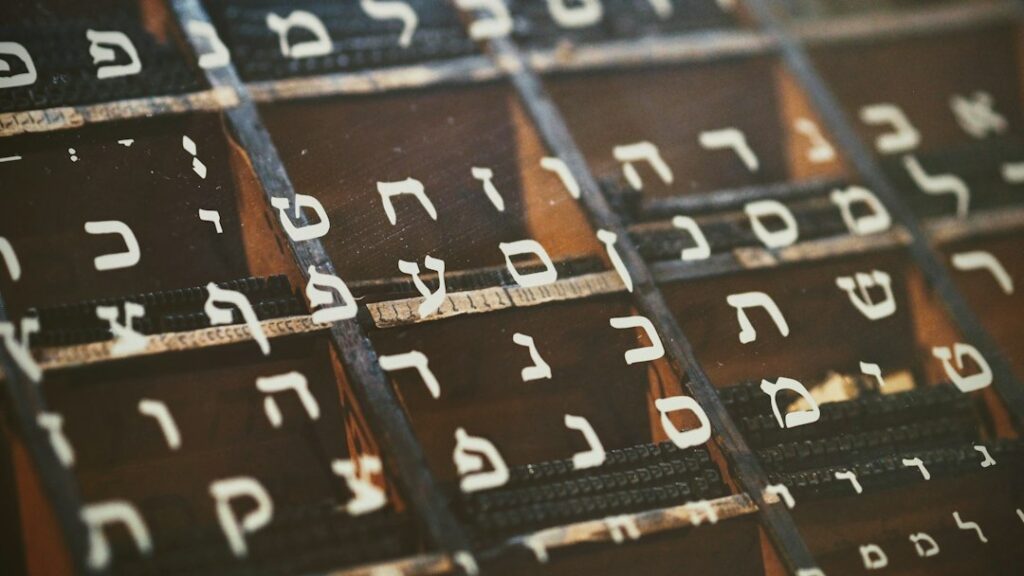
Hebrew is more than Israel’s official language or a subject studied in school. It is a central part of Israeli identity, connecting ancient texts with modern conversation, public life, family traditions, literature, music, and national memory. For residents of Englewood, NJ, learning about Hebrew can provide useful cultural context for family heritage, religious study, travel, community relationships, and children’s education.
Why does Hebrew matter so much in Israeli culture?
Hebrew serves as a shared language across many backgrounds. People in Israel may have family roots in different countries, speak different languages at home, or follow different cultural traditions. Hebrew gives them a common way to communicate in school, work, government, media, and everyday social life.
Its importance also comes from its long historical connection to Jewish civilization. Biblical and classical Hebrew were used for prayer, religious study, legal writing, poetry, and scholarship for many centuries. Modern Hebrew developed from those earlier forms while adding vocabulary and expressions suited to contemporary life.
This combination gives Hebrew a distinctive cultural role. A modern speaker can use the language to discuss technology, sports, or household errands while also encountering words and phrases that have deep connections to ancient texts.
How did Hebrew become a modern spoken language?
For many centuries, Hebrew was used mainly in religious, scholarly, and written settings rather than as the primary spoken language of daily life. Jewish communities around the world often spoke the local language or a Jewish language connected to their region.
During the modern revival of Hebrew, educators, writers, and community leaders worked to make it a practical spoken language. They developed new terms, promoted Hebrew-language schooling, and encouraged families to use Hebrew at home. This process did not simply reproduce biblical language. It created a flexible modern form with updated grammar, pronunciation, and vocabulary.
Today’s spoken Hebrew reflects several layers:
- Biblical and classical vocabulary
- Words developed during the modern revival
- Terms borrowed or adapted from other languages
- Informal expressions used by younger speakers
- Technical vocabulary for science, medicine, government, and digital communication
This history explains why Hebrew can feel both ancient and current. A learner may encounter a familiar word in a prayer book and then hear a related form in an ordinary conversation.
What role does Hebrew play in daily life?
Hebrew is present throughout public life. It appears on signs, school materials, public notices, news broadcasts, menus, forms, text messages, and social media. It is also the language through which many people experience national events, public debates, entertainment, and education.
In daily conversation, Hebrew often communicates more than literal meaning. Tone, word choice, and pronunciation can signal age, region, formality, humor, or social background. A short phrase may sound warm, serious, blunt, playful, or highly formal depending on the setting.
For students and families learning Hebrew outside Israel, this is an important distinction. Knowing vocabulary is useful, but understanding how people use that vocabulary is equally important. Greetings, requests, interruptions, expressions of agreement, and common conversational shortcuts all carry cultural information.
How is Hebrew connected to Jewish holidays and traditions?
Hebrew is closely associated with Jewish prayer, holidays, lifecycle events, and religious learning. Many people first encounter the language through a prayer book, a holiday reading, a Torah passage, or a family ceremony.
A translation can explain the basic meaning of a text, but Hebrew often preserves additional layers. Word roots may connect several related ideas. Repeated phrases may echo earlier passages. A familiar blessing may carry emotional meaning because it has been spoken by parents, grandparents, and previous generations.
This does not mean that every Hebrew learner must become fluent in religious language. It means that even a small amount of Hebrew knowledge can make traditional texts more accessible. Recognizing letters, identifying common roots, or understanding frequently repeated words can change the experience of participation.
Why are Hebrew roots useful for learners?
Many Hebrew words are built around a three-consonant root. The root often carries a general idea, while patterns of vowels and added letters help create related verbs, nouns, and adjectives.
For example, several words connected with writing, learning, or speaking may share related structures. Recognizing these connections helps learners remember vocabulary instead of treating every word as completely separate.
Root-based learning can also reveal cultural associations. A word may connect an action with a person who performs it, a place where it occurs, or an object used in the process. This makes Hebrew feel more organized and can support both reading and listening development.
Learners should still expect exceptions. Modern Hebrew includes irregular verbs, borrowed words, slang, and expressions whose meanings cannot be guessed perfectly from the root alone.
What is the difference between spoken and formal Hebrew?
Israeli Hebrew includes several registers, or levels of formality. News broadcasts, official documents, academic writing, classroom instruction, and casual conversation do not always use the same style.
Formal Hebrew may use longer sentence structures and vocabulary associated with public institutions or literary writing. Everyday speech often uses shorter phrases, common contractions, slang, and expressions that are not obvious from a textbook.
A balanced learning approach introduces standard grammar while also explaining ordinary speech. Students benefit from knowing which expressions are appropriate in a classroom, a family conversation, a public setting, or a written message.

This is especially helpful for children and adults in Englewood who may hear different forms of Hebrew through religious study, family members, Israeli media, and educational materials. Variation does not necessarily mean that one form is correct and another is incorrect. Often, the difference is based on context.
How does Hebrew influence literature, music, and humor?
Hebrew gives writers and artists a way to explore memory, belonging, conflict, family life, humor, and social change. Modern Hebrew literature often draws on the tension between old expressions and new experiences.
Music also shows how the language changes. Lyrics may use biblical references, everyday speech, wordplay, or borrowed expressions. A listener who knows some Hebrew can notice rhymes, repeated sounds, and double meanings that may disappear in translation.
Humor can be especially difficult to translate because it may depend on pronunciation, word roots, cultural references, or the contrast between formal and casual language. Studying these features helps learners understand why a phrase may be funny or emotionally powerful even when its direct translation seems ordinary.
What should local learners keep in mind?
Hebrew learning is not only memorizing letters and vocabulary. It is also learning how language reflects history, relationships, values, and daily habits.
For households in Englewood, useful learning goals may include:
- Reading Hebrew signs and familiar texts with greater confidence
- Understanding common prayers and holiday expressions
- Speaking with relatives or community members
- Helping children connect language study with culture
- Recognizing differences between formal Hebrew and everyday speech
- Building vocabulary through roots, patterns, and real examples
Progress can be gradual. Reading fluency, conversation, listening, and religious-text comprehension are related but separate skills. A learner may be strong in one area and still need practice in another.
The most useful instruction connects language forms to meaningful situations. A greeting, family conversation, holiday passage, or short news item can teach grammar while also showing how Hebrew functions as a living part of Israeli culture.
Why does Hebrew continue to evolve?
Hebrew remains a living language because speakers continue to adapt it. New technology, social habits, immigration, popular culture, and generational change all influence vocabulary and expression.
That evolution does not erase Hebrew’s historical foundation. Instead, it adds new layers. Ancient words may receive modern meanings, older expressions may return in new settings, and contemporary speakers may create informal language that later becomes widely understood.
For families and adult learners, this offers an encouraging perspective: Hebrew is not a fixed museum language. It is a language with a long memory and an active present, making its study relevant to both cultural heritage and everyday communication.