

 See My Latest Article on HelloNation
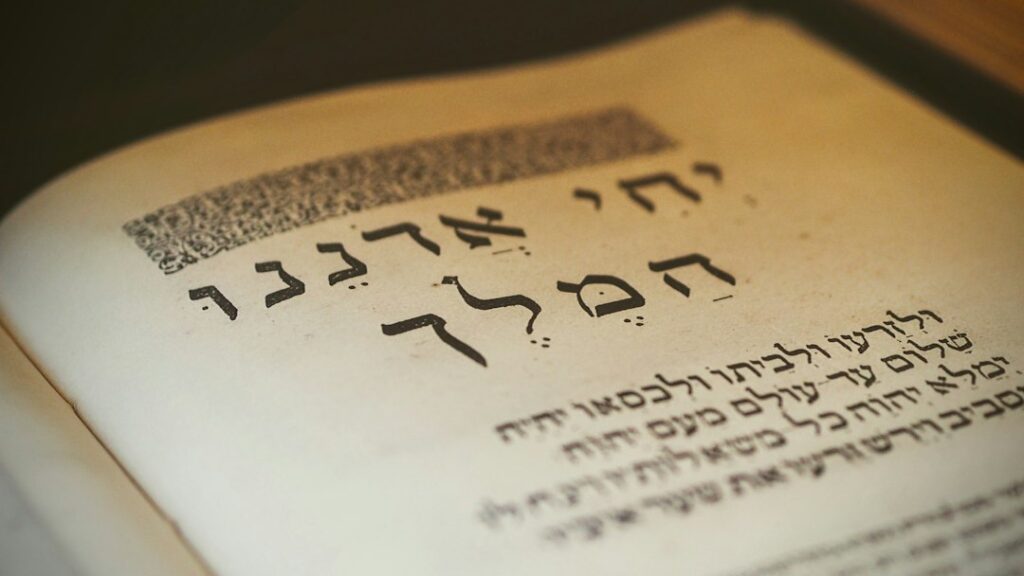
Learning Hebrew pronouns gives beginners a framework for understanding who is speaking, who is being addressed, and who is being described. In Englewood, NJ, residents may encounter Hebrew in family conversations, religious settings, cultural programs, travel preparation, or personal study. Pronouns are among the most useful early building blocks because they connect directly to everyday sentences.
Hebrew pronouns can seem more complicated than English pronouns because they change according to gender and number. The good news is that the system is organized and predictable once learners understand its basic patterns.
What are Hebrew pronouns?
Hebrew pronouns are words that stand in for people or things. The most familiar group is the personal pronoun, such as “I,” “you,” “he,” and “they.”
Here are the main Hebrew personal pronouns:
| English | Hebrew | Transliteration |
|—|—|—|
| I | אני | ani |
| You, masculine singular | אתה | ata |
| You, feminine singular | את | at |
| He | הוא | hu |
| She | היא | hi |
| We | אנחנו | anachnu |
| You, masculine plural or mixed group | אתם | atem |
| You, feminine plural | אתן | aten |
| They, masculine plural or mixed group | הם | hem |
| They, feminine plural | הן | hen |
The distinction between אתה and את is especially important. Both mean “you,” but אתה is used when speaking to one male and את is used when speaking to one female. A similar distinction appears in the plural forms אתם and אתן.
Why does gender matter so much in Hebrew?
Hebrew grammar generally marks gender in pronouns, verbs, adjectives, and many numbers. This means a learner cannot always translate an English sentence word for word and expect the Hebrew form to remain unchanged.
For example:
- אתה לומד — ata lomed — “you are studying” when speaking to a male
- את לומדת — at lomedet — “you are studying” when speaking to a female
- הוא מדבר — hu medaber — “he is speaking”
- היא מדברת — hi medaberet — “she is speaking”
The pronoun helps identify the person, while the verb often changes as well. Learning pronouns early makes these related changes easier to recognize.
Gender in Hebrew is grammatical. It does not always reflect a person’s identity or carry the same social meaning that it may have in English. In practical language learning, the goal is to understand how the grammar works and how speakers use it respectfully in context.
Why are pronouns useful in everyday conversation?
Pronouns allow speakers to form simple sentences quickly. A learner can use them to introduce people, describe activities, ask questions, and clarify who is involved.
Examples include:
- אני לומד עברית — ani lomed Ivrit — “I am learning Hebrew,” said by a male speaker
- אני לומדת עברית — ani lomedet Ivrit — “I am learning Hebrew,” said by a female speaker
- אנחנו גרים כאן — anachnu garim kan — “We live here”
- היא מורה — hi mora — “She is a teacher”
- הם בבית — hem babayit — “They are at home”
These sentences are short, but they establish important patterns. Learners begin to see how Hebrew places a pronoun before a verb, adjective, or noun phrase.
Pronouns are also essential for listening comprehension. In spoken Hebrew, verb endings may be difficult to hear at first. Recognizing אני, אתה, את, הוא, and היא can help listeners determine who is performing an action even when the rest of the sentence is unfamiliar.
Does Hebrew always require a pronoun?
No. Hebrew often allows the subject pronoun to be omitted because the verb ending identifies the person, gender, and number.
For example, לומד, or lomed, can mean “he is learning” or “I am learning” in certain contexts, depending on the verb form and surrounding conversation. A speaker may use אני לומד, “I am learning,” when clarity is needed, but the pronoun may be left out when the subject is already obvious.
This differs from English, where a subject is normally required. Learners should therefore practice both forms:
- אני קורא — ani kore — “I am reading”
- קורא — kore — “is reading” or “am reading,” depending on context
Pronouns are often added for emphasis, contrast, or clarification. For example, אני רוצה, “I want,” may emphasize the speaker’s preference, especially when comparing it with another person’s choice.
What is the difference between personal and possessive pronouns?
Hebrew expresses possession differently from English. Instead of using a separate word equivalent to “my” or “your” in every situation, Hebrew may attach possessive endings to nouns or use the word של, meaning “of” or “belonging to.”
Common examples with של include:
- הספר שלי — hasefer sheli — “my book”
- הבית שלך — habayit shelkha or shelakh — “your house,” depending on the person addressed
- המורה שלנו — hamora shelanu — “our teacher”
The word שלך has different pronunciations and grammatical forms depending on whether the listener is male or female. This is another reason that gender awareness matters beyond the basic personal pronouns.
Possessive endings also appear in more formal, literary, or traditional Hebrew. Learners may encounter forms such as ספרי, “my book,” or ביתנו, “our house.” These forms are less central to beginner conversation but remain important for reading, prayers, formal writing, and older texts.
How do pronouns connect to Hebrew verbs?
Hebrew verbs change according to person, gender, and number, particularly in the past and future tenses. Pronouns provide a reference point for understanding these patterns.
In the past tense, for example:
- אני כתבתי — ani katavti — “I wrote”
- הוא כתב — hu katav — “he wrote”
- היא כתבה — hi katva — “she wrote”
- אנחנו כתבנו — anachnu katavnu — “we wrote”

In the future tense, the verb forms also change:
- אני אכתוב — ani echtov — “I will write”
- הוא יכתוב — hu yichtov — “he will write”
- היא תכתוב — hi tichtov — “she will write”
- אנחנו נכתוב — anachnu nichtov — “we will write”
Studying the pronoun and verb together is more effective than memorizing either one in isolation. It helps learners recognize complete sentence patterns instead of individual vocabulary items.
What mistakes do beginners commonly make?
The most common mistake is confusing אתה and את. Because the difference is represented by a single letter in Hebrew writing and a small pronunciation change in speech, beginners may need repeated practice.
Other frequent difficulties include:
- Using אתם when speaking to a group of women instead of אתן
- Forgetting that a mixed-gender group generally uses the masculine plural form
- Treating אני as gendered, even though it means “I” for all speakers
- Translating English “it” directly, even though Hebrew nouns have grammatical gender
- Assuming Hebrew always needs an explicit subject pronoun
- Confusing הוא, “he,” with היא, “she,” especially while listening
A useful study method is to practice each pronoun with a small set of familiar verbs, such as “to learn,” “to speak,” “to live,” “to read,” and “to write.” Repetition with meaningful sentences is usually more effective than memorizing a chart alone.
How can local learners practice pronouns naturally?
Residents studying in a dense, multilingual community may already hear different languages used in homes, schools, congregations, and community activities. That environment can support Hebrew practice, especially when learners focus on short, repeatable exchanges.
Useful practice activities include:
- Introducing oneself with אני and describing a daily routine
- Asking one person a question with אתה or את
- Describing family members with הוא, היא, הם, or הן
- Writing short labels for household objects and adding possessive forms
- Listening for pronouns in songs, conversations, lessons, or recorded readings
- Practicing both formal and conversational examples
Seasonal routines can also provide practical topics: studying at home during colder months, describing family gatherings, discussing weekly activities, or talking about plans. The subject matter matters less than using the pronouns accurately and repeatedly.
A strong foundation in Hebrew pronouns supports pronunciation, listening, verb conjugation, reading, and conversation. Once learners understand who each form refers to and why the form changes, many later grammar lessons become easier to organize and remember.