

 See My Latest Article on HelloNation
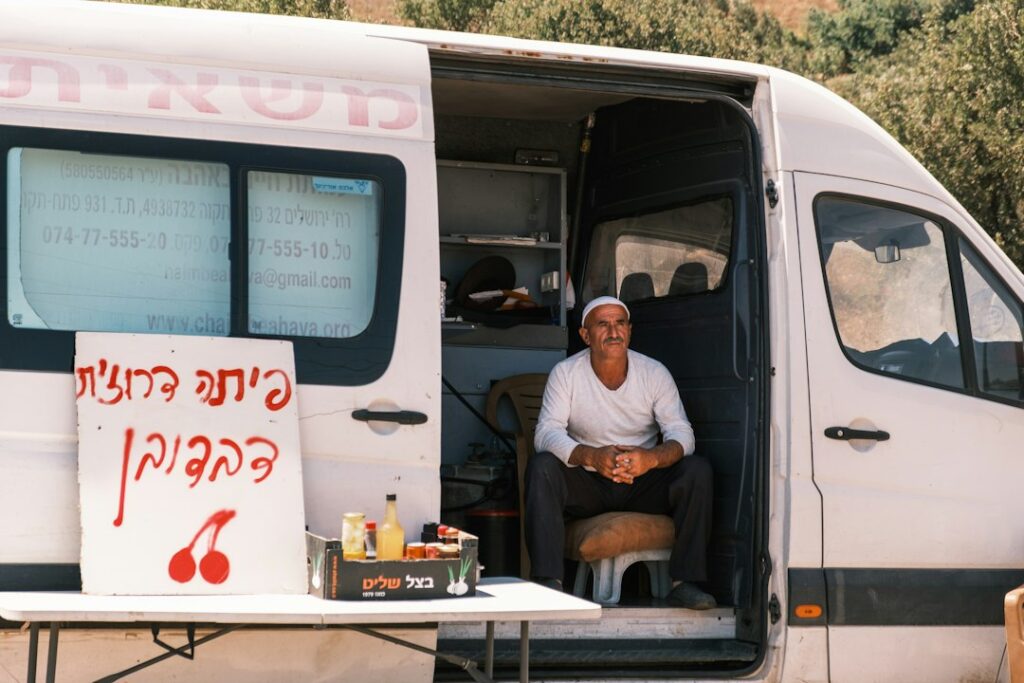
Traveling to Israel for work can be easier with a small set of practical Hebrew phrases. Business travelers do not need advanced fluency to handle greetings, transportation, meals, scheduling, and everyday workplace interactions with greater confidence. A few well-pronounced expressions also show respect for local language and customs.
For residents of Englewood, NJ, preparing for an international business trip often means fitting language study around work, family, and a busy local routine. The most useful approach is focused preparation: learn phrases that are likely to be used repeatedly, understand when they are appropriate, and practice listening as well as speaking.
Which Hebrew phrases are most useful on a business trip?
The most useful phrases are short expressions for greeting people, asking for help, confirming details, and managing routine interactions. Memorizing complete phrases is usually more practical than studying isolated vocabulary.
Greetings and courtesy
- Shalom — Hello, goodbye, or peace
- Boker tov — Good morning
- Erev tov — Good evening
- Ma shlomcha? — How are you? when speaking to a man
- Ma shlomech? — How are you? when speaking to a woman
- Toda — Thank you
- Toda raba — Thank you very much
- Bevakasha — Please or you are welcome
- Slicha — Excuse me or sorry
- Ken — Yes
- Lo — No
A simple “Shalom” followed by “Ma shlomcha?” or “Ma shlomech?” can make an introduction feel more natural. In a formal setting, a polite greeting and a clear handshake may be enough; there is no need to force an elaborate conversation in Hebrew.
How should a business traveler introduce themselves?
A basic introduction should include a greeting, name, occupation, and reason for the visit. The following phrases can be adapted to many professional settings:
- Shmi… — My name is…
- Ani mi-Englewood, NJ. — I am from Englewood, NJ.
- Ani osek b… — I work in…
- Ani po be-esek. — I am here on business.
- Ani same’ach lehakir. — Pleased to meet you, spoken by a man
- Ani smecha lehakir. — Pleased to meet you, spoken by a woman
- Eich korim lach? — What is your name? when speaking to a woman
- Eich korim lecha? — What is your name? when speaking to a man
Hebrew changes some words according to the speaker’s or listener’s gender. This can seem unfamiliar at first, but errors are generally understood, especially when the meaning is clear. A calm pace and a friendly tone matter more than perfect grammar.
Is English widely used in Israeli business settings?
English is common in many professional environments, especially in international business, technology, research, finance, tourism, and higher education. Even so, English ability should not be assumed in every interaction. Reception staff, drivers, restaurant workers, and administrative employees may prefer Hebrew or may understand only limited English.
Learning a few practical expressions helps in three ways:
1. It makes routine communication smoother.
2. It signals courtesy rather than expectation.
3. It helps a traveler recognize what is being said, even when the conversation continues in English.
A useful phrase for language limits is:
- Ani medaber ivrit ktzat. — I speak a little Hebrew, spoken by a man
- Ani medaberet ivrit ktzat. — I speak a little Hebrew, spoken by a woman
- Ani lo mevin kol kach. — I do not understand so well
- Efshar ledaber le’at? — Can you speak slowly?
- Efshar be-anglit? — Is English possible?
It is often better to say “I speak a little Hebrew” than to apologize repeatedly. This establishes realistic expectations and invites the other person to adjust the conversation.
What Hebrew is useful for meetings?
Business meetings require language for time, place, documents, questions, and follow-up. Travelers should know how to confirm information and ask for clarification without interrupting the flow of discussion.
Useful phrases include:
- Eifo hapgisha? — Where is the meeting?
- Ba-eizo sha’a? — At what time?
- Nipagesh besha’a… — We will meet at…
- Efshar lachzor al ze? — Can you repeat that?
- Ma ha-mashma’ut? — What does that mean?
- Ani maskim. — I agree, spoken by a man
- Ani maskima. — I agree, spoken by a woman
- Yesh li she’ela. — I have a question
- Tnu li dakha. — Give me a minute
- Nidaber acharei hapgisha. — We will speak after the meeting
The phrase beseder is especially useful. Depending on context, it can mean “okay,” “all right,” or “fine.” However, it does not always mean that every detail has been finalized. Confirm important arrangements with a direct question.
For example:
- Az, hapgisha macharat besha’a eser? — So, the meeting is tomorrow at ten?
- Ken, beseder. — Yes, okay.
How can travelers handle transportation and directions?
Transportation becomes easier when a traveler can recognize basic direction words and ask for confirmation. This is particularly helpful after a long flight, when signs or announcements may be difficult to follow.
- Eifo…? — Where is…?
- Eich magi’im le…? — How do I get to…?
- Yamin — Right
- Smol — Left
- Yashar — Straight
- Po — Here
- Sham — There
- Karov — Near
- Rachok — Far
- Kama ze oleh? — How much does it cost?
- Eifo ha-sherutim? — Where is the restroom?

Numbers deserve extra attention because times, prices, room numbers, and addresses can be confusing when heard quickly. Travelers should practice saying dates and times aloud rather than relying only on written notes.
A helpful confirmation phrase is:
- Ata yachol lekatov et ze? — Can you write that down? when speaking to a man
- At yechola lichtov et ze? — Can you write that down? when speaking to a woman
Written information reduces misunderstandings involving unfamiliar sounds, street names, and numbers.
What should travelers know about dining and informal conversation?
Meals are often part of business travel, and simple Hebrew can make ordering and social conversation more comfortable.
- Ani rotze… — I want…, spoken by a man
- Ani rotsa… — I want…, spoken by a woman
- Efshar mayim, bevakasha? — Water, please?
- Ani tsve’oni. — I am vegetarian, spoken by a man
- Ani tsve’onit. — I am vegetarian, spoken by a woman
- Yesh po machalim le-regishut? — Are there foods here for people with sensitivities?
- Ze ta’im. — This is tasty
- Lechaim — To life, commonly used as a toast
In professional meals, it is usually safest to observe before assuming. Meal timing, ordering customs, and conversation style can vary. A traveler does not need to imitate every local habit; attentiveness and flexibility are more useful than performance.
How can someone prepare before leaving home?
A short, consistent study plan is more effective than trying to learn a large amount of Hebrew immediately before departure. Residents with demanding schedules may benefit from dividing preparation into small daily sessions.
Focus on four skills:
- Recognition: Learn to identify common words on signs, menus, calendars, and messages.
- Pronunciation: Practice vowels and the sounds of kh, r, and ts.
- Listening: Hear phrases at natural speed, not only in slow lessons.
- Recovery: Learn what to say when a conversation becomes difficult.
Role-play is particularly useful. Practice checking into lodging, finding a meeting room, asking for a receipt, confirming a time, and explaining that you need English. Speaking aloud helps reveal which phrases feel difficult before the trip.
Hebrew uses a different writing system, but travelers do not need to become fully literate to benefit from the language. Learning to recognize a few common letters and words can still help with signs and basic navigation. Transliteration is useful during early study, though relying on it exclusively can make pronunciation less accurate.
What mistakes should business travelers avoid?
The most common mistake is treating Hebrew as a test of perfection. A traveler may pronounce a phrase imperfectly and still communicate successfully. The more serious problems usually come from guessing at times, addresses, prices, or instructions.
Avoid using humor about pronunciation, religion, politics, or national identity with people who have just been introduced. Avoid assuming that every Hebrew speaker follows the same religious or cultural practices. Professional courtesy is best shown through listening, punctuality, clear confirmation, and respect for personal boundaries.
A small working vocabulary, practiced regularly before departure, can support smoother travel and more confident professional interaction. The goal is not to conduct every meeting in Hebrew. It is to greet people respectfully, manage practical moments independently, and recognize when clarification is needed.