

 See My Latest Article on HelloNation
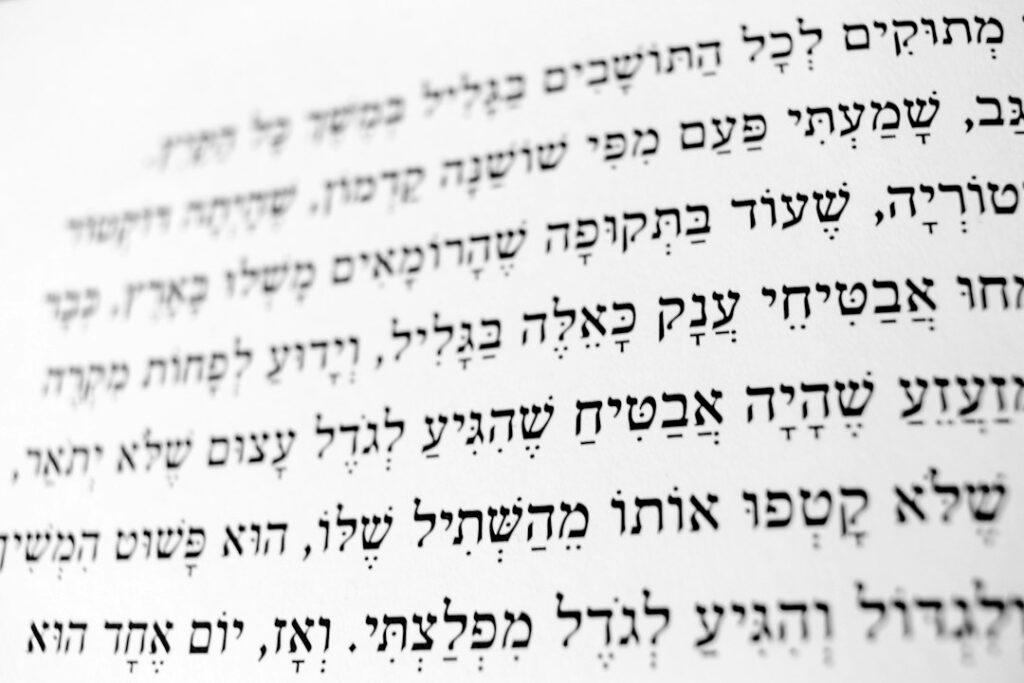
Translating Hebrew poetry requires more than replacing words from one language with words from another. A translator must also carry over rhythm, biblical echoes, wordplay, cultural references, grammar, and emotional tone. For readers in Englewood, NJ, studying this process can deepen both Hebrew learning and appreciation of poetry in translation.
Why is Hebrew poetry difficult to translate?
Hebrew poetry is challenging because a short line may communicate several ideas at once. A single word can carry a literal meaning, a biblical association, a modern conversational sense, and a sound pattern that matters to the poem.
Hebrew also uses a different grammatical structure from English. Verbs, pronouns, and nouns may reveal information about gender, number, or relationships that English leaves unstated. A translation must decide whether to preserve those details, explain them, or allow them to disappear for the sake of natural English.
The difficulty is not limited to vocabulary. Poetry depends on how language behaves in a particular line. A translation that is accurate word by word may still sound flat, awkward, or emotionally incorrect.
How does Hebrew grammar affect poetic meaning?
Hebrew grammar often makes a poem more compact than an English version. Pronouns can be attached directly to nouns or prepositions, and verb forms can communicate information efficiently. This allows Hebrew poets to create lines with multiple meanings without using many words.
Gender is another factor. Hebrew nouns and verbs are marked grammatically as masculine or feminine. Sometimes the gender is meaningful to the poem; sometimes it is simply part of Hebrew structure. English translators must decide whether to make that distinction visible.
Verb tense can also be difficult. Hebrew poetic language may use verb forms in ways that do not correspond neatly to English past, present, or future tense. A translator may need to choose between literal grammar and the poem’s sense of time. A line describing memory, prophecy, and present experience may intentionally blur those categories.
What role do biblical references play?
Biblical language is one of the most significant sources of meaning in Hebrew poetry. A poet may use a familiar phrase, image, name, or grammatical pattern that recalls a biblical passage without explaining the reference.
For readers who know the Hebrew Bible, the connection may be immediate. For others, the line may appear to be a simple description. Translators must determine how much of that background should be visible in the English text.
For example, an image of a garden, desert, stone, river, dove, or ladder may carry more than its physical meaning. It may suggest creation, exile, mourning, revelation, or return. A direct translation can preserve the image while losing the cultural memory attached to it.
There is no single solution. A translator may preserve the image and trust the reader, add a brief note, or choose wording that hints at the older source. Each choice changes how independently the poem works in English.
Why are sound and wordplay so hard to preserve?
Hebrew poetry often depends on sound relationships that cannot be reproduced exactly in English. A poet may place words with similar consonants together, use repeated vowel patterns, or create a link between two words that share a root.
Hebrew roots are especially important. Several words may come from the same three-letter root while carrying different grammatical forms or meanings. This creates an internal connection that may be invisible after translation.
A Hebrew poem might place a word for “writing” beside a word connected to “inscription” or “memory,” allowing the reader to feel a relationship between them. In English, the translator may have to choose between preserving the root connection and using the most natural English word.
Sound can also affect mood. Harsh consonants may support anger or conflict, while softer repetition may create intimacy or calm. Even when the literal meaning survives, the poem’s emotional texture may change.
Should a translator preserve the original line breaks?
Line breaks are part of a poem’s meaning. They can create suspense, emphasize a single word, separate two images, or produce an unexpected pause. Hebrew poetry may also use short lines and open spacing differently from common English poetic forms.
A literal line-by-line layout is not always the best choice. Hebrew word order may place the most important word at the beginning or end of a line, while English requires a different arrangement. Preserving the original breaks without preserving the original emphasis can create a misleading structure.
A skilled translation considers several elements together:
- The approximate length and pace of each line
- The location of pauses and turns
- Repeated words or phrases
- The position of emotionally important terms
- Whether the poem feels compressed, expansive, formal, or conversational
The goal is not mechanical sameness. It is to create a comparable reading experience.
What is lost when Hebrew is translated into English?

Some losses are unavoidable. A rhyme may disappear, a pun may require a footnote, or a biblical echo may be less familiar to English readers. Grammatical gender and root connections may also become less visible.
However, translation can reveal qualities that are difficult to notice in the original. An English version may clarify an ambiguous sentence, make an unusual image more accessible, or show how the poem functions as a complete literary work.
Translation is therefore not simply a process of losing meaning. It is also a process of choosing which meanings to emphasize. Two responsible translators may produce noticeably different versions because each gives priority to a different feature: literal accuracy, rhythm, imagery, clarity, or cultural resonance.
How can Hebrew learners compare a poem with its translation?
Students do not need advanced fluency to compare Hebrew poetry productively. A useful approach is to work in stages.
First, read the English translation for overall meaning and emotional effect. Then examine the Hebrew text, even if only a few words are familiar. Look for repeated terms, recognizable roots, names, and words that appear at the ends of lines.
Next, compare the order of words. Ask whether the translator changed the sequence to create natural English. Notice whether a single Hebrew word became a phrase or whether several Hebrew words were reduced to one English term.
It can also help to ask:
- Which image remains strongest in both versions?
- Which word seems difficult to translate?
- Does the English poem sound formal, intimate, abrupt, or conversational?
- Are repeated words preserved?
- Does a note explain something that the original reader might already know?
This kind of comparison is valuable in Hebrew language teaching because it connects vocabulary, grammar, culture, and interpretation. It also shows that meaning is shaped by context rather than by dictionary definitions alone.
Does a good translation need to be literal?
A good translation does not have to be strictly literal, but it must be accountable to the original. Literal wording can preserve information while damaging rhythm or tone. A freer version may sound like a poem in English while moving too far from the Hebrew.
The most useful translations often balance several responsibilities. They preserve the central images, emotional direction, and major ambiguities while allowing English syntax to function naturally. When a choice cannot preserve everything, the translator should make the tradeoff thoughtfully rather than hide it.
For readers in a multilingual community, this is an especially useful lesson. Translation is not a test with only one correct answer. It is an informed interpretation that makes the original poem available through another language while acknowledging what remains difficult, uncertain, or culturally specific.