

 See My Latest Article on HelloNation
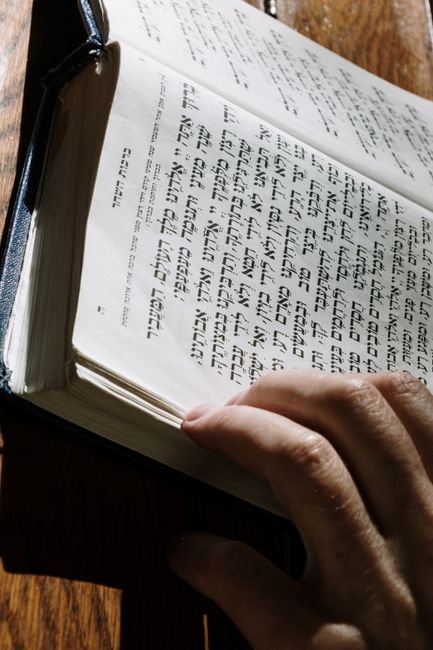
Hebrew education in Israeli schools is not limited to memorizing vocabulary or studying grammar rules. It is a continuous process that begins with oral language and early literacy, then develops into reading comprehension, writing, literature, formal grammar, public speaking, and analysis of complex texts.
For families in Englewood, NJ who are comparing Israeli and American approaches to language education, the main difference is that Hebrew in Israel is usually both a school subject and the primary language of daily life. Students encounter it in the classroom, at home, in public spaces, through media, and in other academic subjects.
Is Hebrew taught as a first language in Israeli schools?
In most Hebrew-language schools, Hebrew is taught as the central language of instruction and as a formal subject called *Hebrew language education*. Students learn to use Hebrew for conversation, reading, writing, research, and academic study.
The curriculum generally connects four areas:
- Listening and speaking
- Reading and understanding texts
- Writing and expressing ideas
- Knowledge of grammar, vocabulary, and language structure
These areas are taught together rather than as completely separate subjects. A reading assignment, for example, may lead to a classroom discussion, a writing exercise, and a lesson about sentence structure or word formation.
Hebrew education also includes literature and cultural texts. Students may read contemporary stories, poetry, informational writing, and selected works from Jewish sources. The goal is not only to understand individual words but also to interpret meaning, recognize different writing styles, and communicate clearly.
When does Hebrew instruction begin?
Hebrew language preparation begins in early childhood education, before formal elementary school. Preschool instruction focuses on language development, listening, conversation, vocabulary, storytelling, and the skills needed for later reading and writing.
In the first elementary grades, students typically work on:
- Recognizing letters and their sounds
- Connecting sounds to written symbols
- Reading words and short texts
- Developing reading fluency
- Writing sentences and short compositions
- Understanding spoken instructions and stories
- Participating in classroom discussions
Early education is designed as a progression rather than a single milestone. A child may recognize letters before reading fluently, or read accurately while still needing support with comprehension. Teachers monitor these different stages and adjust instruction accordingly.
For families supporting Hebrew learning at home, this means that reading speed alone does not show the full picture. Understanding, oral expression, vocabulary, and confidence are also significant parts of early progress.
How is reading taught?
Reading instruction combines decoding with meaning. Younger students first learn how written Hebrew represents speech, including the role of vowels and vowel markings in beginning reading materials. As students become more independent readers, vowel markings are used less consistently, and they learn to rely increasingly on context, vocabulary, and knowledge of word patterns.
Teachers may use several kinds of texts:
- Stories and narrative passages
- Informational articles
- Instructions and practical writing
- Poems and songs
- Dialogues and personal accounts
- Texts from Jewish and Israeli cultural traditions
Reading lessons often include prediction, questioning, identifying the main idea, explaining evidence, summarizing, and comparing information. Students are expected to discuss how a text is organized and why an author may have chosen particular words or expressions.
By the middle grades, reading instruction becomes more analytical. Students encounter longer and more complex texts and are asked to distinguish between facts, opinions, examples, conclusions, and implied meanings.
What role does grammar play?
Grammar is taught as a tool for understanding and producing language, not only as a list of isolated rules. Students gradually study pronunciation, word formation, vocabulary relationships, sentence structure, verb patterns, agreement, punctuation, and the organization of written language.
Hebrew grammar has features that require sustained study. These include:
- Verb patterns and changes in tense
- Gender and number agreement
- Definite articles and noun phrases
- Prefixes attached to words
- Root-and-pattern word formation
- Differences between spoken and formal written Hebrew
- Sentence structure and punctuation
Students may first encounter these concepts through examples in stories or conversations. Formal terminology and deeper analysis are introduced as learners become ready for it.
A common misconception is that Hebrew instruction is mainly about grammar because Hebrew has a highly structured system of roots and word patterns. In practice, grammar is only one part of language education. Effective instruction connects grammatical knowledge to reading, writing, speaking, and interpretation.
How does spoken Hebrew differ from school Hebrew?
Israeli students usually hear and use everyday spoken Hebrew outside school, but classroom instruction also introduces a more formal register. The difference is similar to the distinction between casual conversation and academic or professional writing in English.
Students learn that language changes according to purpose and audience. A conversation with friends, a news report, a school essay, and a formal presentation may use different vocabulary, sentence patterns, and levels of formality.
Teachers may ask students to:
- Retell an event in their own words
- Present information to the class
- Participate in a discussion
- Explain an opinion and support it
- Adjust wording for a particular audience
- Compare conversational and written expressions
This emphasis helps students become flexible communicators rather than simply accurate test-takers.
How does instruction change in middle and high school?
In middle school, Hebrew instruction becomes more advanced and independent. Students read a broader range of literary and informational texts, write longer responses, and study language structures in greater depth. They may also begin more deliberate work with biblical texts and other culturally significant sources, depending on the school sector and curriculum.
High school coursework commonly emphasizes:
- Reading comprehension
- Written argument and explanation
- Research and synthesis
- Literature
- Grammar and language knowledge
- Oral presentation
- Interpretation of texts from different periods
Assessment may include written examinations, classroom assignments, projects, presentations, and other forms of evaluation. The exact balance differs among schools and educational sectors.
Is Hebrew taught the same way in every Israeli school?
No. Israeli education includes several major school sectors, and Hebrew instruction can differ according to the students’ home language, religious setting, community, and educational framework.
In Hebrew-language schools, Hebrew is generally the main language of instruction. In Arabic-speaking, Druze, and Circassian educational settings, Hebrew is often taught as an additional language. Those programs may place greater emphasis on practical communication, listening, speaking, reading, writing, and preparation for academic or civic life.
Religious and ultra-Orthodox schools may also organize language, literature, biblical studies, and traditional texts differently from secular or state-religious schools. The broad skills remain related, but the selected texts, instructional priorities, and assessment methods may vary.
This is useful context for households in Englewood, NJ with bilingual or multilingual children. A student’s Hebrew needs depend not only on age but also on whether Hebrew is a home language, a school language, a heritage language, or an additional language being learned from the beginning.
What can local families learn from the Israeli approach?
The Israeli model shows the value of treating language as a complete system. Speaking, listening, reading, writing, vocabulary, grammar, and cultural knowledge reinforce one another.
For children learning Hebrew outside Israel, progress may be strongest when instruction includes more than worksheets. Age-appropriate stories, conversation, read-aloud practice, writing about familiar experiences, and exposure to both informal and formal Hebrew can create a more balanced foundation.
It is also helpful to distinguish between conversational fluency and academic fluency. A child may speak comfortably about family routines while still needing support with reading comprehension, formal writing, or unfamiliar vocabulary. Israeli schools address these abilities progressively across many years, rather than expecting them to develop all at once.
The central principle is straightforward: Hebrew is taught as a living language used for relationships, learning, culture, and participation in society. Its instruction develops from early oral language and literacy into increasingly sophisticated communication and critical reading.