

 See My Latest Article on HelloNation
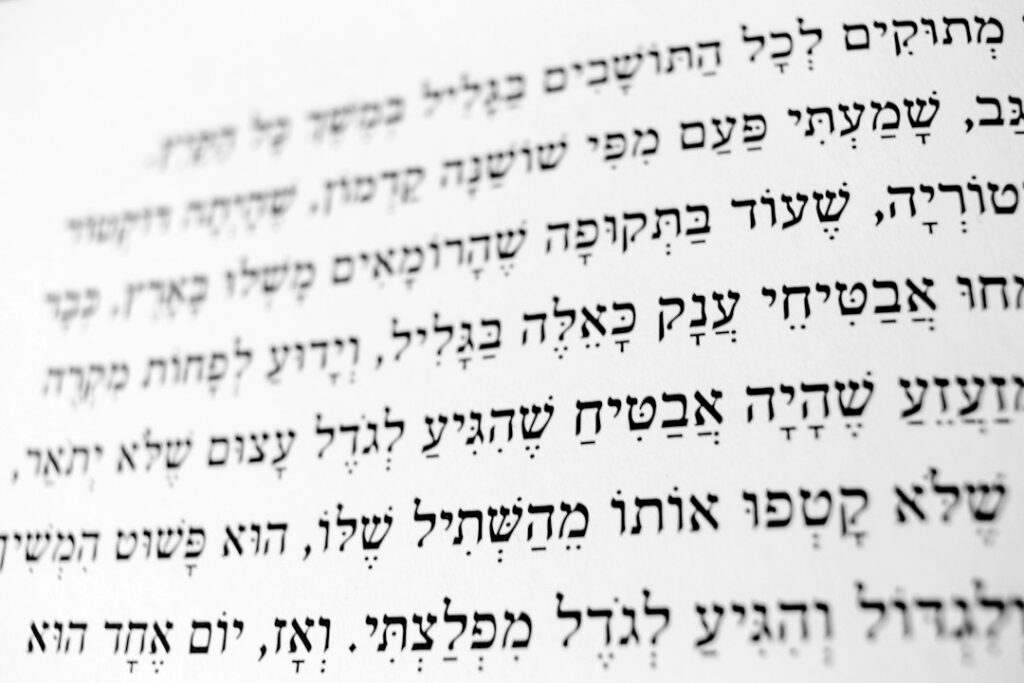
Hebrew is unique not only because of its ancient history and distinctive alphabet, but also because it is read and written from right to left. For learners in Englewood, NJ, this change in direction can feel unfamiliar at first. With practice, however, right-to-left reading becomes a predictable system rather than a barrier.
Why is Hebrew written from right to left?
Hebrew follows a right-to-left writing direction because of long-standing conventions that developed in the language’s writing history. Modern Hebrew continues this tradition in books, handwriting, signs, digital text, and educational materials.
English readers usually begin at the upper-left corner of a page and move toward the right. Hebrew readers begin at the upper-right corner and move toward the left. The same pattern applies line by line: after reaching the left side of one line, the reader moves down and begins the next line on the right.
The direction is not connected to pronunciation, intelligence, or reading difficulty. It is simply part of Hebrew’s written structure, much as left-to-right reading is part of English.
How does Hebrew reading differ from English?
The most noticeable difference is the direction of the line, but several related features affect how learners read.
In Hebrew:
- A page is generally opened and organized in the opposite direction from an English book.
- Words progress from right to left.
- Letters within a word are read from right to left.
- Numbers may still be written from left to right, creating mixed-direction text.
- Punctuation and digital formatting can behave differently from what English readers expect.
For example, the Hebrew word שלום, meaning “peace” or “hello,” begins with ש on the right and ends with ם on the left. A learner who tries to identify the letters from left to right may reverse the order and read the word incorrectly.
Reading direction also affects visual attention. English readers often use the left edge of a page as their starting point. Hebrew learners must train themselves to look first toward the right edge and then scan across the line.
Does Hebrew writing use a different alphabet?
Yes. Hebrew uses its own alphabet, known as the Hebrew alphabet or א"ב. It contains 22 basic letters, and the letters represent consonants. Some letters can also help indicate vowel sounds, especially in modern written Hebrew.
Unlike English, Hebrew has no upper- and lowercase letter system. Each letter has a standard form, although five letters have special final forms used when they appear at the end of a word.
These final forms are:
- כ becomes ך
- מ becomes ם
- נ becomes ן
- פ becomes ף
- צ becomes ץ
The final form does not change the sound of the letter. It signals that the letter appears at the end of a word. This is another feature that makes Hebrew visually different for beginners.
How are vowels shown in Hebrew?
Modern Hebrew is commonly printed without most vowel markings. Instead, readers learn to recognize words through the consonants, familiar patterns, context, and vocabulary.
Hebrew educational materials for beginners often include a system of dots and small marks called niqqud. These marks provide additional information about vowels and pronunciation. Children’s books, prayer texts, dictionaries, poetry, and introductory lessons may use niqqud more often than ordinary newspapers or adult reading materials.
A learner may first encounter a word with vowel marks and later see the same word without them. This can feel like learning two versions of the same writing system, but the underlying letters remain the same.
For example, a beginner may depend on vowel markings to pronounce a new word. As reading skills improve, the learner gradually becomes more comfortable identifying the word from its spelling and context.
Why can right-to-left reading feel difficult at first?
The challenge usually comes from having to build several new habits at the same time. A beginner may be learning unfamiliar letters, new sounds, different handwriting forms, and a new page direction in one lesson.
Common early difficulties include:
- Starting at the wrong side of a page.
- Confusing letters that look similar.
- Reading the letters in reverse order.
- Losing one’s place when moving to the next line.
- Mixing Hebrew and English directions in the same sentence.
- Expecting vowels to be written as separate, obvious letters.

These mistakes are normal. Reading direction is a physical and visual habit, so improvement depends on repeated exposure rather than memorizing a rule once.
Short reading exercises are often more effective than attempting long passages too soon. A learner can begin with individual letters, then syllables, short words, and simple sentences. Tracking each word with a finger or reading guide can help establish the right-to-left movement.
How does Hebrew work on phones and computers?
Digital devices support Hebrew text, but mixed Hebrew-English content can appear confusing. Hebrew sentences flow from right to left, while numbers, email addresses, web addresses, and English words may flow from left to right.
This can create a bidirectional text environment. For instance, a Hebrew sentence containing a date or a street number may not look as visually orderly as a sentence written entirely in one language. The text itself may be correct even if the arrangement initially seems unusual.
Keyboard layouts also differ. Learners who type Hebrew need to recognize that the physical keyboard may display a different set of characters when the language setting changes. Reading and typing reinforce each other, but they are separate skills and may develop at different speeds.
Digital Hebrew is especially relevant for local residents who communicate with relatives, participate in religious or cultural life, or use bilingual educational materials at home. Families may find it helpful to keep Hebrew and English text visually separate during early practice.
What happens with numbers, punctuation, and names?
Numbers generally retain their familiar left-to-right order, even inside right-to-left Hebrew text. This means a sentence can contain two writing directions at once.
Punctuation usually follows the surrounding text, but its position may appear different when Hebrew and English are combined. Names written in English may remain left-to-right within a Hebrew sentence. Dates, phone numbers, abbreviations, and measurements can also require extra attention.
These mixed-direction examples are not exceptions to the Hebrew system. They show how modern languages interact in multilingual writing. Learners should focus first on reading ordinary Hebrew words and sentences before worrying about every technical detail of bilingual formatting.
How can learners in Englewood build comfortable reading habits?
A consistent, low-pressure routine usually works best. Hebrew reading can be practiced at home through labels, short stories, songs with printed lyrics, prayer texts, children’s books, or simple handwritten notes. The goal is to make right-to-left movement familiar in more than one setting.
Useful habits include:
- Begin every Hebrew line at the right edge.
- Say the letter sounds while looking at the letters.
- Practice reading short words without rushing.
- Compare printed and handwritten forms gradually.
- Use vowel-marked material when pronunciation support is needed.
- Revisit familiar words so reading becomes automatic.
- Read aloud, even when working alone, to connect visual order with sound.
Households in Englewood may also encounter Hebrew in community, family, educational, or religious settings. Seeing the same words in books, signs, messages, and conversation helps learners understand that reading direction is part of everyday language use, not merely a classroom exercise.
Right-to-left reading becomes easier when it is treated as a complete system rather than an inversion of English. Hebrew has its own visual rhythm, letter forms, spelling patterns, and reading habits. Once those features become familiar, the direction feels natural and opens the door to richer understanding of Hebrew texts and communication.