

 See My Latest Article on HelloNation
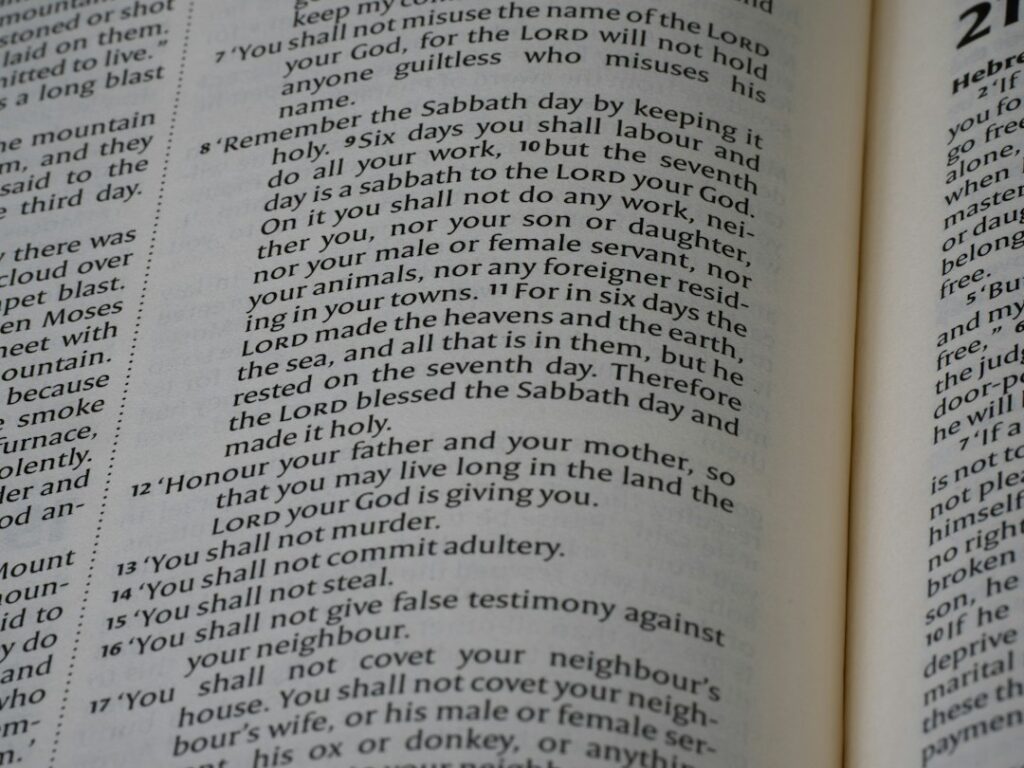
Translating Hebrew accurately requires more than replacing one word with another. Hebrew uses a different writing system, reads from right to left, and often depends heavily on context, grammar, vocalization, cultural background, and the relationship between speakers. For families, students, congregants, educators, and residents working with Hebrew documents or conversations in Englewood, NJ, a small mistake can change the meaning substantially.
Why can a simple Hebrew translation be misleading?
A direct word-for-word translation may sound understandable while still being inaccurate. Hebrew words can carry several meanings, and the correct choice depends on the sentence, subject, tone, and intended audience.
For example, the Hebrew word *shalom* can mean “peace,” but it is also commonly used as “hello” or “goodbye.” Translating it only as “peace” may be technically related to the word’s meaning but inappropriate in a greeting.
The same issue appears with:
- Words that function as both nouns and verbs
- Expressions that have an idiomatic meaning
- Biblical terms that differ from modern spoken usage
- Formal and informal forms of address
- Words whose meaning changes when a prefix or suffix is attached
A reliable translation begins with the full phrase or sentence rather than an isolated dictionary entry.
How does Hebrew grammar create translation mistakes?
Hebrew grammar differs from English in several ways, especially in gender, verb structure, word order, and definiteness. Ignoring these differences can produce sentences that are confusing or unintentionally humorous.
Hebrew nouns are generally masculine or feminine. Adjectives and verbs often must agree with the noun’s gender. A translation that overlooks this may assign the wrong gender to a person, object, or action.
Hebrew verbs also communicate information through their structure. The form of a verb can indicate whether an action is active, passive, reflexive, causative, completed, ongoing, or repeated. Translating only the root letters may miss the role of the verb pattern.
Another frequent error involves the definite article. Hebrew commonly uses the prefix *ha-* to mean “the.” A translator who overlooks this marker may turn a specific reference into a general one. “The book” and “a book” are not always interchangeable, particularly in legal, religious, educational, or family records.
Why are Hebrew vowels so important?
Printed Hebrew often appears without vowel marks, known as *nikkud*. Native readers usually infer pronunciation and meaning from context, but learners and translators may not have enough information to do that reliably.
The same consonants can represent words with different pronunciations and meanings. Without vowel marks, a written form may require careful interpretation of the surrounding sentence.
This is especially relevant when translating:
- Children’s reading materials
- Prayer texts
- Biblical passages
- Names and family records
- Poetry and song titles
- Educational worksheets
Adding vowels automatically is not always safe. A translator should first determine the intended word, then confirm its pronunciation and grammatical role. Guessing from the most familiar reading can lead to an incorrect translation.
What problems come from confusing Biblical and modern Hebrew?
Biblical Hebrew and modern Hebrew share vocabulary and grammatical features, but they are not identical. A word that sounds familiar in a religious text may have a different meaning, tone, or frequency in everyday speech.
Biblical passages can also contain poetic structures, parallel wording, ancient forms, and cultural references that do not translate naturally into contemporary English. Modern Hebrew may use the same root in a practical or conversational sense.
The reverse problem also occurs. A modern phrase may sound unnatural or overly casual if placed into a religious or historical context. Translators should identify the type of Hebrew before selecting an English equivalent.
A useful first question is: Is this text intended for prayer, study, conversation, education, official use, or literary reading? The answer affects vocabulary and style.
Why should translators avoid relying only on transliteration?
Transliteration represents Hebrew sounds with Latin letters. It can help readers pronounce a word, but it is not the same as translation.
For example, writing *todah* helps someone approximate the sound of תודה, but it does not explain that the word means “thank you.” Transliteration also varies. The Hebrew letter ח may be represented in several ways, and sounds such as ע or צ do not have exact English equivalents.
Problems arise when transliteration is treated as if it were a complete translation. It may hide:
- The original spelling
- The grammatical ending
- The distinction between similar sounds
- The difference between a personal name and an ordinary word
- The intended meaning of a phrase

For names, transliteration should usually preserve the established spelling used by the person or family. For ordinary vocabulary, the English meaning should be provided separately.
How can names and place references be mishandled?
Hebrew names may have traditional, modern, religious, or family-specific spellings. A single Hebrew name can appear in several English forms, and none should be selected casually when accuracy matters.
Translators should distinguish between:
- A person’s legal spelling
- A traditional English form
- A phonetic pronunciation guide
- A translation of the name’s meaning
Names should not automatically be translated just because they have a meaning in Hebrew. A person named דבורה may use “Devorah,” “Dvorah,” or another established spelling; replacing the name with “bee” would not be appropriate in a personal document.
Dates can also cause problems. Hebrew calendar dates may refer to religious observances, anniversaries, or historical events. Converting a date requires identifying the calendar system and understanding whether the date begins at sunset, as is customary in Jewish calendrical practice.
What cultural and idiomatic errors are common?
Some Hebrew expressions cannot be translated naturally by preserving every word. Hebrew often uses concise phrases that carry cultural meaning beyond their literal wording.
Examples include expressions used for congratulations, condolences, blessings, gratitude, or polite disagreement. A literal translation may sound abrupt in English even though the original is warm and conventional.
Tone deserves special attention. Hebrew conversation may be more direct than formal English, but directness does not automatically indicate anger or disrespect. Conversely, a polite Hebrew phrase may lose its social meaning if translated too casually.
The intended audience matters as much as the words. A translation for a child, classroom, family letter, synagogue study group, or government form may require different vocabulary and sentence structure.
What should be checked before accepting a translation?
A careful review should address meaning, grammar, context, and presentation. Before using a translated Hebrew text, ask:
- Does the English sentence express the full meaning rather than isolated words?
- Are names spelled according to the person’s established preference?
- Have Biblical, liturgical, and modern meanings been separated?
- Were Hebrew gender and verb forms interpreted correctly?
- Were dates checked against the appropriate calendar?
- Is the tone suitable for the audience?
- Does the translation preserve important ambiguity, or does it invent certainty?
- If the Hebrew has no vowel marks, was pronunciation confirmed from context?
For important records, a second reading by someone familiar with both Hebrew and the subject matter can reveal errors that a general translation tool may miss. This is particularly useful for family documents, educational materials, ceremonial texts, and passages where one word can affect the entire interpretation.
In a community with households that may use Hebrew for study, worship, family history, or education, the most dependable approach is deliberate rather than rushed: preserve the original text, identify its setting, examine the grammar, and translate the meaning that the sentence actually communicates.