

 See My Latest Article on HelloNation
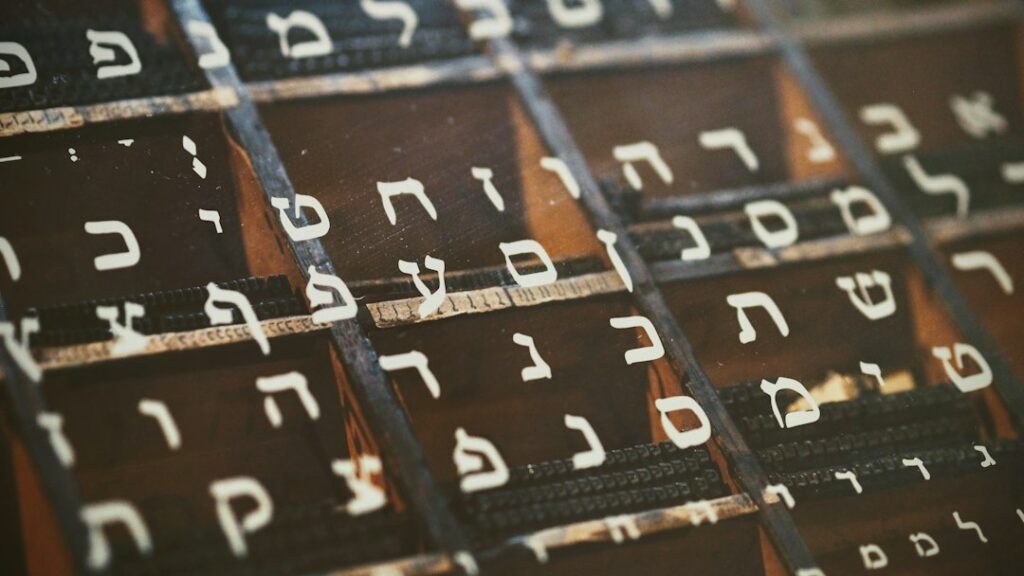
Hebrew and Arabic are closely related languages, but they are not mutually understandable. They share ancient roots, grammatical patterns, sounds, and some vocabulary, yet each has its own pronunciation, writing conventions, everyday expressions, and cultural history.
For residents of Englewood, NJ exploring Hebrew language teaching, this relationship can be useful. Familiarity with Arabic may make certain parts of Hebrew easier to recognize, while knowledge of Hebrew can provide a helpful foundation for approaching Arabic. However, learning one does not allow a person to speak or read the other automatically.
Are Hebrew and Arabic related?
Yes. Hebrew and Arabic both belong to the Semitic language family, a large group that also includes Aramaic, Amharic, Maltese, and several historical languages of the ancient Near East.
Their shared ancestry explains why certain words and grammatical structures resemble one another. For example, the Hebrew word *shalom* and the Arabic word *salaam* both relate to peace and well-being. Hebrew *melech* and Arabic *malik* both mean “king,” although their pronunciation differs.
The relationship is similar to the connection between English and German: the languages may share older roots and recognizable patterns, but speakers of one cannot simply understand the other without study.
How similar are the Hebrew and Arabic alphabets?
The writing systems look different today, but both developed from older Semitic scripts and are written from right to left.
Modern Hebrew uses the Hebrew alphabet, known as *alef-bet*. Modern Arabic uses the Arabic alphabet. Both scripts include letters that often represent consonants, while short vowels may be omitted in ordinary writing.
There are also important differences:
- Hebrew letters usually have separate printed forms and are not connected in ordinary writing.
- Arabic letters change shape depending on their position within a word and are commonly connected.
- Arabic has more letters representing sounds that do not have direct equivalents in modern Hebrew.
- Hebrew uses vowel marks mainly in children’s books, religious texts, poetry, dictionaries, and beginner materials.
- Arabic uses vowel marks in selected contexts, including educational texts, religious materials, and situations where precise pronunciation matters.
A person who reads Hebrew should not assume that an Arabic word can be decoded by recognizing the letter shapes. The scripts share historical connections, but the visual systems must be learned separately.
Do Hebrew and Arabic use the same word roots?
They often use similar root-based patterns. Many words in both languages are built around a group of usually three consonants. These consonants carry a broad meaning, while vowels and added letters help create related words.
For instance, the Hebrew root associated with writing appears in words such as *katav*, meaning “he wrote,” and *ktav*, meaning “writing” or “script.” Arabic also uses a related root system in which patterns built from consonants produce words connected with writing, reading, and books.
This can be helpful for language learners because it encourages recognition of word families rather than memorization of every word as unrelated. However, the same consonants do not always produce the same meaning. Similar-looking roots may have changed meaning over time or developed different uses in each language.
Which words are similar in Hebrew and Arabic?
Some familiar words are related or historically connected. Examples include:
- Hebrew *shalom* and Arabic *salaam*: peace, well-being, or a greeting
- Hebrew *bayit* and Arabic *bayt*: house
- Hebrew *yom* and Arabic *yawm*: day
- Hebrew *shemesh* and Arabic *shams*: sun
- Hebrew *dam* and Arabic *dam*: blood
- Hebrew *malach* and Arabic *malak*: angel
The resemblance is not always obvious because consonants may shift, vowels may differ, and modern pronunciation has developed separately. A related word may also have a narrower or broader meaning in one language.
False assumptions are common. A word that sounds familiar may not mean exactly what a learner expects, and a similar word may be pronounced differently enough to be difficult to recognize in conversation.
Are Hebrew and Arabic grammar similar?
They share several broad grammatical features, including grammatical gender, root-based word formation, and distinctions between singular and plural. Both languages also use patterns that connect nouns, verbs, and adjectives.
Still, the grammatical details are different. Hebrew and Arabic have different systems for verb conjugation, plural formation, pronouns, word order, and noun-adjective agreement. Arabic also has grammatical features that are less prominent in everyday modern Hebrew, while Hebrew has its own structures that do not map neatly onto Arabic.
Both languages distinguish masculine and feminine forms in many situations. This affects adjectives, verbs, and sometimes numbers. A learner who already understands grammatical gender may find the concept familiar, but the specific endings and rules still require separate practice.
Can a Hebrew speaker understand Arabic?
Usually not without previous exposure or study. A Hebrew speaker may recognize a few words, names, signs, or religious terms, especially if the vocabulary is familiar. Written Arabic may also reveal occasional patterns to someone who has studied Hebrew roots.
Spoken understanding is much more limited. Pronunciation, vocabulary, verb forms, and dialect differences create substantial barriers. Arabic itself includes many regional varieties, and everyday speech can differ significantly from formal written Arabic. Hebrew also has differences between formal, conversational, religious, and historical usage.
The same principle applies in reverse: an Arabic speaker may identify some Hebrew words or structures but generally cannot follow ordinary Hebrew conversation without learning it.
Does knowing Arabic make Hebrew easier to learn?

It can help, especially with pronunciation, grammar concepts, and root-based vocabulary. Learners familiar with Arabic may already understand:
- Reading from right to left
- The idea that short vowels may not always be written
- Grammatical gender
- Consonant-based word roots
- Certain related vocabulary
- Sounds produced in the throat or deep in the mouth
The advantage is supportive rather than automatic. Hebrew has sounds that Arabic speakers may pronounce differently, and Arabic speakers may need to adjust to Hebrew vowel patterns, verb forms, and everyday expressions.
English-speaking residents studying Hebrew may also benefit from learning about the relationship, but comparisons should remain limited. Treating Hebrew as “Arabic with different letters,” or Arabic as “Hebrew with different pronunciation,” leads to confusion.
Are religious or historical forms the same as modern spoken language?
No. Biblical Hebrew, Modern Hebrew, Classical Arabic, and contemporary spoken Arabic are not interchangeable categories.
Biblical Hebrew is the language of ancient Hebrew scripture. Modern Hebrew is used in daily conversation, education, media, and public life. Classical Arabic is associated with early literary and religious traditions, while Modern Standard Arabic is used in formal writing and many public contexts. Spoken Arabic varies by region and community.
A learner’s goal matters. Someone studying Hebrew for family communication, reading prayer, understanding literature, or participating in daily conversation may need different vocabulary and pronunciation practice. The same is true for Arabic.
What should local learners expect?
For households and adult learners in Englewood, Hebrew and Arabic can be studied comparatively without treating them as interchangeable. Comparing greetings, numbers, family terms, colors, and common roots can make lessons memorable. It is also useful to learn each language through complete phrases rather than isolated word lists.
A practical learning plan should include:
- The correct alphabet and sound system from the beginning
- High-frequency conversational expressions
- Listening practice with natural speech
- Clear explanations of masculine and feminine forms
- Root and word-family exercises
- Cultural context for greetings, names, holidays, and formal language
- Regular review of words that look or sound similar but differ in meaning
The central answer is straightforward: Hebrew and Arabic are close relatives, not the same language. Their shared history creates meaningful points of connection, but accurate reading, pronunciation, and conversation require separate study of each language.