

 See My Latest Article on HelloNation
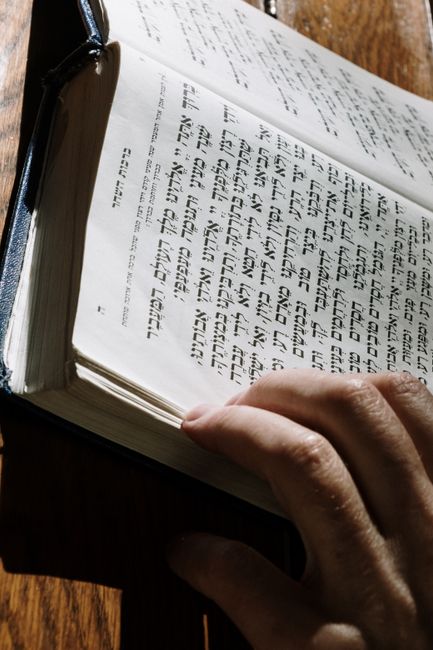
Why do Hebrew pronunciation traditions differ?
In Englewood, NJ, families and learners may hear Hebrew pronounced in noticeably different ways during synagogue services, religious study, Israeli conversation, or home practice. These differences usually reflect Jewish geographic traditions rather than mistakes.
The two broad traditions discussed most often are Ashkenazi and Sephardi pronunciation. Modern Israeli Hebrew developed largely from Sephardi and related Middle Eastern pronunciation patterns, while also incorporating features from European Jewish speech and the natural evolution of a modern language.
Pronunciation can vary within each tradition. A person’s family background, synagogue customs, level of Hebrew education, and whether the setting is religious or conversational all influence how words sound.
What is Ashkenazi Hebrew pronunciation?
Ashkenazi pronunciation developed among Jewish communities in Central and Eastern Europe. It is especially associated with traditional prayer, Torah reading, and religious study in Ashkenazi communities.
Common features include:
- The Hebrew vowel kamatz may be pronounced “oh” rather than “ah.” For example, שבת may sound closer to *Shabbos* in traditional Ashkenazi usage.
- The letter ת without a dagesh, known as *tav rafeh*, may be pronounced “s” rather than “t.” This helps explain the traditional pronunciation *Shabbos* instead of *Shabbat*.
- Some vowel patterns differ from modern Israeli Hebrew. The word ברוך, for example, may be pronounced with a more rounded “oy” or “oh” quality in certain Ashkenazi traditions.
- Stress may fall on a different syllable from the one commonly heard in Israeli Hebrew.
- Certain consonants may reflect European speech patterns rather than the pronunciation used in contemporary Israel.
Ashkenazi pronunciation is not a single uniform system. Lithuanian, Polish, Hungarian, German, and other traditions developed their own variations. Some communities preserve highly distinctive vowel patterns, while others use a pronunciation close to Israeli Hebrew during everyday speech.
What is Sephardi Hebrew pronunciation?
Sephardi pronunciation developed among Jewish communities with roots in the Iberian Peninsula and later communities throughout the Middle East and North Africa. It is commonly associated with many traditional prayer customs outside the Ashkenazi world.
Typical features include:
- Kamatz is generally pronounced “ah,” as in the first vowel of *Shabbat*.
- Tav rafeh is usually pronounced “t,” not “s.”
- Vowels tend to be pronounced more consistently according to the standard Hebrew vowel system.
- The pronunciation of certain guttural letters, such as ח and ע, may be preserved more clearly than in many European Jewish traditions.
- Stress often follows patterns that are closer to modern Israeli Hebrew.
Sephardi traditions also differ from one another. The Hebrew of a Moroccan Jewish community may not sound identical to the Hebrew of a Syrian, Iraqi, Yemenite, or Turkish Jewish community. Some communities preserve older distinctions between consonants that have merged in other varieties.
How does Israeli Hebrew fit into the comparison?
Modern Israeli Hebrew is not simply identical to classical Sephardi pronunciation, although it was strongly influenced by Sephardi-based pronunciation choices. It is a modern spoken language with its own sound patterns, vocabulary, rhythm, and informal expressions.
For many learners, the most noticeable differences are:
- שבת is usually pronounced *Shabbat*, not *Shabbos*.
- תורה is commonly pronounced *Torah* with an “ah” ending, rather than a traditional Ashkenazi form that may sound closer to *Toyre*.
- צ is generally pronounced like “ts.”
- ר is often produced as a throat or uvular sound, similar to the “r” heard in many modern Israeli speakers.
- The letters ח and כ may sound similar in everyday speech, although careful speakers can preserve distinctions.
- Final stress is common in many Hebrew words, but stress must be learned word by word because exceptions are frequent.
A learner attending both synagogue services and Hebrew classes may hear two systems in the same week. That is normal. Prayer pronunciation and conversational pronunciation often serve different purposes.
Which pronunciation is correct?
Both Ashkenazi and Sephardi pronunciation traditions are legitimate. “Correct” depends on the purpose and setting.
For a traditional prayer service, the most appropriate pronunciation is often the custom of the congregation. In a classroom focused on speaking with Israelis, modern Israeli Hebrew may be the practical target. In a family setting, preserving a parent’s or grandparent’s pronunciation may be an important cultural choice.
A pronunciation may be historically traditional without being the best match for a particular learning goal. For example, a student preparing to read from the Torah may need to follow the synagogue’s custom, while a student learning to communicate during travel or conversation may benefit from modern Israeli pronunciation.
The key is consistency. Switching between systems within the same reading can make it harder for listeners to follow and can confuse the learner.
Why do some Hebrew words sound so different?
Several differences are especially noticeable to English speakers.
Shabbat and Shabbos
The word שבת is pronounced *Shabbat* in Sephardi and modern Israeli usage. In many Ashkenazi traditions, the final ת without a dagesh becomes an “s” sound, producing *Shabbos*.
Torah and Toyre
The word תורה is commonly pronounced *Torah* in Sephardi and Israeli pronunciation. In some Ashkenazi traditions, the vowels shift, producing a pronunciation closer to *Toyre*.
Kiddush and Kidesh
The word קידוש may sound like *Kiddush* in modern Israeli and Sephardi speech. Some Ashkenazi traditions use a different vowel quality, making it sound closer to *Kidesh*.
Hebrew vowel names
Even the names of the vowels can vary. Kamatz is usually pronounced with an “a” vowel in modern Israeli and Sephardi settings, while some Ashkenazi speakers use a pronunciation closer to *komatz*. These differences are part of the tradition, not evidence that one speaker has learned the word incorrectly.
How should a learner choose a pronunciation?
The best choice depends on the learner’s immediate environment and long-term goal.
Consider these questions:
- Is the learner preparing for prayer or Torah reading in a particular congregation?
- Is the main goal conversational Hebrew?
- Does the family use an inherited pronunciation at home?
- Will the learner study with Israeli speakers, an Ashkenazi prayer community, or a Sephardi prayer community?
- Is the learner trying to recognize multiple traditions rather than speak only one?
For children and adults in Englewood, a practical approach may be to learn one primary system clearly while developing recognition of the others. A student can read *Shabbat* in modern Hebrew, understand that some speakers say *Shabbos*, and know that both refer to the same word.
Can different traditions be used together?
Yes, but the setting should guide the choice. Many communities naturally combine elements. A person may use modern Israeli pronunciation while preserving an Ashkenazi melody for prayer, or use Sephardi consonants with a family-specific rhythm.
Prayer melodies and pronunciation are related but not identical. A melody may sound Ashkenazi even when the reader uses modern Israeli vowels. Similarly, a speaker may use Sephardi pronunciation while following an Ashkenazi service order or tune.
Learners should avoid treating pronunciation as a test of identity. Language traditions carry history, family memory, religious practice, and community belonging. Respectful listening is often more valuable than trying to decide which version sounds most familiar.
What is the most useful approach for local learners?
A clear learning plan usually begins with one consistent pronunciation model. After basic reading becomes comfortable, the learner can compare common differences through familiar prayers, blessings, and vocabulary.
Useful practice includes:
- Recording the same short passage in two pronunciation traditions.
- Marking stressed syllables in new words.
- Listening for the difference between t and s in *tav rafeh*.
- Comparing *Shabbat* and *Shabbos* without treating either as an error.
- Practicing modern spoken Hebrew separately from liturgical reading.
- Asking which pronunciation a congregation or teacher expects before reading publicly.
The goal is not to erase variation. It is to understand what is being heard, choose an appropriate pronunciation for the setting, and speak or read with confidence and consistency.