

 See My Latest Article on HelloNation
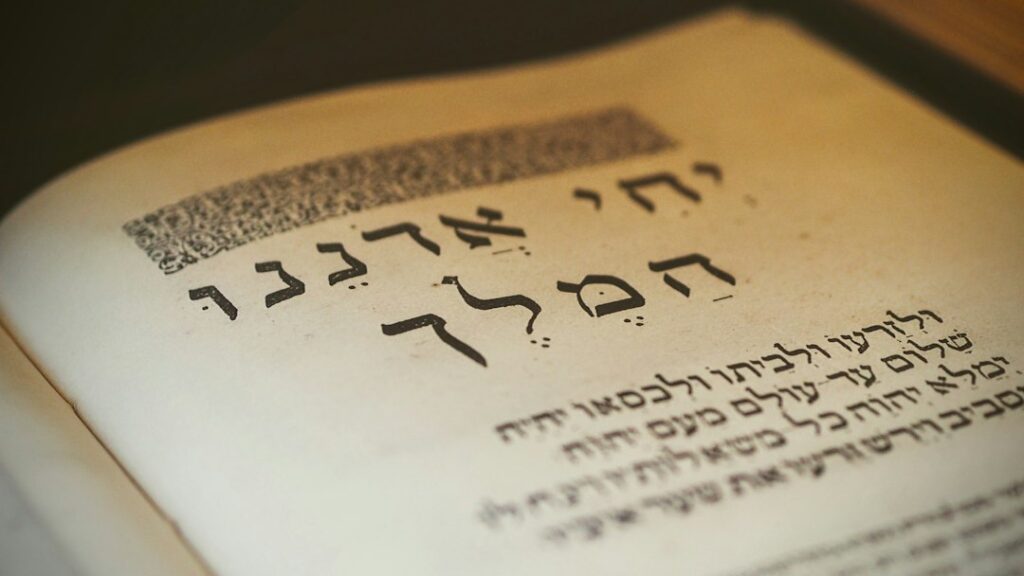
Learning to pronounce Hebrew can be confusing because the same word may sound different in a synagogue, Hebrew classroom, family setting, or Israeli conversation. The differences are usually not mistakes. They reflect distinct Jewish reading traditions shaped by geography, history, community practice, and the purpose for which Hebrew is being used.
For residents of Englewood, NJ, these variations may be especially noticeable because local households and congregations often include people with Ashkenazi, Sephardi, Mizrahi, Israeli, and mixed family backgrounds.
What is the basic difference between Ashkenazi and Sephardi Hebrew?
Ashkenazi Hebrew is traditionally associated with Jewish communities of Central and Eastern Europe. Sephardi Hebrew developed among communities connected historically with the Iberian Peninsula and later with parts of the Mediterranean and Middle East. Each tradition has its own patterns for vowels, consonants, syllable stress, and prayer pronunciation.
The distinction is most noticeable in liturgical Hebrew—the Hebrew used for prayer, Torah reading, and religious study. In everyday Modern Hebrew, many speakers use a pronunciation based largely on the Israeli standard, although regional and family influences remain audible.
The two traditions share the same alphabet and written texts. A person familiar with one system can generally understand the other, especially when reading along. The differences are comparable to variations in accent and pronunciation rather than separate languages.
How do the vowel sounds differ?
Vowels are among the clearest differences.
In many Ashkenazi traditions:
- The Hebrew vowel kamatz may sound like “o” in certain words.
- The vowel tzere may be pronounced differently from the way it is commonly heard in Modern Hebrew.
- Word stress may fall in a different place, particularly in prayer and Torah reading.
- Common liturgical words may have endings that sound different from their Sephardi or Israeli equivalents.
For example, the word שבת is often pronounced “Shabbos” in Ashkenazi prayer traditions and “Shabbat” in Sephardi and Modern Israeli pronunciation. The written word is identical, but the final consonant reflects a difference in how the letter ת is pronounced without a dot, known as ת רפה.
Another familiar example is אדוני, traditionally pronounced “Adonoy” in many Ashkenazi prayer settings and “Adonai” in Sephardi and Modern Israeli settings.
These patterns are not universal across every Ashkenazi or Sephardi community. Eastern European Ashkenazi pronunciation itself has several regional forms, and Sephardi pronunciation varies across communities with different historical languages and local influences.
Which consonants sound different?
The letter ת without a dagesh is one of the most recognizable examples. In many Ashkenazi traditions, it can be pronounced like “s,” producing “Shabbos.” In Sephardi and Modern Israeli pronunciation, it is generally pronounced like “t,” producing “Shabbat.”
The letter ק, kuf, may also differ. Some traditional Sephardi and Mizrahi speakers preserve a deeper throat sound, while many Ashkenazi and Modern Israeli speakers pronounce it similarly to כ, khaf, or with a less distinct articulation.
The letters ח and ע may be pronounced with stronger throat articulation in some Sephardi and Mizrahi traditions. In many Ashkenazi communities, these sounds have weakened or merged with less guttural sounds. Modern Israeli Hebrew often preserves the spelling distinctions but does not always preserve the older pronunciation differences in everyday speech.
The letter ר can vary as well. It may be rolled, tapped, or pronounced farther back in the throat, depending on family background, region, age, and personal speech habits.
Is Sephardi pronunciation the same as Modern Israeli Hebrew?
No. Modern Israeli Hebrew was influenced strongly by Sephardi vowel patterns and stress, but it is not identical to traditional Sephardi Hebrew.
The modern Israeli standard also reflects the speech habits of Hebrew revivalists from Europe and later generations of native speakers. As a result, it combines features from multiple traditions. For example, many speakers use Israeli-style vowels while pronouncing certain consonants in ways historically associated with Ashkenazi or European speech.
Traditional Sephardi, Mizrahi, Yemenite, and North African pronunciations may preserve distinctions that are not normally heard in mainstream Israeli conversation. At the same time, speakers from those backgrounds may use Modern Israeli pronunciation outside prayer or formal religious reading.
This means a student may encounter several legitimate pronunciation systems:
- Ashkenazi liturgical Hebrew
- Sephardi liturgical Hebrew
- Mizrahi or North African traditions
- Modern Israeli Hebrew
- A blended family or synagogue pronunciation
Does one pronunciation count as more correct?

For most learners, the answer depends on the purpose.
If the goal is to participate comfortably in a particular congregation, the local prayer tradition may be the most useful model. If the goal is speaking with Israelis, reading contemporary texts, or traveling, Modern Israeli Hebrew is usually the practical choice. If the goal is Torah reading or traditional prayer, consistency with the relevant community’s pronunciation may matter more than adopting a general Israeli accent.
No single pronunciation represents every Jewish community. A pronunciation can be historically accurate within one tradition while sounding unfamiliar in another. It is also possible to read Hebrew accurately while retaining a family accent.
In educational settings, correction should focus first on clarity, rhythm, vowels, and accurate reading rather than treating one community’s tradition as universally superior.
Why do synagogue and classroom pronunciations sometimes differ?
Prayer and conversation follow different conventions. A person may speak Modern Hebrew during a class or discussion but use Ashkenazi, Sephardi, or another traditional pronunciation during prayer. The shift can feel similar to changing from everyday speech to a formal register.
Synagogues may also preserve older patterns through melodies and communal repetition. Children often learn pronunciation from a combination of family members, religious school, prayer leaders, Hebrew teachers, and recorded materials. If those influences use different traditions, a blended pronunciation is common.
Seasonal and family gatherings can make these differences more noticeable. In a community with many households maintaining different customs, relatives may pronounce the same blessing in distinct ways while still following the same written text.
How should a beginner choose a pronunciation?
A beginner should choose based on the intended use rather than trying to master every tradition at once.
For conversational Hebrew, begin with a consistent Modern Israeli pronunciation. Learn the basic vowel system, syllable stress, and common consonant sounds. This provides a practical foundation for speaking and listening.
For prayer or Torah reading, follow the tradition used in the setting where the learner will participate. Pay attention to:
- Whether ת without a dagesh sounds like “t” or “s”
- How kamatz and other vowels are pronounced
- Where words receive stress
- How ח, ע, ק, and ר are articulated
- Whether Hebrew words are being read in a prayer melody or spoken naturally
It is useful to learn the written Hebrew separately from the pronunciation tradition. This helps students recognize that different sounds may represent the same spelling and prevents confusion when moving between classrooms, prayer books, and family settings.
What should parents and adult learners keep in mind?
Variation is not a sign that Hebrew has been taught incorrectly. A child who hears “Shabbos” at home and “Shabbat” in a classroom is hearing two established traditions. The same applies to differences in blessings, biblical names, and vowel sounds.
Adults may also feel self-conscious when their family pronunciation differs from the dominant pronunciation in a class. A respectful learning environment should make room for both heritage pronunciation and practical communication goals.
The most effective approach is to identify the target: prayer, reading, conversation, heritage preservation, or a combination. Once that goal is clear, pronunciation differences become easier to organize. The written language remains shared, while the spoken tradition communicates history, identity, and community practice.