

 See My Latest Article on HelloNation
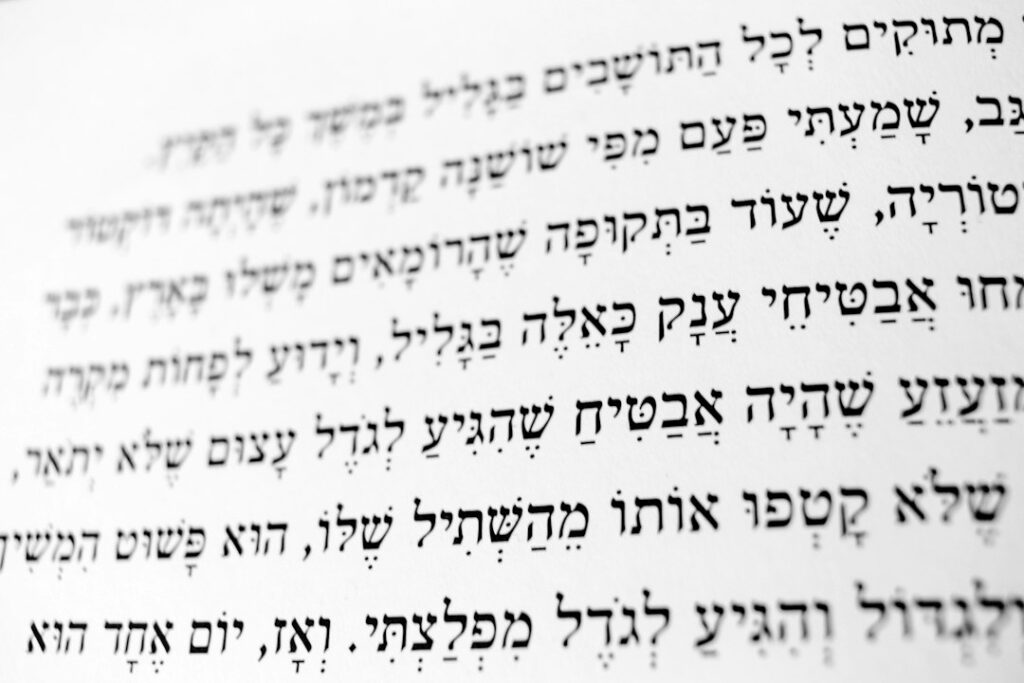
Learning to read Hebrew becomes much easier when beginners practice in small, predictable steps. The first goal is not speed or perfect pronunciation. It is recognizing letters, connecting them with sounds, and reading short combinations without guessing.
For residents of Englewood, NJ, Hebrew reading practice can fit into ordinary routines at home. A quiet table, a notebook, and ten minutes of focused work are enough to begin building useful reading habits.
What should a beginner learn first?
A beginner should start with the Hebrew alphabet, letter sounds, and the direction of reading. Hebrew is read from right to left, but the basic learning process is similar to learning any new writing system: identify symbols, connect symbols to sounds, and combine them into words.
Hebrew has 22 primary letters. Some letters change shape when they appear at the end of a word. These final forms are:
- ך — final kaf
- ם — final mem
- ן — final nun
- ף — final pe
- ץ — final tsadi
It is helpful to learn each letter by its name, shape, and sound. Beginners should also notice letters that may look similar, such as ב and כ, or ד and ר. Writing the letters by hand can strengthen visual memory, even if the long-term goal is reading rather than handwriting.
How do Hebrew vowels work?
Hebrew vowels are often represented by small marks called *nikud*. These marks appear above, below, or inside consonant letters. For beginners, nikud makes pronunciation more visible and gives each short reading exercise a clear structure.
For example:
- בַּ can be read as “ba”
- מִ can be read as “mi”
- לוּ can be read as “lu”
- שֶׁ can be read as “she”
The exact pronunciation may vary slightly depending on the reading tradition being studied. Beginners should choose one consistent pronunciation system at first rather than switching between several systems.
A useful exercise is to practice one consonant with several vowel patterns:
- בַּ — ba
- בֶּ — be
- בִּ — bi
- בֹּ — bo
- בּוּ — bu
This helps the reader see that the vowel mark changes the sound while the main consonant remains the same.
What are simple Hebrew reading exercises?
The most effective early exercises move from isolated letters to syllables, then to short words. Each step should be repeated enough times that recognition becomes comfortable.
Exercise 1: Letter recognition
Write five to ten Hebrew letters on a page. Point to each one in random order and say its name or sound. Avoid reciting the alphabet from memory, because alphabetical order can hide uncertainty.
A beginner might practice:
- א, ב, ג, ד, ה
- מ, נ, ס, ע, פ
- ר, ש, ת, ל, ק
The purpose is quick recognition, not memorizing a long list in one sitting.
Exercise 2: Sound-and-vowel matching
Choose one consonant and add different vowel marks. Read each combination slowly, then read the group again at a natural pace.
For example:
- מַ — ma
- מֶ — me
- מִ — mi
- מֹ — mo
- מוּ — mu
Cover the transliteration after a few repetitions. Transliteration is useful for checking a sound, but relying on it too long can slow the development of direct Hebrew reading skills.
Exercise 3: Syllable blending
Place two syllables together and read them as one unit:
- שָׁ + לוֹם = שָׁלוֹם
- תּוֹ + רָה = תּוֹרָה
- מֶ + לֶךְ = מֶלֶךְ
The reader should first identify each part, then blend the sounds without inserting extra pauses. This exercise teaches the eyes to move smoothly across a word.
Exercise 4: Short, familiar words
Once syllable blending feels manageable, practice words that contain familiar letters and clear vowel marks. Examples include:
- אָב — av
- אֵם — em
- בַּיִת — bayit
- סֵפֶר — sefer
- יֶלֶד — yeled
- לַיְלָה — laylah

Some Hebrew words contain vowel patterns that do not match a simple one-letter, one-sound pattern. Beginners should expect this and treat each word as a combination of smaller sound units.
How can beginners practice reading without guessing?
Reading aloud slowly is useful, but pointing to each letter or syllable is equally important. A finger, index card, or narrow piece of paper can guide the eyes from right to left and prevent the reader from looking ahead too quickly.
Try this three-step routine:
1. Look at the word without speaking.
2. Identify the consonants and vowel marks.
3. Read the word aloud, then read it once more smoothly.
If a word is difficult, do not immediately supply the answer. Separate it into parts, identify the unfamiliar letter or vowel, and rebuild the word. This develops a reliable decoding habit instead of dependence on memory or context.
A beginner can also keep a “frequent mistakes” page. Write down pairs that are often confused, such as:
- ב and כ
- ה and ח
- ו and ז
- ד and ר
- ט and ת
Reviewing a small group of recurring errors is usually more productive than adding many new words.
What is a practical ten-minute routine?
Short daily practice is generally easier to maintain than a long session once a week. A simple routine might look like this:
- Two minutes: Review five letters and their sounds.
- Three minutes: Read consonant-vowel combinations with nikud.
- Three minutes: Read five short words.
- Two minutes: Reread the same words more smoothly.
During colder months, when households may spend more time indoors, this routine can be added to an existing evening study period. In a busy community with varied schedules, consistency matters more than having a large uninterrupted block of time.
A notebook can track the date, letters practiced, words read, and any recurring difficulty. Seeing gradual improvement helps beginners recognize progress that may be hard to notice from one day to the next.
Should beginners learn Hebrew print and cursive together?
Most beginners should learn printed Hebrew first because it is the form commonly used in books, educational materials, prayer texts, and signs. Hebrew cursive is valuable later, especially for handwriting, but learning both forms at the same time can create unnecessary confusion.
After the printed letters become familiar, compare one cursive letter at a time with its printed equivalent. This gradual approach allows the learner to recognize the connection without having to memorize two complete alphabets at once.
What mistakes commonly slow progress?
Several habits can make reading practice more difficult:
- Practicing only the alphabet without combining letters into words
- Reading transliteration instead of looking carefully at Hebrew
- Trying to read quickly before letter recognition is secure
- Ignoring final letter forms
- Treating every unfamiliar word as a failure
- Changing pronunciation systems frequently
- Practicing for a long period and then taking several days off
Mistakes are part of decoding a new writing system. The useful question is not whether an error occurred, but whether the reader can identify what caused it and try again accurately.
How can families make practice comfortable at home?
A calm, well-lit space is usually enough. Keep materials simple and avoid correcting every small hesitation. It is often better to let the learner finish a word, then review one or two errors clearly.
Family members can take turns reading short lines, matching Hebrew words to spoken sounds, or sorting letter cards into familiar and unfamiliar groups. Children and adults may benefit from different pacing, but both usually respond well to brief exercises with visible progress.
The strongest early milestone is not reading quickly. It is looking at a new, fully marked Hebrew word and knowing how to begin decoding it. With regular practice, that process becomes more automatic, and short reading exercises gradually lead to greater independence.