

 See My Latest Article on HelloNation
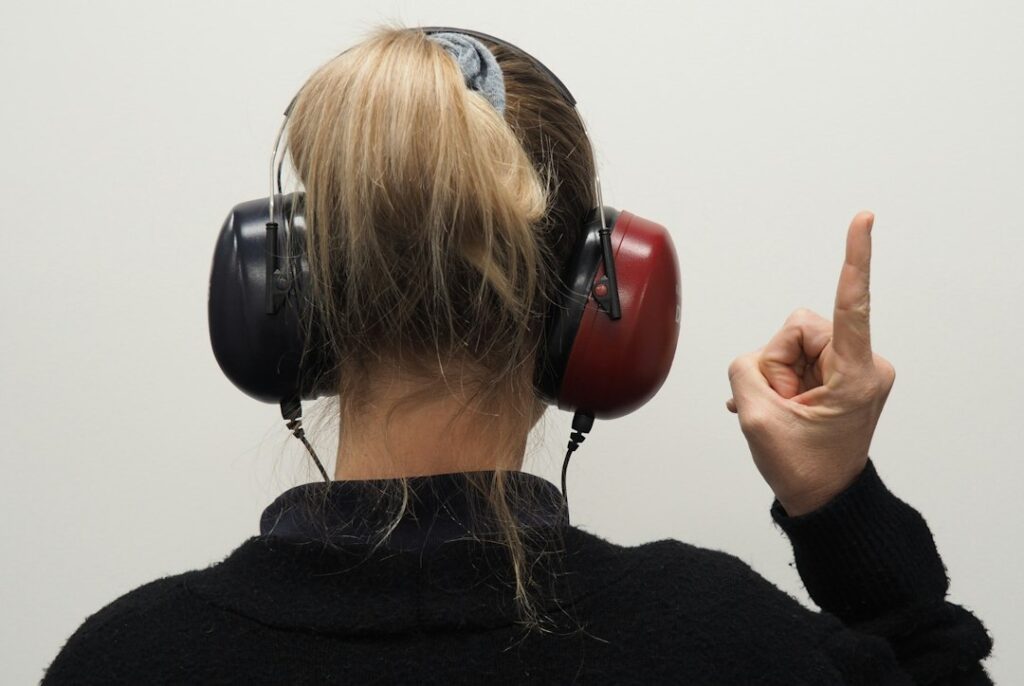
Learning to understand spoken Hebrew takes more than memorizing vocabulary. Listening improves through regular exposure to natural speech, careful attention to sound patterns, and practice with language that matches real situations. For residents of Englewood, NJ, a practical routine can fit around family life, commuting, worship, school schedules, and household activities.
Why is Hebrew listening difficult at first?
Hebrew can sound fast because spoken words often run together. Native speakers may shorten words, change their tone, or leave out information that would be stated more clearly in a textbook. Familiar vocabulary may also be difficult to recognize when it appears in a different form.
Several features commonly create challenges:
- Hebrew uses word patterns that change the form of a root.
- Verb forms can sound different depending on tense, gender, number, and speaker.
- Unstressed vowels may be reduced or difficult to hear.
- Everyday speech often includes fillers, shortened expressions, and informal pronunciation.
- Speakers may shift quickly between formal Hebrew, conversational Hebrew, English, and other languages.
A listener who understands written Hebrew may still need time to connect a spoken sound with a familiar word. That gap is normal and usually narrows through repeated, focused listening.
What should a beginner listen to first?
Start with short recordings that are easy enough to understand without translating every word. A one-minute conversation is often more useful than a long program that feels overwhelming.
Choose material with:
- Clear speech and moderate pacing
- Familiar subjects such as introductions, meals, directions, weather, or daily routines
- A written transcript when possible
- Repeated vocabulary
- A speaker whose pronunciation is easy to follow
The goal at the beginning is not complete understanding. Try to identify the topic, the people involved, the main action, and a few important words. Recognizing the general meaning builds the ability to follow longer passages later.
How can repeated listening improve comprehension?
Use the same short audio several times, but give each listening a different purpose.
First listening: Focus only on the general meaning. Do not pause or look up words.
Second listening: Notice familiar words, repeated phrases, numbers, names, and changes in tone.
Third listening: Read the transcript while listening. Mark words that sound different from how they look in writing.
Fourth listening: Pause after short phrases and repeat them aloud.
Fifth listening: Listen without the transcript and check how much more you recognize.
This method helps the brain connect sound, meaning, and written form. Listening repeatedly to the same material is not wasted time; it develops recognition speed. Eventually, common expressions begin to register without conscious translation.
Should Hebrew learners use subtitles?
Subtitles can help, but the type of subtitle matters. Hebrew subtitles support listening because they connect spoken sounds with Hebrew spelling. English subtitles may help with the general meaning, but relying on them can encourage reading English instead of processing Hebrew.
A useful progression is:
1. Listen without subtitles.
2. Listen with Hebrew subtitles.
3. Review unfamiliar words.
4. Listen again without subtitles.
5. Use English only when the meaning remains unclear.
Do not stop for every unknown word. Look up terms that are repeated, central to the conversation, or useful in daily life. Letting minor words pass can help maintain listening flow.
How should pronunciation practice support listening?
Speaking and listening strengthen each other. If a learner has difficulty producing a Hebrew sound, that sound may also be harder to recognize in conversation.
Pay attention to sound contrasts such as:
- ח and כ, depending on the speaker’s pronunciation
- א and ע, which may be subtle in modern speech
- ר, which can vary among speakers
- ק and כ, which may sound similar in some forms of speech
- The difference between short, reduced vowels and clearly pronounced vowels
Practice by repeating short phrases rather than isolated sounds. Copy the speaker’s rhythm, pauses, and emphasis. This is sometimes called shadowing: the learner listens to a sentence and repeats it immediately, trying to match the timing and melody.
Perfect imitation is not required. The purpose is to become more comfortable hearing the structure of spoken Hebrew.
What everyday activities can provide listening practice?
Listening practice does not need to take place at a desk. Short periods throughout the day can be effective, especially in a busy household or during seasonal schedule changes.
Possible routines include:
- Listening to a short Hebrew dialogue while preparing breakfast
- Replaying a familiar lesson during a commute or walk
- Naming household objects and actions in Hebrew
- Listening to children’s stories with clear narration
- Following a simple recipe in Hebrew
- Playing a short recording before beginning homework
- Reviewing the same conversation during several days
In Englewood, winter weather may create more time indoors, while warmer months may make walking-based listening practice convenient. The activity matters less than consistency. Ten focused minutes most days can be more productive than an occasional long session.
How can learners understand different speaking styles?
No single speaker represents all Hebrew pronunciation. Age, background, region, education, and setting can affect vocabulary, rhythm, and pronunciation. A learner should first develop confidence with clear standard speech, then gradually add different voices.

Begin by comparing two recordings about the same subject. Listen for:
- Words that are pronounced differently
- Faster or slower pacing
- Formal versus casual expressions
- Changes in sentence endings and emphasis
- Words that are shortened in conversation
Do not assume that failure to understand a new speaker means that progress has been lost. The brain is adjusting to a different voice pattern. Brief exposure to several speakers can gradually improve flexibility.
What mistakes slow listening progress?
One common mistake is trying to understand every word. This can cause a learner to pause constantly and lose the meaning of the next sentence. Another is studying only written vocabulary without hearing it used in context.
Other problems include:
- Listening to material that is far above the learner’s level
- Translating every sentence word for word
- Using English subtitles for the entire recording
- Practicing only passive listening while doing another demanding task
- Changing materials too often
- Avoiding informal speech completely
Active listening requires attention. Even a short session should include a specific task, such as identifying verbs, writing down numbers, or summarizing the main idea.
How can progress be measured?
Listening progress is easier to recognize when it is measured in practical terms. Instead of asking, “Do I understand Hebrew yet?” use specific questions:
- Can I identify the subject of a short conversation?
- Can I understand a familiar sentence without translating?
- Can I follow basic directions?
- Can I recognize when a speaker changes from past to present tense?
- Can I understand the main point even when several words are unfamiliar?
- Can I follow a familiar recording at a slightly faster speed?
Keep a simple listening record. Write the date, recording length, topic, and what was understood. Revisit the same recording after two or three weeks. Improvement often appears first as faster recognition, better understanding of connected speech, and less dependence on subtitles.
What is a realistic weekly routine?
A balanced routine might include four or five short sessions:
- Two days: Listen to a short dialogue and review its transcript.
- One day: Practice repeating useful phrases aloud.
- One day: Listen to a new speaker or subject.
- One day: Review older material without subtitles.
A learner with more time can add informal conversation, storytelling, or news designed for language learners. The level should be challenging but not discouraging. If the main idea is never understandable, choose shorter or simpler material.
The most reliable improvement comes from regular contact with spoken Hebrew, deliberate repetition, and patience with unfamiliar accents and conversational speed. Listening becomes easier as the brain learns to recognize common patterns before translating each individual word.