

 See My Latest Article on HelloNation
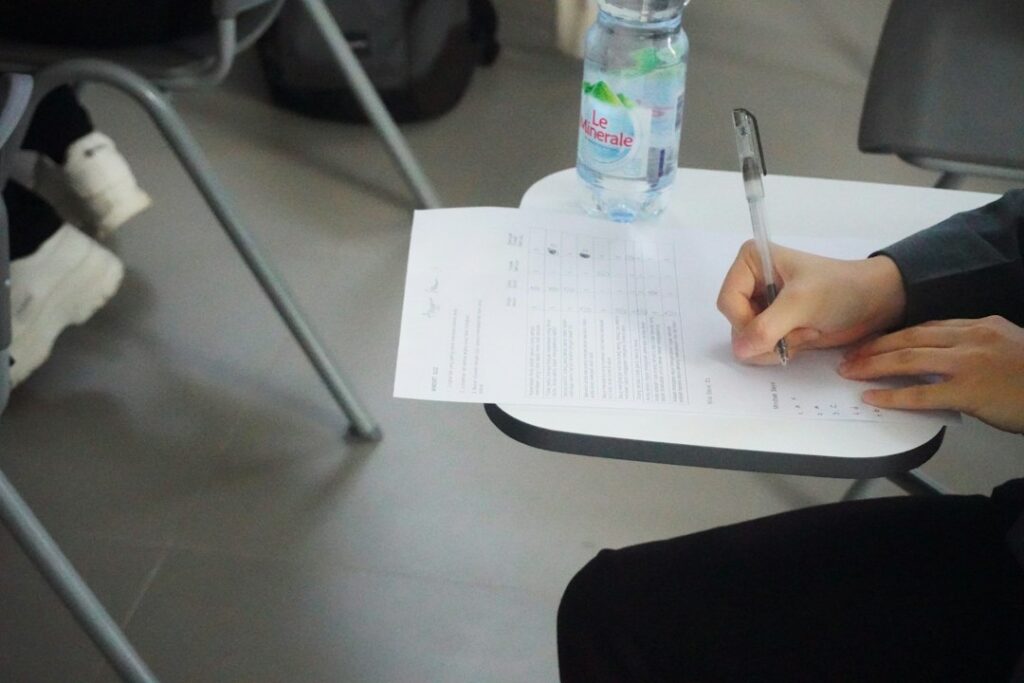
Hebrew proficiency exams measure more than memorized vocabulary. Most assess how well a person can understand written Hebrew, follow spoken language, communicate clearly, and use grammar in context. The most effective preparation begins by identifying the exact exam, learning its scoring system, and practicing the skills that will actually be tested.
Which Hebrew proficiency exam are you taking?
The first step is to confirm the exam name and its purpose. Hebrew tests are not interchangeable. A university entrance exam may focus heavily on reading, vocabulary, grammar, and academic writing, while an oral proficiency interview may emphasize spontaneous conversation.
Common categories include:
- Academic Hebrew exams, such as tests used for admission, placement, or exemption from university Hebrew courses.
- Speaking and writing assessments, often based on recognized proficiency scales.
- Professional or licensing exams, which may require formal communication and specialized vocabulary.
- School or program placement tests, designed to determine the appropriate level of instruction rather than award a broad certification.
For example, the YAEL examination is designed to measure Hebrew ability for academic settings. It includes reading comprehension, language-use questions, and written expression. An ACTFL-style oral assessment, by contrast, evaluates how effectively a person can speak in unrehearsed situations.
Before studying, write down:
- The required score or proficiency level
- The sections and time limits
- Whether the exam is written, computer-based, spoken, or combined
- Whether dictionaries, notes, or other aids are permitted
- How writing and speaking are scored
- The deadline for submitting results
A strong general Hebrew background does not always prepare someone for a specific test format.
How should you assess your current Hebrew level?
A realistic starting assessment prevents wasted study time. Many learners overestimate their ability because they can manage familiar conversations but struggle with formal reading or timed writing.
Try a short diagnostic session in four parts:
1. Read a newspaper-style article or academic passage without translating every word.
2. Listen to several minutes of natural Hebrew and summarize the main idea.
3. Speak for two minutes about a familiar topic, such as work, education, family, or a recent experience.
4. Write a paragraph explaining an opinion and supporting it with examples.
Record the results. Note whether problems come from vocabulary, verb patterns, sentence structure, reading speed, pronunciation, or difficulty organizing ideas.
A learner who understands conversations but cannot write a structured paragraph needs a different study plan from someone who writes accurately but cannot follow spoken Hebrew. The goal is to identify the weakest tested skill, not simply to repeat material that already feels comfortable.
What Hebrew skills matter most?
Vocabulary is essential, but isolated word lists are rarely enough. Proficiency exams usually test whether a learner can understand and use language in context.
Reading comprehension
Practice identifying the main idea, supporting details, tone, and implied meaning. Academic passages may include unfamiliar words, but the surrounding sentence often provides clues.
Pay attention to:
- Connectors such as although, therefore, however, and in contrast
- Cause-and-effect relationships
- Comparisons and examples
- Pronoun references
- The difference between a fact and an opinion
Do not stop at every unknown word. First determine what the sentence is doing. Then decide whether the unfamiliar word is important to the question.
Grammar and language use
Review grammar through complete sentences rather than disconnected rules. High-value topics include:
- Verb roots and common binyanim
- Past, present, and future forms
- Gender and number agreement
- Construct phrases
- Prepositions and attached pronouns
- Definite articles
- Relative clauses
- Common irregular verbs
Hebrew learners often recognize a root but miss the meaning created by the pattern, tense, or surrounding preposition. Practice noticing the whole structure.
Writing
A successful written response usually has a clear position, logical organization, relevant examples, and accurate language. Advanced vocabulary cannot compensate for an unclear argument.
A practical paragraph structure is:
- State the main point.
- Explain why it is true.
- Give a specific example.
- Connect the example back to the main point.
During timed practice, leave a few minutes to check verb agreement, sentence endings, spelling, connectors, and repeated words. Clear, accurate sentences are generally more valuable than complicated sentences that contain frequent errors.
Speaking and listening
For oral exams, practice answering without preparing a script. Examiners may ask follow-up questions or change topics to see whether the speaker can maintain communication.
Useful speaking exercises include:

- Giving a one-minute summary of a news item or short story
- Comparing two choices and explaining a preference
- Describing a past event in sequence
- Explaining a problem and proposing a solution
- Retelling information heard in a recording
Focus on being understandable and organized. Pausing briefly is acceptable; abandoning an answer because of one missing word is not.
How can residents build an effective study routine?
A manageable routine is more useful than occasional long sessions. A learner with a busy schedule in Englewood may benefit from short daily practice that fits around school, work, family responsibilities, or commuting.
A balanced weekly plan might include:
- Two reading sessions using increasingly difficult texts
- Two listening sessions with brief summaries
- Two grammar or vocabulary reviews
- One timed writing task
- One speaking practice session
Keep a correction notebook with three columns: the original error, the corrected form, and the reason for the correction. Reviewing recurring mistakes is often more productive than collecting new vocabulary indefinitely.
Households with more than one Hebrew speaker can create simple practice opportunities at home. For example, one person can ask follow-up questions while another gives a two-minute response. The purpose is not to imitate a classroom perfectly, but to build comfort with spontaneous communication.
How do you prepare for timed sections?
Many candidates know the material but lose points because they spend too long on one question. Practice with the actual time limits well before test day.
For reading questions, preview the question before rereading the passage in detail. For writing, spend a short period planning before drafting. A basic outline can prevent repetition and make the response easier to follow.
If a question seems unusually difficult, mark it and continue when the test rules allow. Returning later with a clearer mind is often better than sacrificing several easier questions.
Timed practice should also include working while tired or slightly distracted. Real testing conditions may not feel as comfortable as a quiet study session at home.
What common mistakes should be avoided?
Several preparation habits frequently produce disappointing results:
- Studying only vocabulary and neglecting writing or speaking
- Memorizing model essays word for word
- Translating every sentence into English
- Practicing only familiar conversation topics
- Ignoring Hebrew connectors and sentence structure
- Waiting until the final week to complete a full practice test
- Assuming that conversational fluency guarantees academic reading ability
- Failing to check the current exam instructions and score requirements
A memorized answer can also create problems if the prompt changes. It is better to prepare flexible language patterns: ways to introduce an opinion, compare ideas, explain causes, give examples, and summarize a position.
What should you do during the exam?
Read instructions carefully, especially if several sections use different question types. Keep track of time without constantly checking the clock. In speaking sections, answer the question directly before adding details.
If an unfamiliar word appears, use context. If a writing prompt feels broad, choose a clear position and support it with two or three relevant points. Avoid trying to include every idea you have studied.
The best preparation combines accurate Hebrew, familiarity with the exam format, and steady practice under realistic conditions. Starting with a diagnostic assessment and concentrating on the weakest skill gives learners a practical path toward a stronger score.