

 See My Latest Article on HelloNation
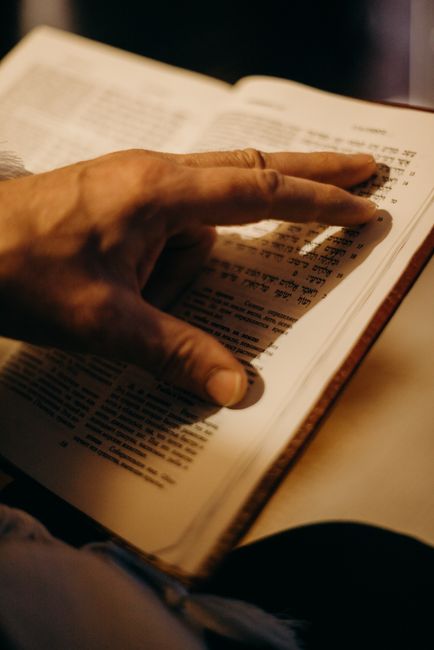
Learning Hebrew through traditional Jewish prayers can connect language study with sound, memory, history, and daily practice. For residents of Englewood, NJ, prayer texts offer a familiar structure for learning Hebrew gradually, whether the goal is to participate more comfortably in services, understand blessings at home, or read Jewish texts with greater independence.
Prayer-based learning is not the same as memorizing sounds. It works best when learners study pronunciation, vocabulary, grammar, and meaning together.
Why are traditional prayers useful for learning Hebrew?
Traditional prayers repeat important Hebrew words and sentence patterns. A learner may encounter the same terms in the *Siddur*, holiday blessings, synagogue readings, and family customs. Repetition makes it easier to recognize vocabulary over time.
Prayers also provide language in context. Instead of studying isolated words such as “light,” “peace,” or “thank,” learners see how those ideas appear in complete phrases. This helps connect Hebrew words to their grammatical role and religious meaning.
Common prayer vocabulary includes:
- *Baruch* — blessed
- *Adonai* — traditionally read aloud in place of the written divine name
- *Melech* — king
- *Olam* — world or eternity, depending on context
- *Shalom* — peace, completeness, or well-being
- *Torah* — teaching or instruction
- *Kadosh* — holy
The repeated structure of blessings is especially useful. Many begin with *Baruch Atah Adonai Eloheinu Melech ha-olam*, which introduces learners to a consistent grammatical and rhythmic pattern.
Should a beginner learn the Hebrew alphabet first?
Yes, but alphabet study does not need to be completed before prayer-based learning begins. A balanced approach introduces the letters and vowel marks while using short, familiar prayers as practice material.
Hebrew is read from right to left, and many prayer books include vowel points, known as *nikud*. These marks help beginners identify pronunciation. In many printed prayer books, however, the vowel points may be smaller or visually dense, so learners benefit from using a clear edition and reading at a comfortable pace.
Early study often focuses on:
- Recognizing the 22 Hebrew letters
- Distinguishing similar letters, such as *bet* and *vet*
- Learning common vowel sounds
- Understanding that some letters change pronunciation depending on their position or markings
- Reading short words before attempting long passages
A learner does not need perfect pronunciation immediately. The first goal is to identify letters and syllables accurately, then improve fluency through repeated reading.
Which prayers are most approachable for beginners?
Short blessings are usually the best starting point because they contain repeated wording and can be practiced in small sections. Examples include blessings over food, the *Shema*, *Modeh Ani*, and selected lines from *Ashrei* or *Adon Olam*.
The most suitable starting point depends on the learner’s purpose:
- Someone preparing for synagogue participation may begin with frequently recited congregational responses.
- Someone studying at home may prefer blessings connected with meals, candles, or daily routines.
- A learner interested in biblical Hebrew may focus on the *Shema* and passages with clear vocabulary.
- Someone preparing for a lifecycle event may study the specific prayers used during that occasion.
Short, repeated passages are generally more manageable than beginning with a complete service. Studying one paragraph carefully often produces more lasting progress than rushing through many pages.
How can prayer be used as a step-by-step Hebrew lesson?
A useful lesson separates prayer study into several stages. Each stage answers a different learning need.
1. Listen and identify the sound
Begin by hearing the prayer read slowly. The learner should notice where words begin and end, rather than trying to understand every word immediately.
2. Read the Hebrew text
Read the prayer aloud while following the printed letters and vowel marks. This builds the connection between the sound and the written form.
3. Divide the prayer into phrases
Traditional prayers often contain natural units of meaning. Marking these phrases helps prevent reading every word with equal emphasis and makes the text easier to remember.
4. Learn key vocabulary
Choose a small number of words from each prayer. Five to eight words may be enough for one study session. Review those words in later prayers whenever they appear again.
5. Examine the translation
A translation should clarify the general meaning, but learners should avoid assuming that each Hebrew word has only one fixed English equivalent. Hebrew words can carry a range of meanings depending on context.
6. Return to the full prayer
After studying the sounds, phrases, and vocabulary, read the entire prayer again. The text should now feel more recognizable without becoming merely a word-for-word exercise.
Does Hebrew prayer pronunciation vary?
Yes. Jewish communities use different pronunciation traditions, including Ashkenazi, Sephardi, Mizrahi, and Modern Israeli styles. Differences may involve vowels, certain consonants, and the pronunciation of words ending in particular letters.
These variations do not necessarily mean that one reader is correct and another is incorrect. A learner may hear a prayer pronounced differently at home, in a synagogue, in a classroom, or through recorded materials.
It is helpful to choose one pronunciation system for consistent study at first. Later, learners can compare traditions and recognize familiar prayers across communities. The goal is clear, respectful participation and a growing understanding of the text.
How much grammar should a learner study?
Some grammar is necessary because prayer Hebrew often differs from conversational Modern Hebrew. A learner who studies only translations may recognize prayers but remain unsure how the sentences work.
Useful early grammar topics include:
- Hebrew prefixes and suffixes
- Masculine and feminine forms
- Singular and plural nouns
- Common verb patterns
- The construct form, which links two nouns
- Definite articles and prepositions
- Biblical vocabulary that may not be common in everyday speech
Prayer texts also include older forms and poetic expressions. A word may be familiar from Modern Hebrew but appear with a different meaning or grammatical pattern in a traditional prayer. This is normal and can become an opportunity to compare different stages of the language.
Can families study prayers at home?
Yes. Home study can be especially effective when it is short, regular, and connected to an actual routine. A family might spend several minutes examining one blessing before a meal or reviewing a few lines before a weekly observance.
For households managing school schedules, commuting, and seasonal routines, brief practice is often more realistic than long, irregular sessions. A practical routine might include:
- Reading one short passage aloud three times
- Identifying two familiar words
- Reviewing one letter or vowel pattern
- Discussing the general meaning
- Using the same passage again later in the week
Children and adults may study the same prayer at different levels. A child might focus on sounds and recognition, while an adult explores grammar, history, or interpretation.
What common mistakes should learners avoid?
The most common problem is treating prayer as a pronunciation performance without understanding the text. Memorization can help with fluency, but it should be paired with reading and explanation.
Other frequent difficulties include:
- Trying to learn an entire service at once
- Relying only on transliteration
- Translating every word separately without considering the sentence
- Assuming modern spoken Hebrew and prayer Hebrew are identical
- Becoming discouraged by unfamiliar letters or regional pronunciation
- Ignoring pauses and phrasing
Transliteration can be useful as temporary support, especially for participation in a service. However, depending on it permanently can make it harder to recognize Hebrew letters and vowel patterns.
How can learners make progress in a local community?
Englewood has a diverse Jewish community, and residents may encounter different prayer customs, educational backgrounds, and levels of Hebrew familiarity. That variety can be helpful because it shows that prayer learning is not limited to one age group or one style of practice.
Learners can strengthen their skills by bringing a Hebrew prayer book into regular use, listening carefully during services, asking about unfamiliar words in an educational setting, and comparing the same prayer across different occasions. Progress is usually easier to maintain when Hebrew becomes part of an existing religious or family routine rather than a separate subject studied only occasionally.
Learning through prayer does not require advanced language ability at the beginning. A few recurring letters, words, and phrases can gradually develop into confident reading, more accurate pronunciation, and a deeper grasp of the meaning carried by traditional Jewish texts.